

About this guide
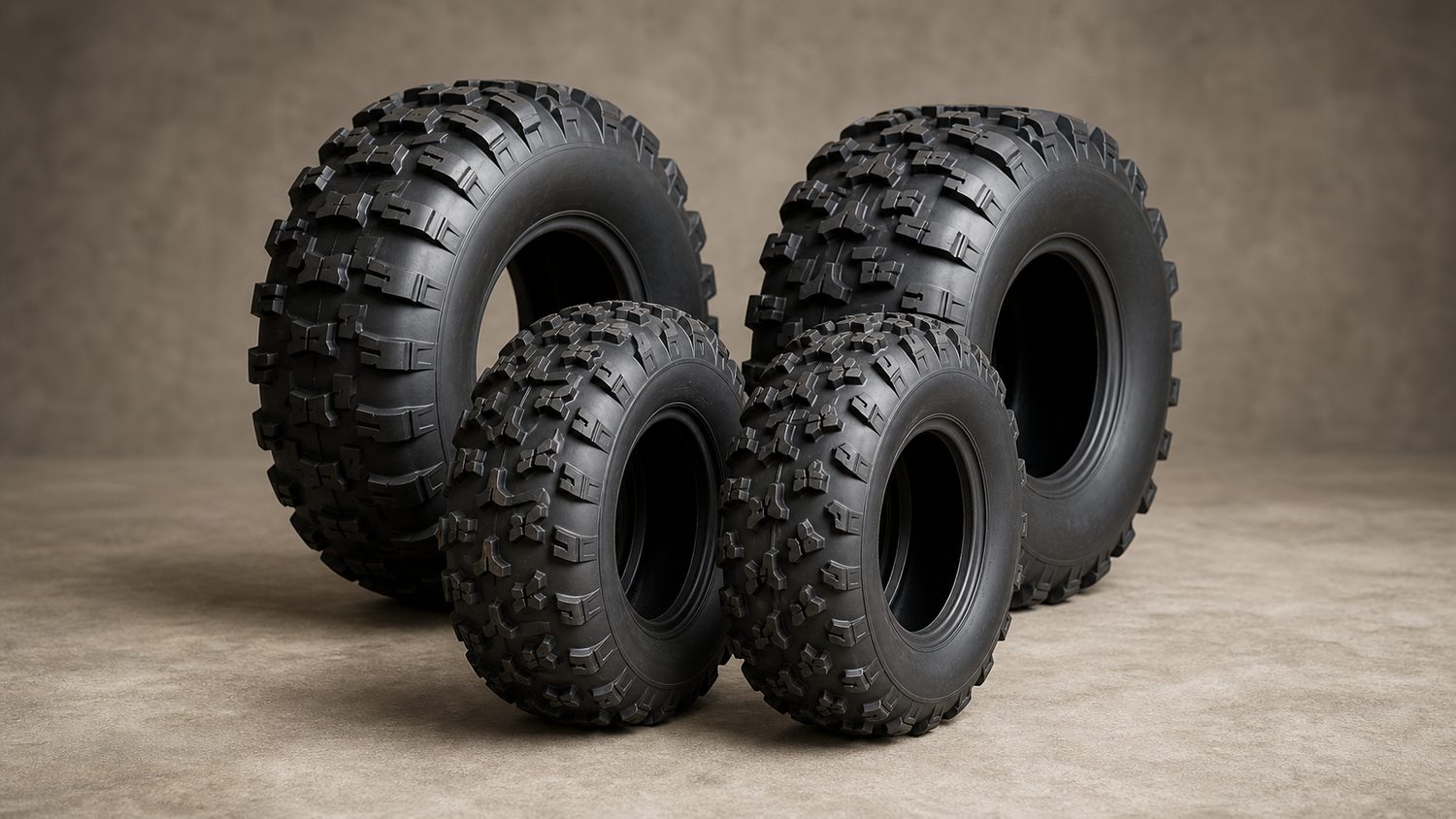
The Honda TRX 90 is a youth quad, and that changes what a tyre has to do. An adult machine’s tyres are chosen to put power down and survive abuse. A 90’s tyres are chosen for something more important: keeping a light machine with a light rider stable, predictable and unlikely to tip.
That reframing matters because of what stability actually depends on here, and it is not the tread pattern. It is pressure. Youth ATV tyres run at very low pressures — typically in the region of 2 to 4 psi, with the exact figure on the sidewall and in the owner’s manual — and a few tenths of a psi is a large proportion of that. Over-inflate a youth quad tyre and the contact patch shrinks, the carcass stops absorbing bumps, the machine skips across ruts and gets dramatically more likely to lift a wheel. Under-inflate it badly and the tyre can roll off the bead in a turn, which is worse. A cheap low-pressure gauge is a more important purchase than the tyres themselves, because a normal car tyre gauge cannot read 3 psi with any accuracy at all.
The second thing to know is that the TRX 90 has different front and rear tyre sizes, as almost all quads do, and the fronts are usually a narrower, less aggressive pattern than the rears. That is deliberate: the fronts steer and the rears drive, and putting aggressive rear-style tread on the front makes the steering grabby and the machine harder for a young rider to control. Buy the sizes the machine specifies, by the numbers on the sidewall.
Third: size, not tread, is what fits. Youth ATV tyres are given as three numbers — overall diameter, section width and rim diameter, such as 19×7-8. All three must match, and the rim diameter is the one that absolutely cannot vary.
And a note worth stating plainly: a youth ATV is a machine that injures children when it is too fast, too big or unsupervised. Helmet, gloves, boots, eye protection and an adult present are not optional extras. Ten picks below.
As an Amazon Associate and eBay Partner, toptenpick.com earns from qualifying purchases. Prices and availability are subject to change.
The picks, in detail
OEM-Replacement Front Tyres
The straightforward answer for the front axle.
- Factory front size and tread pattern
- Milder tread for predictable steering
- Low-pressure youth ATV construction
- Sold individually or as a pair
- Steering behaves the way the machine was designed to
- Cheap and widely available
- No compatibility questions
- Nothing special in mud or deep sand
- Must be replaced as a matched pair
Why we picked it
Factory-pattern front tyres for a youth quad are deliberately less aggressive than the rears — a milder tread that steers predictably rather than grabbing and darting. That predictability is the whole point on a machine a child is learning on. Buy them in the size printed on your sidewall and fitted as a pair, since a mismatched pair front-to-front makes the steering pull. These are cheap and there is very little reason to deviate.
OEM-Replacement Rear Tyres
The driven end, and a slightly more aggressive pattern than the front by design.
- Factory rear size and tread
- More aggressive than the front pattern
- Low-pressure construction
- Sold individually or as a pair
- Correct balance of grip and predictability
- Matched to the front tyres’ behaviour
- Inexpensive
- Must be replaced as a pair on a solid axle
- Wears faster than the fronts
Why we picked it
Factory-pattern rears give a light machine enough bite to climb and pull without being so aggressive that they dig in and unsettle it. As with the fronts, replace them as a pair — a quad with one new and one worn rear tyre has different effective rolling diameters, which on a solid rear axle means it will constantly want to pull to one side.
Complete Front and Rear Tyre Set
Buying all four together is usually cheaper and always more sensible.
- Matched set of four in the correct sizes
- Different front and rear specifications
- Usually discounted against singles
- One purchase, one delivery
- Cheaper than buying four singles
- All four wear together, keeping balance consistent
- Removes any mismatch risk
- Some ‘sets’ are four identical tyres — check the sizes
- Larger upfront cost
Why we picked it
The four tyres then wear together, the machine's balance stays as designed, and you avoid the situation where a new pair on one axle changes how the whole quad behaves relative to the old pair on the other. Sets are commonly discounted over individual purchases. Confirm that the set is specified with the correct different front and rear sizes rather than four of the same.
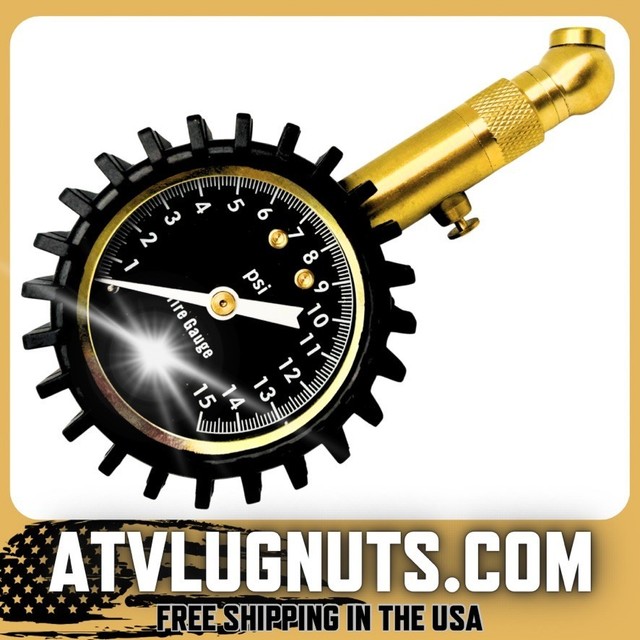
Low-Pressure Tyre Gauge (0-15 psi)
Arguably the most important purchase on this list.
- 0-15 psi range with fine increments
- Dial, digital or pencil types
- Bleed valve on better gauges
- Angled chuck for ATV valve access
- Car gauges cannot read these pressures at all
- The single biggest influence on how the quad handles
- Very cheap
- Cheap gauges need checking against a known reference
- Easy to lose in a garage
Why we picked it
Youth ATV tyres run at a few psi, and a standard car gauge — designed to read 30 to 50 psi — simply cannot resolve the difference between 3 and 5 psi, which on these tyres is an enormous change in how the machine handles. A dedicated low-pressure gauge reading 0 to 15 psi in small increments costs very little and is the difference between the machine behaving as designed and skipping over every bump.

Tyre Sealant for Tubeless ATV Tyres
Practical insurance on a machine used on trails full of thorns and stubble.
- Low-pressure tubeless ATV formulation
- Seals small thorn and nail punctures
- Poured in through the valve
- Lasts a season or more
- Turns most punctures into non-events
- Cheap relative to a ruined afternoon
- Simple to install through the valve
- Makes a subsequent tyre change messy
- Will not seal a sidewall tear
Why we picked it
A liquid sealant poured into the tyre coats the inside and plugs small punctures as they happen, which on a youth quad means a ride continues instead of ending. Check it is rated for low-pressure tubeless ATV use rather than being a bicycle or car product, and be aware it makes a future tyre change messy — a fair trade for not walking a child's quad back to the trailer.
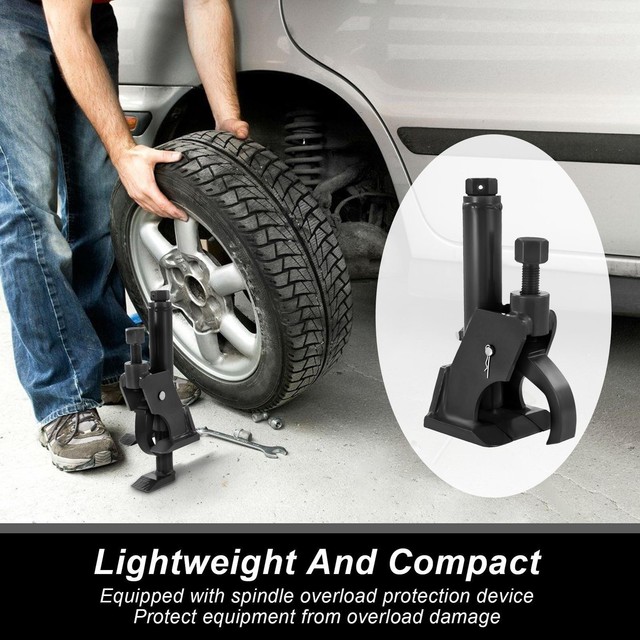
- Manual bead breaker
- Short ATV-specific tyre irons
- Rim protectors on better sets
- Compact for garage storage
- Makes home fitting genuinely possible
- Pays for itself over a couple of changes
- Useful for the whole family’s machines
- Real physical effort on stubborn beads
- Irons mark rims without protectors
Why we picked it
Youth ATV tyres are small and the beads are stubborn — the tyre must be broken off the rim before anything else can happen, and that is nearly impossible without a tool designed for it. A small bead breaker plus a pair of ATV-length tyre irons makes the job doable at home, and once you own them the cost per change is nothing. Use plenty of tyre lubricant and be careful of the rim edges, which mark easily on aluminium wheels.
Valve Stems and Caps
Replace them whenever a tyre comes off.
- Rubber or metal valve stems for ATV rims
- Sealing caps
- Sold in multipacks
- Valve core tool often included
- Prevents slow leaks that matter enormously at low pressure
- Costs almost nothing
- Zero extra labour during a tyre change
- Requires the tyre to be off the rim
- Sizes vary — check the rim hole
Why we picked it
Rubber valve stems perish, and at these pressures a valve leaking slowly gives you a tyre that is fine on Saturday and dangerously soft on Sunday — which, per the introduction, is a tyre that can roll off the bead in a turn. They cost pennies and fitting them while the tyre is already off is free. Metal caps with a rubber seal are worth having over plastic ones; they keep grit out of the valve core.

Small 12V Air Compressor with a Low-Pressure Setting
A garage compressor set for car tyres will over-inflate a youth ATV tyre in under a second, and blowing past the bead on a low-pressure tyre is genuinely easy to do.
- 12 V vehicle-powered
- Low fill rate suited to small tyres
- Integrated low-range gauge
- Long lead and alligator clips or socket plug
- Slow fill makes small adjustments possible
- Works at the trail head, not just the garage
- Useful for the tow vehicle too
- Built-in gauges are often inaccurate at low readings
- Slow if you are filling from flat
Why we picked it
A small 12 V compressor with a fine gauge and a slow fill rate suits these tyres far better. It also runs from a vehicle at the trail head, which is where you actually need to adjust pressures — because the right pressure for hard-packed dirt is not the right pressure for sand.

Youth Helmet, Goggles and Gloves
Non-negotiable, and it belongs on this list because no tyre choice makes an unprotected rider safe.
- Youth-specific helmet sizing and certification
- Goggles with anti-fog lenses
- Gloves with knuckle protection
- Over-ankle boots
- The most important purchase in this whole category
- Youth-specific sizing fits properly
- Goggles matter as much as the helmet on a trail
- Outgrown quickly, which tempts buying too large
- Must be replaced after any impact
Why we picked it
A properly fitted youth-specific helmet — sized to the child's head, not bought big to grow into — plus goggles, gloves and over-ankle boots is the baseline. A helmet that is too large moves on impact and protects far less than a correctly fitted one, which is why buying to grow into it is the wrong instinct here. Replace any helmet after an impact.
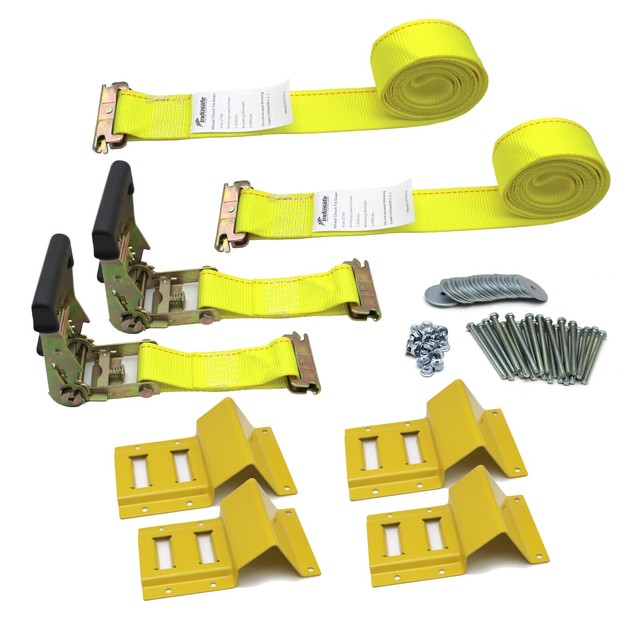
Tie-Down Straps and a Wheel Chock
Getting the quad to the trail safely, which is when a tyre is most likely to be damaged.
- Ratchet straps with soft loop ends
- Front wheel chock
- Rated working load well above the machine’s weight
- Soft loops to protect the frame finish
- Prevents damage in transit
- Soft loops avoid marking the frame
- A chock stops the front wheel walking
- Over-tightening compresses suspension and stresses the machine
- Cheap ratchets seize and slip
Why we picked it
Ratchet straps over the frame — not over the suspension or the handlebars — hold it down without compressing the suspension all the way, which stresses the machine. A wheel chock stops the front wheel walking sideways in transit. Worth noting that a quad strapped down hard enough to compress the suspension fully puts constant load on the tyres and rims for the whole journey.
What each one costs
Typical price, cheapest first. Tap a name to jump to that pick and its buy link.
Compare any three
| OEM-Replacement Front Tyres | OEM-Replacement Rear Tyres | Complete Front and Rear Tyre Set | |
|---|---|---|---|
| Price | $40-$90 | $50-$110 | $90-$180 |
| Key features |
|
|
|
| Pros |
|
|
|
| Cons |
|
|
|
Buying tips
- Buy a 0-15 psi gauge before you buy tyres. Youth ATV tyres run at a few psi, and a standard car gauge cannot resolve the difference between 3 and 5 — which on these tyres is an enormous change in handling. This is the cheapest and most useful purchase in the category, and most people do not own one.
- Check the pressure every single ride. At three psi, a small leak is a large proportion of the total. A tyre that is fine on Saturday can be dangerously soft on Sunday, and a badly under-inflated tyre can roll off the bead in a turn. It takes thirty seconds with the right gauge.
- Over-inflation is the more common mistake and it makes the quad less stable. Higher pressure shrinks the contact patch and stops the carcass absorbing bumps, so the machine skips across ruts and is far more likely to lift a wheel. The temptation is to add air because the tyres look soft — they are supposed to look soft.
- Front and rear tyres are different, and that is deliberate. The fronts steer and carry a milder tread; the rears drive and carry a more aggressive one. Fitting rear-pattern tread on the front makes the steering grabby and darty, which is exactly wrong on a machine a child is learning to control.
- Match all three size numbers. Youth ATV tyres are specified as overall diameter, section width and rim diameter — 19×7-8 and so on. All three must match what the machine calls for, and the rim diameter absolutely cannot vary. Buy by the numbers on your sidewall, not by a description.
- Replace tyres in pairs on each axle. Different effective rolling diameters across a solid rear axle make the quad pull to one side constantly, and mismatched fronts make the steering pull. It is not about looks — it is about the machine tracking straight, which matters most for the least experienced rider.
- Adjust pressure for the surface. Slightly lower for sand and soft ground, where a bigger footprint floats the machine; slightly higher for hard-packed trails. Stay within the range on the sidewall, and note that ‘slightly’ means a fraction of a psi at these pressures — which is why the gauge is the important tool.
- None of this substitutes for supervision and protective gear. A youth quad is a machine that injures children when it is too fast for the rider, too large for them, or unsupervised. A correctly fitted helmet, goggles, gloves and over-ankle boots are the baseline, and a helmet bought large to grow into protects far less than one that fits now.
As an Amazon Associate and eBay Partner, toptenpick.com earns from qualifying purchases. Prices and availability are subject to change.