

As an Amazon Associate and eBay Partner, toptenpick.com earns from qualifying purchases. Prices and availability are subject to change.
Metal doesn’t need the kind of subwoofer that gets sold for EDM or hip-hop, even though both get marketed with the same “deep bass” language. Most of metal’s low-end weight sits in the low-mid overlap zone — roughly 60 to 200 Hz — where the kick drum’s punch, the bass guitar, and a down-tuned rhythm guitar’s fundamental all live. A standard low-E guitar string sits around 82 Hz; drop it to Drop A and it’s closer to 55 Hz. That’s a different job than reproducing a 20-30 Hz electronic sub-bass drop, and it isn’t the range most subwoofer marketing is built around.
The practical consequence: a subwoofer voiced and tuned to dig for maximum extension down at 20-30 Hz can make metal sound muddier rather than heavier, because it’s adding uncontrolled output in a range that’s already crowded with kick, bass, and rhythm guitar, while doing comparatively little for the 60-200 Hz band that’s actually carrying the weight. For this kind of listening, transient speed — how cleanly a sub starts and stops on a kick hit — and where you set the crossover matter more than how low the spec sheet claims the sub can reach.
That’s where sealed versus ported becomes a real, checkable difference rather than marketing language. A sealed enclosure’s driver works against trapped air, which controls it more tightly and produces less group delay — a sealed box typically runs around 8-10ms of group delay at 30 Hz, against a longer settling time for a ported design tuned to the same frequency. In practice that means a kick drum through a sealed sub stops when the kick stops, instead of ringing on for another few milliseconds. A ported design trades some of that tightness for more maximum output and deeper extension per dollar, which is a fair trade in a large room but works against you in a small one.
None of the subwoofers below were auditioned here. Sealed-versus-ported status, driver size, wattage, and price are pulled from each manufacturer’s own spec sheet and cross-checked against independent reviews and enthusiast-forum consensus, not from listening. A few on this list — Hsu’s VTF-3 MK5, Outlaw’s LFM-1 Plus — let you adjust port tuning yourself, which is the closest a ported sub gets to sealed-style tightness without giving up all of its extra output.
| # | Product | Price | Where to buy |
|---|---|---|---|
| 1 | SVS SB-2000 Pro | $750–$800 | Amazon · eBay |
| 2 | SVS PB-1000 Pro | $650–$800 | Amazon · eBay |
| 3 | SVS SB-1000 Pro | $550–$600 | Amazon · eBay |
| 4 | Hsu Research VTF-3 MK5 | $1,000–$1,300 | Amazon · eBay |
| 5 | Rythmik L12 | $790–$860 | Amazon |
| 6 | Outlaw Audio LFM-1 Plus | $500–$600 | Amazon · eBay |
| 7 | Klipsch R-121SW | $400–$550 | Amazon · eBay |
| 8 | Monoprice Monolith M-12 V2 | $680–$850 | Amazon · eBay |
| 9 | Polk Audio HTS 12 | $400–$550 | Amazon · eBay |
| 10 | Power Sound Audio S1500 | $950–$1,050 | Amazon |
The picks, in detail
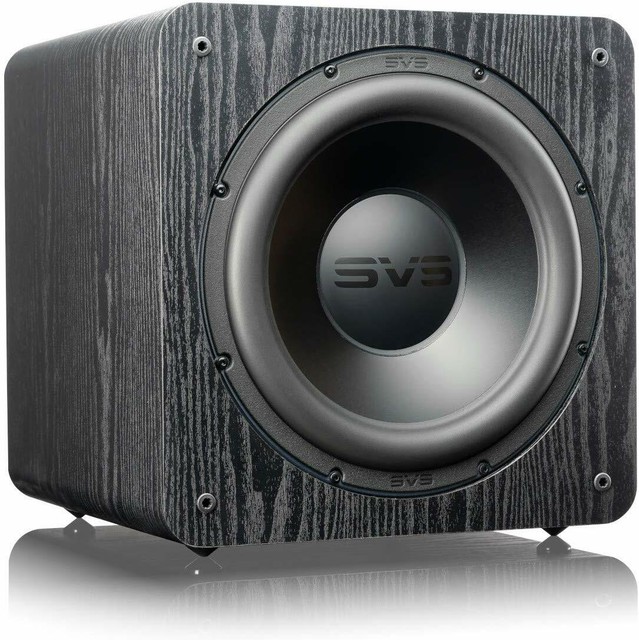
SVS SB-2000 Pro
A sealed 12-inch sub with a genuinely useful feature for metal specifically: app-based parametric EQ that lets you pull down a boom peak in the 80-150 Hz zone where down-tuned riffs and kick drum overlap, instead of just turning the whole sub down. Sealed alignment gives the fast start-stop transient behavior that matters for tight, fast rhythm parts.
- 12-inch driver, sealed enclosure
- 550W RMS / 1,500+W peak Sledge amplifier
- App-controlled 3-band parametric EQ and adjustable crossover
- Compact sealed cabinet footprint
- Sealed design gives the fast start-stop needed for tight kick and rhythm-guitar transients
- Onboard parametric EQ lets you dial out boom in the 80-150 Hz zone metal actually lives in
- Compact footprint for the output it produces
- Less raw low-frequency extension below 20 Hz than a similarly sized ported design
- Premium price for a single 12-inch sealed sub
- The app/DSP setup adds a step most passive subs don’t need
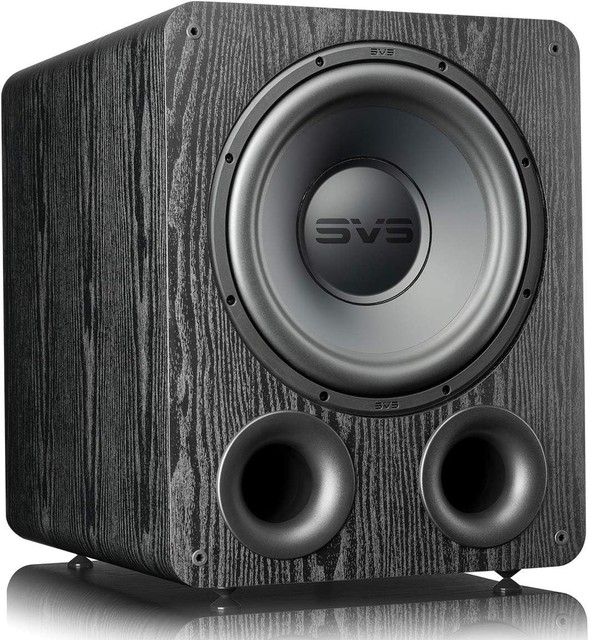
SVS PB-1000 Pro
The ported sibling of the SB-2000 Pro, trading some transient tightness for more maximum output and deeper extension per dollar. The adjustable port tuning gives some control over how loose or tight the low end feels, which matters more here than on a sub built for movie explosions.
- 12-inch driver, front-firing ported enclosure
- Sledge amplifier, DSP-controlled
- Adjustable crossover, phase, and port tuning
- Larger cabinet than the sealed SB line for extra output
- Ported design gives more max output and deeper extension per dollar than a sealed sub
- Adjustable port tuning gives some control over how loose or tight the low end feels
- Same DSP/app control as the pricier SB-2000 Pro
- Ported bass has more overhang than sealed, which can blur fast kick-drum patterns if the crossover isn’t set carefully
- Bigger cabinet than a sealed sub with the same driver size
- Extra output below 40 Hz mostly goes unused on metal, which lives higher up

SVS SB-1000 Pro
A smaller, cheaper entry into SVS’s sealed, DSP-controlled SB line. Same fast, tight transient behavior as the SB-2000 Pro in a more compact box, with less maximum output — the right call if the room is small and the SB-2000 Pro’s extra headroom would go unused.
- Sealed 12-inch driver, compact SVS SB-series cabinet
- Sledge amplifier with app-based EQ and crossover control
- Smaller, lower-output sibling of the SB-2000 Pro
- Sealed alignment for tighter transient response than SVS’s ported PB line
- Cheapest way into SVS’s sealed, DSP-controlled SB line
- Same fast, tight transient behavior as the SB-2000 Pro in a smaller box
- App EQ still available to tame the 80-150 Hz zone
- Less maximum output than the SB-2000 Pro, so it runs out of headroom first in a bigger room
- Sealed alignment means less low-frequency extension than a similarly priced ported sub
- Smaller amplifier than SVS’s Pro-tier PB and SB-2000 models

Hsu Research VTF-3 MK5
A high-output dual-12-inch ported sub with user-adjustable port plugs, so you can trade some maximum extension for a tighter, less boomy response — useful for metal’s midbass-heavy content rather than a movie soundtrack’s deep LFE. A long-standing enthusiast favorite for output-per-dollar.
- Dual 12-inch drivers, ported enclosure
- High-output design built for large rooms
- User-adjustable port plugs to trade extension for tightness
- Configurable toward a sealed or ported response depending on port-plug setting
- Adjustable ports let you tune toward a tighter, less boomy response, useful for metal’s midbass-heavy content
- Very high maximum output for a home sub, real headroom in a full-volume listening room
- Long-standing enthusiast reputation in home-theater and music forums for value at this output level
- Large cabinet, not a subtle addition to a living room
- Among the pricier options here for a single sub
- Direct-order, limited-dealer brand, less convenient than big-box subs for local service
Rythmik L12
A sealed 12-inch sub built around direct-servo feedback control, which is engineered specifically for tight, accurate transient response rather than maximum output. That’s the exact trait that matters most for a fast-picked, down-tuned mix, and it’s why Rythmik has a specific reputation among music listeners rather than home-theater bass-heads.
- 12-inch driver, sealed enclosure
- Direct-servo-feedback amplifier design
- Built primarily for accurate, low-distortion bass rather than max SPL
- Compact sealed cabinet
- Servo feedback control is built specifically for tight, accurate transient response, the exact trait that matters for a fast-picked, down-tuned mix
- Sealed alignment keeps kick-drum and rhythm-guitar attack from smearing
- Respected in enthusiast/music-listening circles specifically for pitch accuracy, not just impact
- Small direct-order brand, no big-box return or exchange convenience
- Lower max output than a large ported sub, not the choice for a big room played loud
- Premium price for a single 12-inch driver
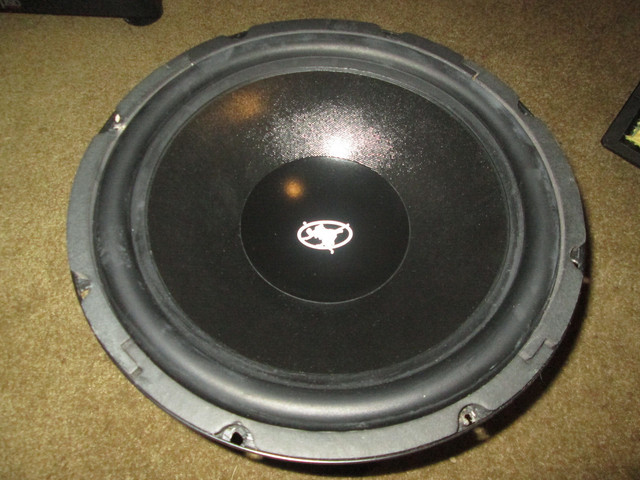
Outlaw Audio LFM-1 Plus
A value-priced, direct-to-consumer ported sub with a long-throw 12-inch driver and variable port tuning, which gives some of the same tightness control as a dual-tuned sub at a lower price. Needs that tuning set deliberately, since it’s ported by default and will boom on midbass-heavy metal if left wide open.
- 12-inch long-throw driver, down-firing
- 350W BASH amplifier
- Variable port tuning to adjust output character
- Value-oriented direct-to-consumer pricing
- Variable port tuning gives some of the same tightness control as a dual-tuned sub at a lower price
- 350W BASH amp is genuinely high output for the price tier
- Long-running product line with an established enthusiast following
- Ported by default, needs the port tuning set deliberately to avoid boom on midbass-heavy metal
- Direct-to-consumer brand, so no in-store audition before buying
- Down-firing design needs a hard floor and clearance, not ideal on thick carpet

Klipsch R-121SW
The cheapest way onto this list to get a 12-inch ported sub with real brand support and easy in-store returns. The tradeoff for the price is control: no parametric EQ, just basic level, phase, and low-pass, so tightening the response for metal takes more trial and error than on the SVS models.
- 12-inch front-firing driver, ported enclosure
- Up to 400W peak / 200W RMS digital amplifier
- Spun-copper driver and Tractrix port
- Compact cabinet, widely available big-box price tier
- Cheapest way onto this list to get a 12-inch ported sub with real brand support
- Widely stocked, easy to audition or return through big-box retailers
- Tractrix port reduces port noise and chuffing versus a plain round port at high output
- Fewer tuning controls (no parametric EQ, just basic crossover and phase) than the SVS models
- Ported alignment with no adjustable tuning, less control over tightening the low end for metal
- Plastic-heavy cabinet build compared to the MDF/wood cabinets on this list

Monoprice Monolith M-12 V2
A vented 12-inch sub with THX Ultra certification, meaning it’s cleared an independently audited output and distortion bar most budget subs never take. Balanced XLR input is an unusual feature at this price and useful if the rest of your system runs balanced connections.
- 12-inch driver, vented HDF cabinet
- 500W RMS Class D amplifier, THX Ultra certified
- Balanced XLR and RCA inputs
- Vented (ported) enclosure design
- THX Ultra certification is an independently audited output and distortion bar most budget subs don’t clear
- Balanced XLR input is unusual at this price and useful with pro-style gear
- Strong output-per-dollar for a ported 12-inch sub
- Ported design again means more attention needed on crossover and port tuning to avoid muddying midbass-heavy metal
- Large, heavy vented cabinet for a single driver
- Direct-order brand, limited in-person audition options

Polk Audio HTS 12
A widely available big-box ported sub with Polk’s Power Port design, built to cut down the chuffing noise a plain port makes at high output. Solid, easy option if you want to walk into a store, hear it, and walk out with it, at the cost of any real EQ or crossover control.
- 12-inch driver with Polk’s Power Port technology
- Up to 400W dynamic amplifier power
- Ported enclosure, wood-grain finish
- Big-box widely available price tier
- Power Port design is specifically built to reduce the chuffing/noise a plain port makes at high output
- Widely available with easy local return or exchange
- Solid output for the price in a moderate-size listening room
- No parametric EQ or adjustable crossover, just basic level and low-pass controls
- Ported alignment, same midbass-tightness tradeoff as the other ported subs here
- Sits a tier below the SVS and Rythmik models on measured distortion in independent reviews
Power Sound Audio S1500
A sealed 15-inch sub for players who want the tight transient behavior of a sealed box but more cone area than any of the 12-inch subs on this list. Direct-order only from a small US-built brand, so there’s no dealer network or in-store audition, but the RMS power on tap is genuinely high for a sealed design.
- 15-inch driver, sealed enclosure
- 725W RMS / 1,900W peak ICEpower amplifier
- Compact-for-its-driver-size sealed cabinet
- US-built, direct-order brand
- Sealed 15-inch driver combines tight transient behavior with more cone area than the 12-inch subs on this list
- Very high RMS power for a sealed sub, headroom to run an aggressive crossover without strain
- Compact footprint relative to its output class
- Direct-order only, no dealer network or in-store audition
- Heavier and larger than the 12-inch sealed options here despite the compact-for-15-inch framing
- Premium price for a single driver, no built-in app/DSP control like the SVS models
Buying tips
- Set the crossover around 80 Hz to start, then adjust by ear — that’s roughly where kick drum and down-tuned rhythm guitar hand off, not the 40-60 Hz crossover point common electronic-music guides recommend.
- If your subwoofer has a phase control, use it: bass that’s out of phase with your main speakers cancels exactly in the frequency range metal’s rhythm section lives in.
- In a small or medium room, a sealed sub’s tighter transient response is usually more audible than a ported sub’s extra low-end extension.
- If you pick a ported sub, look for one with adjustable or dual-tuned ports, like the Hsu VTF-3 or Outlaw LFM-1 Plus, so you can tighten the response instead of being stuck with the factory tuning.
- Don’t chase sub-40Hz extension specs for a metal-focused system — down-tuned guitars bottom out around 40-80 Hz and kick drums punch around 60-100 Hz, well above where most “how deep does it go” marketing is aimed.
- Run any built-in parametric EQ to pull down a peak in the 80-150 Hz range before adding bass elsewhere — that’s the zone most likely to sound boomy under heavy, palm-muted riffing.
- Placement matters more than spec sheets at this budget: corner-loading a sub adds boom in exactly the range you’re trying to control, so test at least two spots in the room.
- If two rooms are in play, prioritize a sealed sub for a smaller listening room and save a ported or dual-driver sub for a room large enough to actually need the extra output.
As an Amazon Associate and eBay Partner, toptenpick.com earns from qualifying purchases. Prices and availability are subject to change.