

As an Amazon Associate and eBay Partner, toptenpick.com earns from qualifying purchases. Prices and availability are subject to change.
The label buyers lean on hardest here is the one that tells them the least. FIFA’s quality marks — Basic, Quality, and the pro-grade Quality Pro used in top competitions — are pass/fail results against a specific lab test covering roundness, water absorption, and bounce consistency, not a ranking of how good a ball is. A ball with no FIFA mark at all isn’t necessarily worse; plenty of solid training and backyard balls were simply never submitted for testing, because certification costs the manufacturer money a $20 ball’s margin doesn’t support.
At this price range, how the panels are joined tells you more than any sticker does. A traditionally stitched ball has visible seams — small channels where the thread passes through the panel — and those channels soak up water on wet grass, adding weight and throwing off bounce and flight as a match goes on. Thermally bonded construction fuses the panels with heat instead of thread, which nearly eliminates that seam and keeps the ball closer to its stated weight and shape in wet conditions. A growing number of mid-price balls now hybridize the two, machine-stitching the panels for touch and then bonding over the seams for water resistance, rather than picking one trait over the other.
Size and surface are the two decisions a generic list tends to skip, and both are easy to get wrong buying for someone else. Size 5 is the full adult match ball for age 13 and up, size 4 covers roughly ages 8 to 12, and size 3 is for younger kids — an oversized ball just makes control harder for a smaller player, it doesn’t make the gift more serious. Surface matters as much as size: a standard outdoor ball bounces too high and too unpredictably on a hard indoor court, which is why futsal balls are built smaller and deliberately low-bounce rather than just a shrunken outdoor ball.
Every ball below is a real, current product from a named manufacturer, with pricing and construction pulled from the manufacturer’s or retailer’s own listing rather than a generic “best of” aggregator. We haven’t played with any of them, and we say so rather than pretending otherwise — what follows is what’s actually specified on the box.
| # | Product | Price | Where to buy |
|---|---|---|---|
| 1 | Adidas Tiro League Thermally Bonded | $40–$50 | Amazon · eBay |
| 2 | Select Numero 10 | $45–$50 | Amazon · eBay |
| 3 | Wilson NCAA Vanquish | $38–$42 | Amazon · eBay |
| 4 | Select Club DB V22 | $30–$39 | Amazon · eBay |
| 5 | Mitre Impel | $23–$34 | Amazon · eBay |
| 6 | Nike Pitch Team | $20–$25 | Amazon · eBay |
| 7 | Puma Attacanto | $18–$23 | Amazon · eBay |
| 8 | Select Attack V22 (Futsal) | $38–$43 | Amazon |
| 9 | Senda Valor Premium (Fair Trade) | $40–$45 | Amazon · eBay |
| 10 | Franklin Sports Competition 100 | $12–$16 | Amazon · eBay |
The picks, in detail
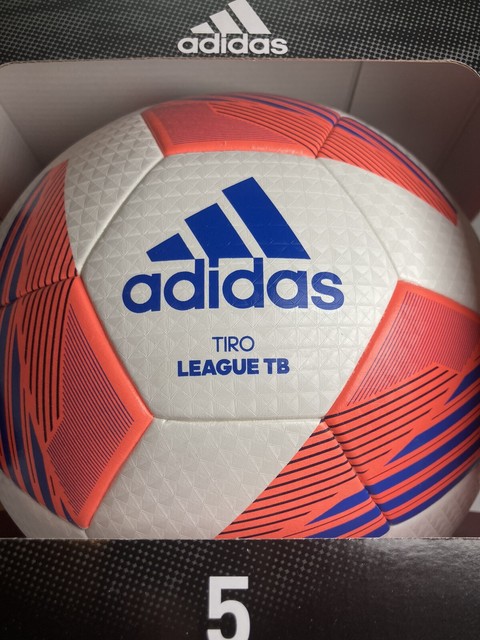
Adidas Tiro League Thermally Bonded
Adidas’s Tiro line sits in the middle of its ball range, and the League version is thermally bonded rather than stitched, which matters most exactly where a backyard or rec-league ball spends its life: wet grass. It’s a recognizable, widely stocked option for buyers who want a name-brand ball without paying pro-match prices.
- Thermally bonded panel construction
- Butyl bladder for air retention
- Available in sizes 4 and 5
- Machine-finished synthetic cover
- Water resistance from the bonded seams
- Widely available from major retailers
- Recognizable adidas Tiro line quality
- Sits at the top of the under-$50 range depending on retailer
- Not FIFA Quality Pro certified — that’s the separate Tiro Pro model
- Bonded construction gives a firmer touch than a premium stitched ball
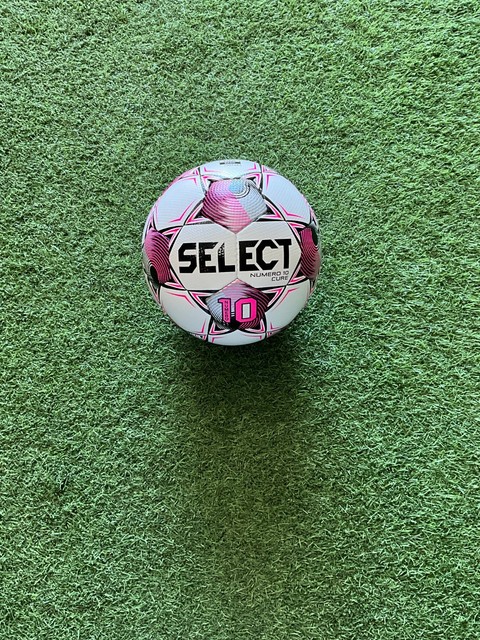
Select Numero 10
Select’s best-selling ball pairs 32-panel construction with a PU cover laminated over neoprene foam for a softer touch than a plain synthetic-leather ball, and a latex bladder for responsive bounce. It’s FIFA/NFHS approved and priced right at the top of this list’s budget, positioned as a step up for players who’ll notice the difference.
- 32-panel PU cover laminated with neoprene foam
- Latex bladder
- FIFA/NFHS approved construction
- 2-year manufacturer warranty
- Softer touch than a basic PU cover from the foam lamination
- Reputation as Select’s durability-to-price standout
- Backed by a 2-year warranty
- Priced at the very edge of “under $50”
- Latex bladder needs more frequent re-pumping than a butyl one
- NFHS-specific version costs more still
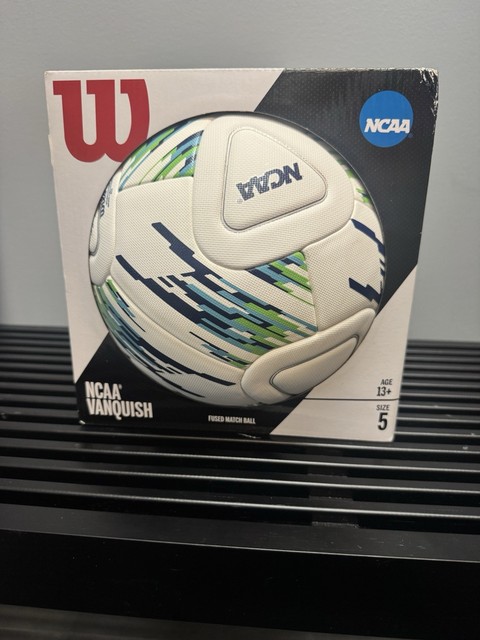
Wilson NCAA Vanquish
Wilson’s Vanquish uses a 20-panel fused (thermally bonded) construction with high-density EVA foam backing the panels, aimed at combining a soft touch with moisture resistance and shape retention over a season of use. It’s built to NCAA/NFHS match specifications, which is the audience it’s really aimed at.
- 20-panel fused construction
- High-density EVA foam panel backing
- NCAA/NFHS match specifications
- Sizes 4 and 5 available
- Fused seams resist water pickup
- EVA backing adds cushioned touch and energy return
- Built to recognized match-play specifications
- Priced closer to $40 than to the budget end of this list
- High-visibility graphics are a matter of taste, not universally liked
- Less common outside organized league contexts

Select Club DB V22
The Club DB uses what Select calls dual-bonded construction: panels are both machine-stitched and glued, aiming to combine the seam durability of stitching with reduced water uptake from the bonding. It sits in the middle of this list on price and is a common training and club-practice pick.
- Dual-bonded (stitched and glued) panel construction
- Machine-stitched base with reinforced seams
- Suitable for grass and turf training
- Available in standard match sizes
- Hybrid construction reduces water uptake versus plain stitching
- Mid-range price for a name-brand training ball
- Durable seam structure from the added stitching
- Not fully thermally bonded, so some seam absorption remains
- Touch is firmer than Select’s higher-end match balls
- Colorways vary by retailer and can sell out

Mitre Impel
The Impel is Mitre’s entry-level training ball, built around a simpler 6-panel PU construction rather than the 20- or 32-panel designs used higher up this list. It’s aimed squarely at everyday practice on grass or astroturf rather than match play, and it prices accordingly — a straightforward, replaceable ball for a training bag rather than a squad’s match kit.
- 6-panel PU cover construction
- Suitable for grass and astroturf
- Available in sizes 3, 4, and 5
- Soft-touch foam layer
- Lowest price among the name-brand options here
- Simple 6-panel build is easy to keep round and durable for daily practice
- Available across all three common sizes
- 6-panel construction gives a less true flight than higher panel counts
- Not built or marketed for match play
- No FIFA-tier certification

Nike Pitch Team
Nike’s Pitch Team is a straightforward 12-panel, machine-stitched training ball with a rubber bladder — no bonding, no foam backing, just a basic, durable ball for players learning the game. It’s the cheapest Nike option that still carries the brand’s 2-year stitch-and-shape guarantee, which matters more on a ball that sees daily practice use than on an occasional match ball.
- 12-panel machine-stitched casing
- Rubber bladder
- 60% rubber / 15% polyester / 13% PU / 12% EVA composition
- 2-year stitch and shape guarantee
- Nike’s stitch-and-shape guarantee covers manufacturing defects
- Low price for a recognized brand name
- Simple, durable build for beginner training
- No thermal bonding, so seams absorb water like any stitched ball
- Basic touch compared to foam-backed or bonded options here
- Entry-level materials versus Nike’s higher match-ball lines
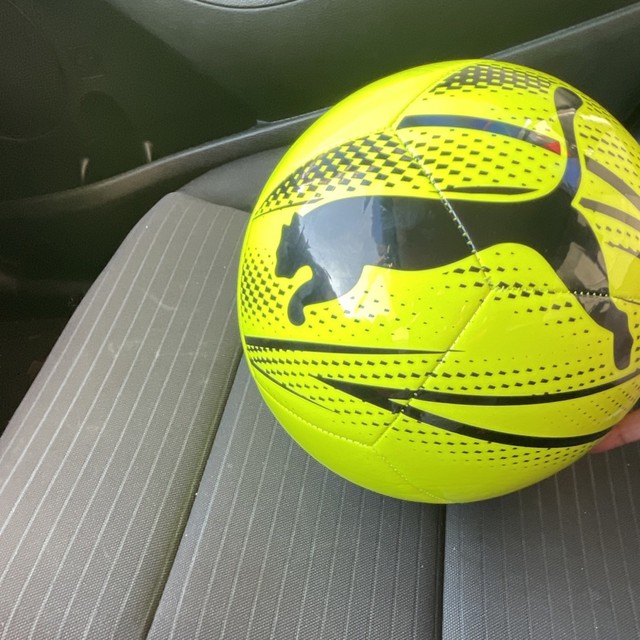
Puma Attacanto
Puma’s Attacanto uses a simple 12-panel machine-stitched design with a glossy TPU outer layer, positioned as an entry to mid-level training ball. The TPU surface resists abrasion and gives a noticeably shinier finish than the matte covers on most balls at this price, at the cost of a firmer, less forgiving touch.
- 12-panel machine-stitched construction
- TPU outer layer
- Available in youth and adult sizes
- Graphic and solid colorways
- Abrasion-resistant TPU surface
- Inexpensive entry point into the Puma line
- Simple construction is easy to keep round
- No thermal bonding — standard stitched-seam water absorption
- TPU surface feels harder underfoot than a foam-backed ball
- Marketed as training-grade, not match-grade
Select Attack V22 (Futsal)
This is the futsal-specific pick on this list: a 32-panel low-bounce ball built for hard indoor courts rather than grass, where a standard outdoor ball rebounds too high and disrupts close passing. It’s the right buy for anyone shopping for indoor five-a-side rather than an outdoor pitch.
- 32-panel construction, low-bounce design
- Built for indoor/futsal courts
- Size 4 (standard futsal size)
- FIFA-recognized futsal specification
- Genuinely low-bounce — built for the surface, not a relabeled outdoor ball
- 32-panel construction for a truer roll on hard courts
- Recognized futsal sizing and specification
- Wrong choice for outdoor grass or turf play
- Priced near the top of this list
- Low bounce feels unfamiliar to players used to outdoor balls

Senda Valor Premium (Fair Trade)
Senda’s Valor uses what the company calls DuoTech construction — combining machine stitching with thermal bonding on the same ball — and is Fair Trade Certified, meaning the workers who made it were paid under audited fair-wage standards. It’s a legitimate pick for buyers who weigh sourcing alongside performance.
- DuoTech hybrid stitched-and-bonded construction
- 32-panel design
- Fair Trade Certified manufacturing
- Complies with FIFA International Match Standards
- Fair Trade certification is independently audited, not just a marketing claim
- Hybrid construction aims for stitched touch with bonded water resistance
- Meets FIFA International Match Standards
- Among the pricier options on this list
- Smaller brand with less retail availability than Nike, Adidas, or Wilson
- Fair Trade premium is a values purchase, not a performance one

Franklin Sports Competition 100
The Competition 100 is a basic machine-stitched ball sold individually or in bulk packs, aimed at teams and coaches who need several balls for practice rather than one match-quality ball. It’s the cheapest option here by a wide margin, and it’s priced and built like it.
- Machine-stitched PVC/synthetic cover
- Available individually or in 12-packs with pump
- Sizes 3, 4, and 5
- Butyl bladder
- Lowest price on this list by a wide margin
- Bulk 12-pack option is genuinely cost-effective for teams
- Simple, replaceable if damaged
- Basic PVC cover doesn’t hold shape as well as PU over a season
- No thermal bonding — full stitched-seam water absorption
- Touch and flight noticeably behind every other ball on this list
Buying tips
- Match the ball to the surface before the price: thermally bonded or hybrid-bonded balls resist water pickup on wet grass and turf, while a basic stitched ball is fine for a dry driveway or backyard.
- Buy a futsal-specific low-bounce ball for indoor courts — a standard outdoor ball rebounds too high off a hard indoor surface and makes short passing drills harder, not easier.
- Size to the player, not the occasion: size 3 for kids under roughly 8, size 4 for ages 8-12, size 5 for 13 and up. An oversized ball is harder for a younger player to control and strike cleanly.
- Treat any FIFA mark (Basic, Quality, or Quality Pro) as a pass/fail floor, not a ranking — it confirms the ball passed a specific lab test, not that it’s the best ball at its price.
- Check the bladder material when it’s listed: latex bladders give a softer, more responsive touch but lose air pressure faster; butyl bladders hold air longer with a slightly firmer feel.
- If you’re buying for league or school play, check your league’s ball requirements (NFHS, NCAA, etc.) first — several balls on this list are built and marked specifically for those standards.
- A higher panel count generally means a rounder ball and truer flight, but construction quality and how the panels are joined matter as much as the raw panel count.
- Inflate a new ball to the correct pressure before judging its touch — an underinflated ball feels softer and slower off the foot, which can make a good ball seem mediocre in its first few uses.
As an Amazon Associate and eBay Partner, toptenpick.com earns from qualifying purchases. Prices and availability are subject to change.