

As an Amazon Associate and eBay Partner, toptenpick.com earns from qualifying purchases. Prices and availability are subject to change.
The thing an automatic litter box quietly takes away from you is the daily look in the tray, and that look is how a lot of cats get diagnosed in time. Changes in urine output are among the earliest signals that something is wrong, and in male cats a urinary blockage goes from uncomfortable to life-threatening in a day or two. When the box sifts everything away within minutes of every visit, the evidence is gone before you see it. That is not an argument against buying one — it is an argument for buying one that tracks weight and visit frequency and actually reading the app, or for keeping one ordinary tray alongside it.
The second issue is mechanical safety, and it is worth being specific rather than alarmist. Automatic boxes work by rotating, raking or tipping, and the whole design depends on sensors correctly detecting that a cat is inside. Where sensors are cheap or badly placed, the cycle can start with a cat present. There have been sustained complaints and warnings about particular low-cost brands sold through marketplaces, and the established makers have spent years refining exactly this. This is a category where buying a known brand with a long track record is a safety decision, not a snobbery one.
Kittens and small cats are the specific risk group, because most sensors are weight-triggered and a very light cat may not register at all. Manufacturers generally specify a minimum weight — commonly around 5 lb — and that figure is not marketing. Under it, use a manual tray.
Then there are the ordinary practicalities that decide whether the cat uses it at all. Cats are conservative about litter boxes: a new box that moves and makes noise is, from the cat’s point of view, a threat that appeared in its bathroom. Transition over weeks with the old box still available, run the new one with the cleaning cycle switched off at first, and use the same litter. Most failures in this category are transition failures rather than product failures.
And on the arithmetic: these need clumping clay litter of a particular type, they consume more of it than a manual box, and several use proprietary waste bags or cartridges. Work out the running cost before the purchase price.
The rule for multi-cat homes still applies. One box per cat plus one is the standard veterinary advice, and buying a single expensive automatic box for three cats does not repeal it.
| # | Product | Price | Where to buy |
|---|---|---|---|
| 1 | Litter-Robot 4 | $650–$750 | Amazon · eBay |
| 2 | CatGenie A.I. | $380–$500 | Amazon · eBay |
| 3 | PetSafe ScoopFree Self-Cleaning Litter Box | $150–$250 | Amazon · eBay |
| 4 | Whisker Litter-Robot 3 Connect (previous generation) | $400–$550 | Amazon · eBay |
| 5 | Standard Open Litter Tray (keep one alongside) | $15–$40 | Amazon · eBay |
| 6 | Clumping Clay Litter, Low Dust | $20–$45 | Amazon · eBay |
| 7 | Litter Mat | $20–$40 | Amazon · eBay |
| 8 | Pet Camera with Alerts | $35–$90 | Amazon · eBay |
| 9 | Top-Entry Manual Litter Box | $30–$60 | Amazon · eBay |
| 10 | Unbranded Marketplace Automatic Box (be careful here) | $150–$300 | Amazon · eBay |
The picks, in detail

Litter-Robot 4
The established name in this category, and the reason it commands its price is refinement of exactly the things that go wrong elsewhere: a sensor system that has been iterated over generations, a globe that stops on detection, and app-based weight and visit tracking that addresses the health-monitoring problem this whole category creates. Expensive, large, and the one most veterinary-adjacent recommendations point to.
- Rotating globe with cat detection sensors
- Weight and visit tracking via app
- Multi-cat identification by weight
- Carbon filter and sealed waste drawer
- Tracking restores the health signal an auto box removes
- Long track record of sensor refinement
- Genuinely reduces odour with the sealed drawer
- Very expensive
- Physically large — measure the space first
- Uses a lot of clumping litter

CatGenie A.I.
A genuinely different approach: it plumbs into a water supply and a drain, washes permanent granules rather than sifting litter, and flushes waste away. That removes the litter running cost and the bin bag entirely, which over years is a real saving. The trade is installation — it needs a cold feed and a drain within reach — and a long wash-and-dry cycle the cat must stay out of.
- Connects to water supply and drain
- Washable permanent granules, no litter to buy
- SaniSolution cartridge for cleaning
- Long wash and dry cycle
- No litter purchasing or disposal at all
- Genuinely washes rather than sifting
- Lower running cost over years
- Requires plumbing — a real installation, not a plug-in
- Cleaning cartridges are a proprietary consumable
- Long cycle time during which the box is unavailable
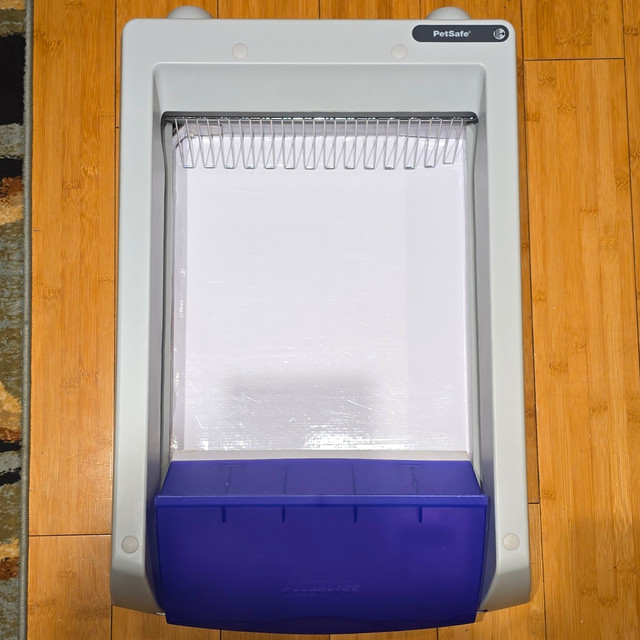
PetSafe ScoopFree Self-Cleaning Litter Box
The simplest mechanism in the category and therefore one of the safest: a rake sweeps across a shallow tray on a timer after the cat leaves, with a covered compartment at one end. Crystal litter rather than clumping. Fewer moving parts and no enclosed rotating chamber means fewer ways for it to go wrong, and it is a fraction of the price of the premium boxes.
- Horizontal rake on a delay timer
- Disposable crystal litter trays
- Covered waste compartment
- Open design with no enclosing chamber
- Simple mechanism with few failure modes
- No enclosed chamber for a cat to be caught in
- Much cheaper than the premium options
- Disposable trays are an ongoing cost and a lot of waste
- Crystal litter suits some cats and not others
- No health tracking at all

Whisker Litter-Robot 3 Connect (previous generation)
The outgoing model, and worth considering because the used and refurbished market for these is active and the core mechanism is the same proven design. It has app connectivity and cycle tracking, though less sophisticated multi-cat identification than the 4. A refurbished unit from the manufacturer with a warranty is a sensible way into this category at a lower price.
- Rotating globe, same core principle as the 4
- App connectivity with cycle logging
- Refurbished units sold with warranty
- Sealed waste drawer
- Proven mechanism at a lower price
- Manufacturer refurbished units carry a warranty
- Parts and support still available
- Less capable tracking than the current model
- Noisier in operation
- Used units of unknown history are a gamble

Standard Open Litter Tray (keep one alongside)
The recommendation that makes an automatic box safe to own. Keeping one ordinary tray gives a nervous cat somewhere familiar during the transition, satisfies the one-box-per-cat-plus-one rule, provides a fallback when the automatic box jams or the power goes, and — crucially — preserves your ability to actually look at what your cat produced. It costs almost nothing and it removes most of the risk in this category.
- Simple open plastic tray
- High-sided versions reduce scatter
- Cheap and easily replaced
- No power, sensors or consumables
- Restores the daily health check an auto box removes
- Fallback during transition, jams and power cuts
- Helps meet the one-per-cat-plus-one guideline
- Still needs scooping, which was the point of the purchase
- Takes floor space alongside the automatic box
- Open trays scatter litter

Clumping Clay Litter, Low Dust
The consumable that decides whether an automatic box works, and most of them specify clumping clay for a mechanical reason: the rake or sifter needs a clump firm enough to survive being moved. Crystal, paper and wood pellets behave differently and several boxes explicitly will not work with them. Low-dust formulations matter more here because the mechanism agitates the litter far more than a scoop does.
- Clumping sodium bentonite clay
- Low-dust formulations available
- Unscented versions for sensitive cats
- Sold in large sacks
- Required by most automatic mechanisms to function
- Firm clumps survive the sifting cycle
- Low-dust versions reduce the airborne mess the mechanism creates
- Heavy to carry and store
- Automatic boxes consume noticeably more than manual ones
- Scented versions put a lot of cats off the box entirely

Litter Mat
Unglamorous and more necessary with an automatic box than a manual one, because these boxes agitate litter and cats leave a raised entrance with more granules on their paws. A large honeycomb or ridged mat catches most of it before the cat reaches carpet. Buy a bigger one than you think — the tracking radius from a tall box is a surprise the first week.
- Honeycomb or deep-ridged surface
- Large sizes for tall boxes
- Washable or rinseable
- Non-slip backing
- Catches most of the tracking a tall box produces
- Cheap and long-lasting
- Easy to rinse
- Honeycomb mats need emptying, which is fiddly
- Some cats dislike the texture and step around it
- Small mats are a waste of money

Pet Camera with Alerts
A partial answer to the monitoring problem for boxes that have no tracking of their own. Point a camera at the litter area and you can count visits, spot straining, and see a cat going in repeatedly without producing anything — which is the classic presentation of a blockage. It is cheaper than upgrading to a tracking box and useful for a dozen other reasons.
- Motion-triggered alerts and recording
- Night vision
- Two-way audio on most models
- Cloud or local storage
- Restores visit-frequency observation cheaply
- Catches repeated unproductive visits, the key blockage sign
- Useful well beyond this one purpose
- You have to actually review the footage
- Subscription fees for cloud storage on many models
- No weight data, which is the other half of the picture

Top-Entry Manual Litter Box
Worth naming because it solves several of the problems people buy automatic boxes for, without any mechanism at all. A top-entry box dramatically reduces scatter and stops dogs helping themselves, the lid contains odour, and it costs a twentieth of a robotic box. It still needs scooping — which, given the health-monitoring argument above, is not purely a disadvantage.
- Enclosed box with a top opening
- Grooved lid to catch litter from paws
- Large interior for big cats
- No power or consumables
- Very cheap with no failure modes
- Contains odour and scatter well
- Keeps the daily health check intact
- Not suitable for elderly or arthritic cats
- Some cats refuse an enclosed box
- Still requires daily scooping
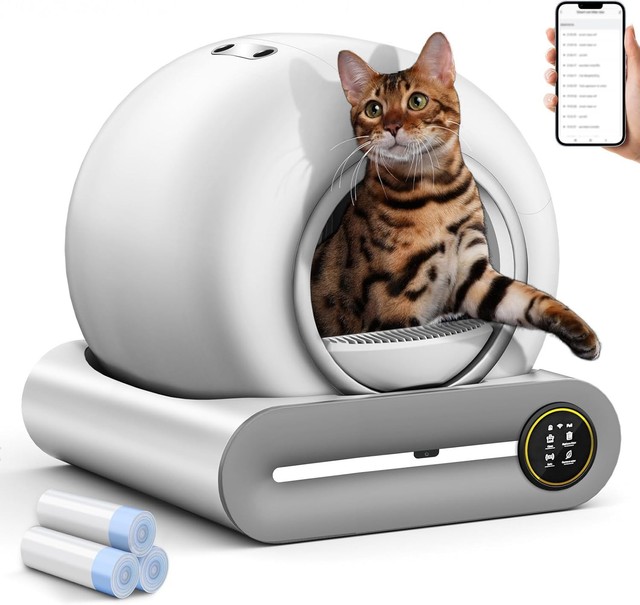
Unbranded Marketplace Automatic Box (be careful here)
Named because this is where the safety complaints cluster. Low-cost automatic boxes sold under rotating brand names through marketplaces have drawn sustained warnings from owners about sensors failing to detect a cat and cycles starting or doors closing at the wrong moment. The mechanism is the same idea as the premium boxes; the sensing and the testing behind it are not. This is not the category to economise in.
- Rotating or raking mechanism
- Weight or infrared sensing of variable quality
- Sold under frequently changing brand names
- Substantially cheaper than established makes
- Much cheaper up front
- Sustained owner warnings about sensor failures on several brands
- Support and spare parts often vanish with the brand name
- No meaningful safety track record to check
Buying tips
- Understand what you are giving up: the daily look in the tray is how many urinary problems get caught, and in male cats a blockage becomes life-threatening within a day or two.
- Buy a box that tracks weight and visit frequency, and actually read the app — or keep one ordinary tray alongside so you can still see what your cat produced.
- Treat brand track record as a safety specification here. The sustained complaints in this category cluster around cheap marketplace brands with poor sensing, not around the established makers.
- Check the manufacturer’s minimum cat weight, usually around 5 lb. Sensors are weight-triggered and a kitten or a very small cat may not register at all.
- Transition over weeks, not days. Leave the old box in place, run the new one with cleaning switched off at first, and keep the same litter — most failures in this category are transition failures.
- Use the clumping clay the manufacturer specifies. The mechanism needs a firm clump to move, and crystal, paper or wood pellets will jam several of these designs.
- Work out the running cost before the purchase price. These use more litter than a manual box and several need proprietary trays, bags or cleaning cartridges.
- Remember one box per cat plus one still applies. An expensive automatic box does not repeal the guideline, and a queue at the only box is a common cause of going elsewhere.
As an Amazon Associate and eBay Partner, toptenpick.com earns from qualifying purchases. Prices and availability are subject to change.