

As an Amazon Associate and eBay Partner, toptenpick.com earns from qualifying purchases. Prices and availability are subject to change.
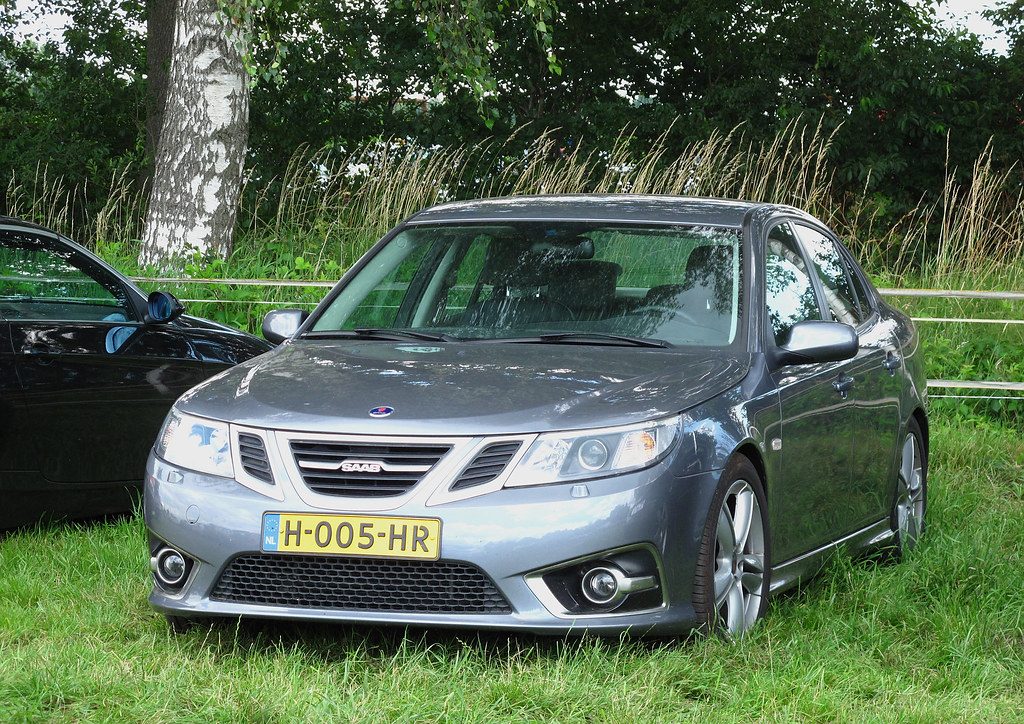
“Saab 9-3” is the name of two unrelated cars, and that is where most of the money gets wasted. The 1998–2002 car is the original 9-3: a Saab-designed hatchback descended from the 900, running the B205 or B235 four-cylinder under a Trionic 7 engine management system. The 2003–2011 car — the Sport Sedan, Combi and convertible — is a General Motors Epsilon-platform saloon with a different body, different suspension, the GM-derived B207 engine and Trionic 8. They share a badge and a rough silhouette and almost nothing else. Tuning software does not cross over. Intercoolers, downpipes, springs, bushings and intake parts do not cross over. A listing that says “fits Saab 9-3” without a year range is not telling you anything, and generic sellers publish those constantly.
Establish which car you have first, then which engine — the 2.0t and the 2.0T are different states of tune of the same block, the Aero’s B207R is the highest of them, and the 2.8 V6 in the later Aero and Turbo X is a different engine again with its own weaknesses.
The second thing to accept is that the cheapest big gain comes with a bill attached. On a turbocharged Saab a Stage 1 remap is dramatic value: the B207L goes from around 175 bhp to roughly 220, the Aero’s B207R from about 210 to around 250, on stock hardware and in an afternoon. What the advertisement does not say is that the manual gearbox’s clutch is the next component in line, and it is generally the first thing to complain about the extra torque. Budget the remap and the clutch together or expect to do the job twice. Automatic cars have their own torque ceiling in the transmission software and tuners handle them differently for exactly that reason.
Third: Saab has been dead since 2011, and parts supply is now a real design constraint on your build. Genuine parts still flow through Orio, the former Saab Automobile Parts, and the specialist aftermarket — Maptun, BSR, Hirsch, Abbott Racing, do88, Nordic — is unusually good for a dead marque. But it is a specialist aftermarket. Several of the best upgrades below are not things you will find on a general marketplace, and a suspiciously cheap generic equivalent for a car with this production volume deserves scepticism.
One sequencing note before the list. On a twenty-year-old turbocharged car, the maintenance items are the upgrades. A car with a tired ignition system, a leaking charge pipe and worn control arm bushings will not deliver a remap’s gains, and may not survive them.
| # | Product | Price | Where to buy |
|---|---|---|---|
| 1 | Stage 1 ECU remap (Maptun, BSR, Hirsch or Abbott) | $400–$800 | Amazon · eBay |
| 2 | do88 Intercooler Kit | $450–$800 | Amazon · eBay |
| 3 | Bilstein B8 Shock Absorbers | $350–$700 | Amazon · eBay |
| 4 | Eibach Pro-Kit Lowering Springs | $250–$400 | Amazon · eBay |
| 5 | Powerflex Polyurethane Bushing Kit (front lower control arm) | $80–$220 | Amazon · eBay |
| 6 | Genuine Ignition Coils and NGK Iridium Spark Plugs | $120–$400 | Amazon · eBay |
| 7 | 3-inch Turbo-Back Exhaust and Downpipe | $400–$1,100 | Amazon |
| 8 | do88 Silicone Hose and Charge Pipe Kit | $60–$250 | Amazon · eBay |
| 9 | Uprated Brake Discs and Pads (Zimmermann, Brembo or EBC) | $180–$450 | Amazon · eBay |
| 10 | Abbott Racing Front Strut Brace | $150–$300 | Amazon · eBay |
The picks, in detail

Stage 1 ECU remap (Maptun, BSR, Hirsch or Abbott)
Nothing else on this list comes close on power per pound. Saab’s Trionic management left substantial headroom on every turbocharged 9-3, and a reputable Stage 1 file raises boost and adjusts fuelling and timing within the standard hardware’s limits. Expect roughly 220 bhp from a 2.0t and around 250 from an Aero. Buy from an established Saab tuner rather than a generic remapping service — Trionic is unusual and generic files have a poor record on these cars.
- Software-only, stock hardware retained
- Trionic 7 or Trionic 8 depending on model year
- Typically 40–50 bhp and a large torque increase
- Reversible to the original file
- By far the biggest single gain for the money
- No mechanical work, done in an afternoon
- Reputable tuners provide a stock file to revert to
- Clutch on a manual is usually the next thing to fail
- Bought from a tuner, not from a marketplace
- Voids any remaining warranty and some insurers require disclosure

do88 Intercooler Kit
The single best hardware upgrade for a tuned 9-3, and the one that converts a remap from a short burst of enthusiasm into repeatable performance. The factory intercooler is small and heat-soaks quickly; the do88 replacement carries a large increase in core volume and flow, so intake temperatures stay down on a second and third run. Sold in model-specific kits — buy the one for your exact generation and engine, not a universal core.
- Direct-fit replacement for the factory unit
- Large increase in core volume over stock
- Model-specific kits for 9-3 generations
- Silicone hose and clamp kits available
- Keeps intake temperatures down under repeated load
- Directly enables higher tuning stages
- Bolt-in rather than fabricated
- Expensive, and shipping from Sweden is not trivial
- Requires front bumper removal to fit
- Gains are invisible on a single cold pull, which frustrates buyers

Bilstein B8 Shock Absorbers
A twenty-year-old Saab almost certainly has dead dampers, and replacing them changes the car more than any power modification. The B8 is the shorter-bodied, firmer-valved unit designed to be paired with lowering springs, so it is the right choice if you are also fitting a spring kit and the wrong one if you are staying at standard ride height, where the B6 or B4 is correct.
- Monotube gas pressure design
- Valved for use with lowering springs
- Model and generation specific part numbers
- Bilstein warranty
- Transforms body control on a tired car
- Proper monotube construction at a sane price
- Widely available with clear part numbers
- Firm — genuinely firm — on poor surfaces
- Wrong choice if you are keeping standard springs
- Fitting requires spring compressors at the front
Eibach Pro-Kit Lowering Springs
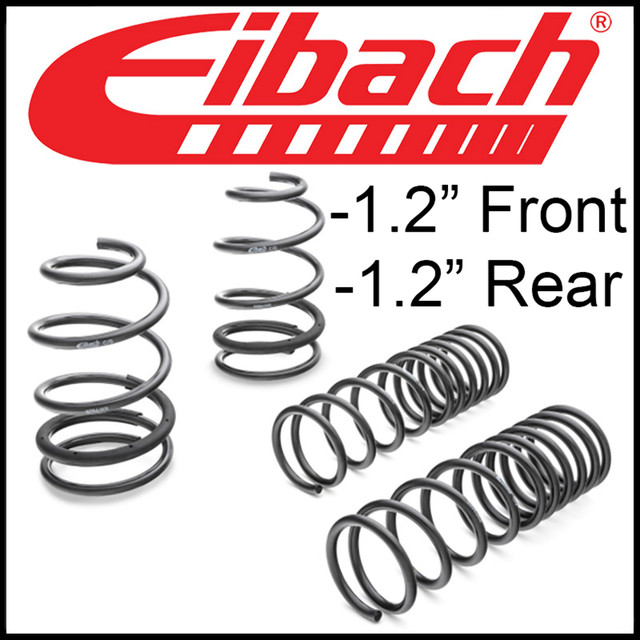
A modest drop of roughly an inch with progressive rates, which is the sensible version of this modification: enough to remove the factory wheel gap and reduce roll, not so much that you are riding on the bump stops and destroying the new dampers. Pair with B8 dampers. A deeper sport kit on a car with this suspension geometry costs more in ride quality than it returns in handling.
- Around 25–30 mm drop front and rear
- Progressive spring rates
- Retains standard damper travel when paired correctly
- Application-specific part numbers
- Noticeably flatter cornering without wrecking the ride
- Closes the factory arch gap
- Long-established, consistent quality
- Must be paired with correct dampers or both wear fast
- Alignment required afterwards, which is an extra cost
- Any drop worsens an already limited front approach angle

Powerflex Polyurethane Bushing Kit (front lower control arm)
The clunk over bumps that nearly every high-mileage 9-3 develops is usually a worn front lower control arm bush, and once the rubber has gone the arm starts hammering its own bracket. Polyurethane replacements outlast the rubber originals by a wide margin and sharpen turn-in as a side effect. Fitting is the hard part — the bushes are pressed in, so factor in a press or a shop.
- Polyurethane replacement for factory rubber bushes
- Available in road and race hardness grades
- Sold as front lower arm kits and full-car kits
- Lifetime warranty from Powerflex
- Cures the classic 9-3 suspension clunk
- Much longer life than the rubber originals
- Sharper steering response
- Transmits more road noise into the cabin
- Pressing old bushes out is genuinely difficult at home
- Race-grade compounds are too harsh for a road car

Genuine Ignition Coils and NGK Iridium Spark Plugs
Boring, and the thing most likely to be limiting your car right now. A turbocharged engine under higher cylinder pressure demands more of the ignition system, and a 9-3 running tired coils and worn plugs will misfire under boost the moment it is remapped. Fit the correct heat range and gap for your engine, and use genuine or Denso and NGK parts — cheap aftermarket coils on these engines have a bad reputation for repeat failure.
- Direct replacement coils for B207 and earlier ignition systems
- NGK or Denso iridium plugs in the correct heat range
- Correct pre-gapped specification per engine
- Sold individually or as full sets
- Cures misfires that look like expensive faults
- Cheap relative to what it prevents
- Straightforward home job on most variants
- Cheap aftermarket coils frequently fail again within a year
- Getting the heat range wrong causes new problems
- Not an upgrade you can feel unless the old parts were failing
3-inch Turbo-Back Exhaust and Downpipe
On a turbocharged engine the restriction that matters most is immediately after the turbine, and the factory downpipe with its catalyst is where the flow is lost. A larger-bore downpipe is what unlocks the higher tuning stages; a cat-back section alone on a stock downpipe changes the noise far more than the numbers. Check your local emissions rules before ordering anything decatted — in many jurisdictions it is not road legal.
- 3 inch bore downpipe and exhaust sections
- Stainless construction from specialist suppliers
- Sport cat and decat variants available
- Required for higher tuning stages
- Enables Stage 2 and beyond
- Reduces exhaust gas temperatures under sustained boost
- Better turbo spool response
- Decat versions are illegal for road use in many places
- Drone at motorway speed is a real complaint
- Rusted factory fasteners make fitting a long job

do88 Silicone Hose and Charge Pipe Kit
The rubber charge pipes and bypass hoses on these cars are twenty years old, and they soften, split and blow off under raised boost. That failure feels exactly like a major fault — sudden loss of power and a limp mode — and is one of the most common post-remap panics. Silicone replacements are cheap insurance and the correct first purchase before tuning, not after.
- Reinforced silicone replacements for factory rubber hoses
- Model-specific bypass valve and charge pipe kits
- Higher temperature and pressure tolerance
- Several colours, various kit sizes
- Prevents the most common post-tune failure
- Inexpensive compared with what it prevents
- Easy home fitting on most of the hoses
- Fixes a weakness rather than adding performance
- Some hoses sit in awkward, hot locations
- Cheap generic silicone kits fit poorly

Uprated Brake Discs and Pads (Zimmermann, Brembo or EBC)
A remapped 9-3 reaches speeds the standard brakes were specified for at a lower power output, and Saab’s front discs were never generous. Grooved or drilled discs with a fast-road pad compound recover the margin without moving to a big brake kit. Match the pad compound to how you actually drive — a track pad on a commuter car is noisy, dusty and worse when cold.
- Direct-fit discs in standard dimensions
- Fast road and sport pad compounds
- Grooved, drilled or plain faces
- Front and rear sets available
- Restores braking margin after a power increase
- Direct fit, no caliper changes
- Far cheaper than a big brake kit
- Performance pads are dustier and noisier cold
- Drilled discs can crack under heavy track use
- No benefit at all if the fluid and hoses are old
Abbott Racing Front Strut Brace
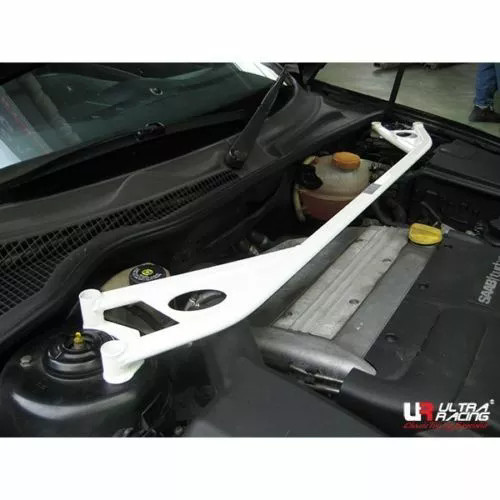
A tidy, reversible chassis modification that ties the front strut towers together and reduces flex under cornering load. On a convertible, where the structure has no roof to help it, the difference is meaningful; on a saloon it is subtler and mostly shows up as steering that stays consistent through a long bend. Straightforward to fit and equally straightforward to remove.
- Bolts to both front strut towers
- Model-specific fitment
- Powder-coated finish
- No permanent modification required
- Most noticeable on convertibles, which need it most
- Easy bolt-on and fully reversible
- Tidies up steering consistency mid-corner
- Marginal on a saloon with a sound shell
- Can foul aftermarket intake or strut top options
- Specialist supplier rather than general availability
Buying tips
- Establish which 9-3 you own before buying anything. The 1998–2002 car is Saab-designed with Trionic 7; the 2003–2011 Sport Sedan is a GM Epsilon platform with Trionic 8, and parts and software do not cross between them.
- Budget the clutch alongside a Stage 1 remap on a manual car. The standard clutch is generally the first component to give up under the extra torque, and doing it afterwards means paying for the gearbox to come out twice.
- Fix the charge pipes and ignition system before tuning, not after. Split hoses and tired coils produce dramatic-feeling faults under raised boost and are the two most common post-remap panics.
- On the 2.0 B207, ask about the balance shaft chain, not the main timing chain. The main chain is reasonably robust; the plastic guides on the balance shaft chain are the known failure and the rattle they make is the warning.
- Treat the 2.8 V6 as a different car. It has its own timing chain reputation and its own tuning limits, and advice written for the four-cylinder does not transfer.
- Chase the clunk before chasing power. A worn front lower control arm bush is near-universal on high-mileage cars and it will ruin new dampers and new springs if you fit them over the top of it.
- Buy from the Saab specialists. Maptun, BSR, Hirsch, Abbott and do88 exist because the marque died with an enthusiastic owner base — generic marketplace parts for a car with this production volume are frequently mislisted.
- Check emissions law before ordering a decat downpipe. It is the component that unlocks higher tuning stages and in many jurisdictions it also makes the car fail its next test.
As an Amazon Associate and eBay Partner, toptenpick.com earns from qualifying purchases. Prices and availability are subject to change.