

As an Amazon Associate and eBay Partner, toptenpick.com earns from qualifying purchases. Prices and availability are subject to change.
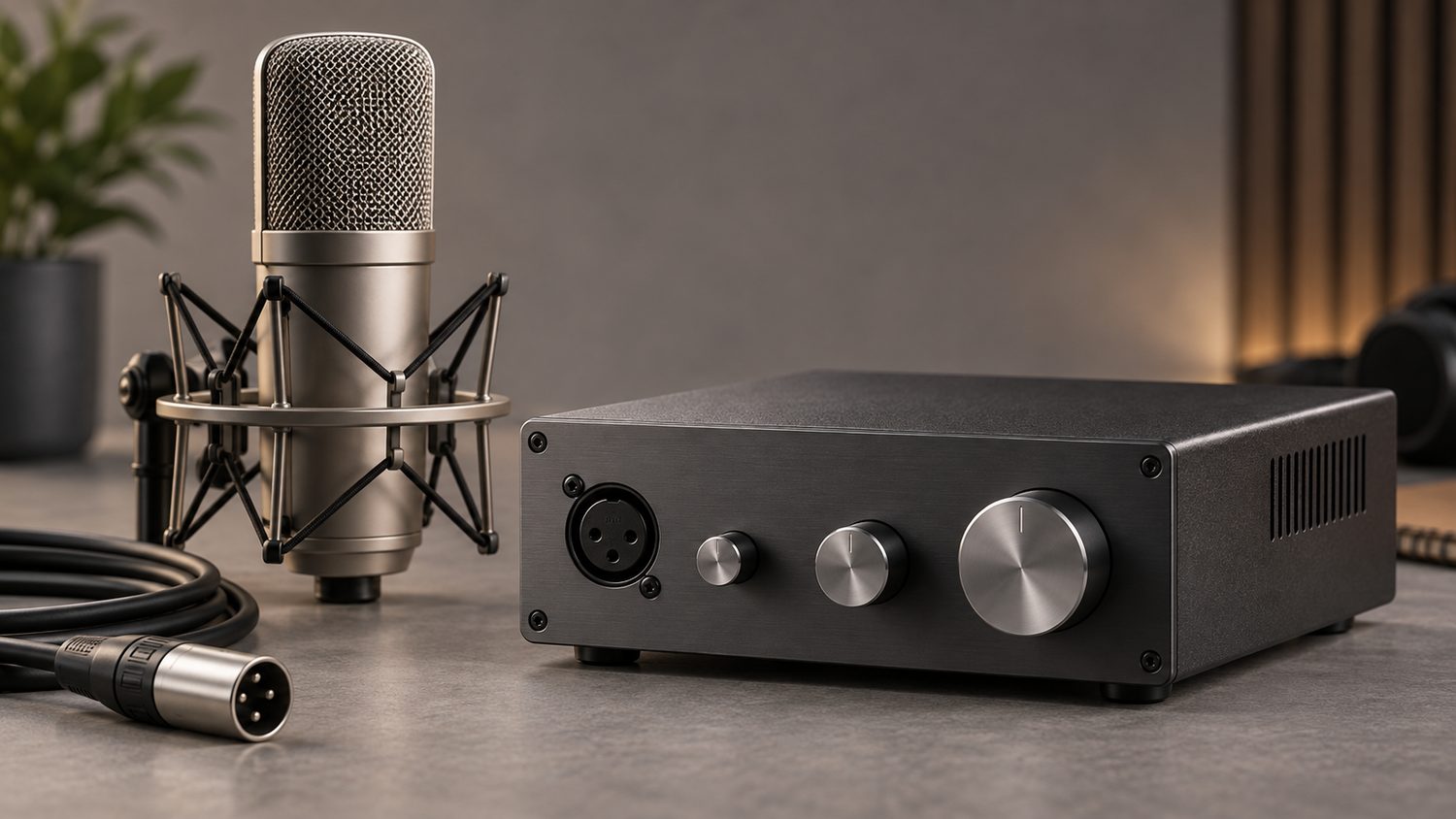
The Rode NT1 has a self-noise rating under 5dBA and a healthy output level, which is the whole reason it built its reputation as an affordable studio condenser — unlike a ribbon mic or a Shure SM7B, it does not need 60–80dB of clean gain just to get above the noise floor. That means the product on this list you’d expect to lead with, an inline gain booster like a Cloudlifter, is actually the one to be skeptical of. Buying one to “fix” the NT1’s sound solves a problem this mic doesn’t have.
What buyers are usually chasing when they go preamp-shopping for the NT1 is something else: its bright, detailed top end, which on some voices and in some rooms reads as a little forward or sibilant. That’s a voicing question, not a specification one — the fix isn’t more gain, it’s whether the preamp itself leans clean and transparent or adds some gentle harmonic darkening on the way in.
The clean camp is well covered by modern audio interfaces. Focusrite’s Scarlett line, Audient’s iD4 MkII and SSL’s 2+ all measure quiet and transparent, which is a legitimate choice if you’d rather shape tone afterward in software than commit to a color at the mic stage. One caution specific to this mic: skip built-in “Air” or presence-boost switches when tracking the NT1, since they add exactly the high-frequency lift it already has plenty of.
The colored camp — Neve 1073-style boxes like the Golden Age Pre73 Jr MKII and Warm Audio WA73, or a switchable tube preamp like the ART Pro MPA III — does something genuinely useful here: their low-mid emphasis and gentle top-end rolloff can counterbalance the NT1’s crispness in a way that EQ after the fact doesn’t quite replicate. If sibilance specifically, not just general brightness, is the complaint, a processor with a built-in de-esser like the dbx 286s addresses that more directly than any preamp voicing choice.
Phantom power quality is the other real checkbox, and it matters more than most buyers expect. A cheap or unstable 48V supply is a more common source of audible noise on this mic than the preamp’s own circuitry — every option below supplies clean, stable phantom power, so that part of the decision is already handled. Where you spend the money is on voicing, not volts.
| # | Product | Price | Where to buy |
|---|---|---|---|
| 1 | Focusrite Scarlett Solo (4th Gen) | $120–$170 | Amazon · eBay |
| 2 | Focusrite Scarlett 2i2 (4th Gen) | $200–$230 | Amazon · eBay |
| 3 | Audient iD4 MkII | $180–$220 | Amazon · eBay |
| 4 | SSL 2+ | $230–$280 | Amazon · eBay |
| 5 | Universal Audio Volt 276 | $280–$320 | Amazon · eBay |
| 6 | Golden Age Project Pre73 Jr MKII | $220–$250 | Amazon · eBay |
| 7 | ART Pro MPA III | $480–$520 | Amazon · eBay |
| 8 | Warm Audio WA73 | $550–$600 | Amazon · eBay |
| 9 | dbx 286s | $160–$200 | Amazon · eBay |
| 10 | Cloudlifter CL-1 | $100–$130 | Amazon · eBay |
The picks, in detail
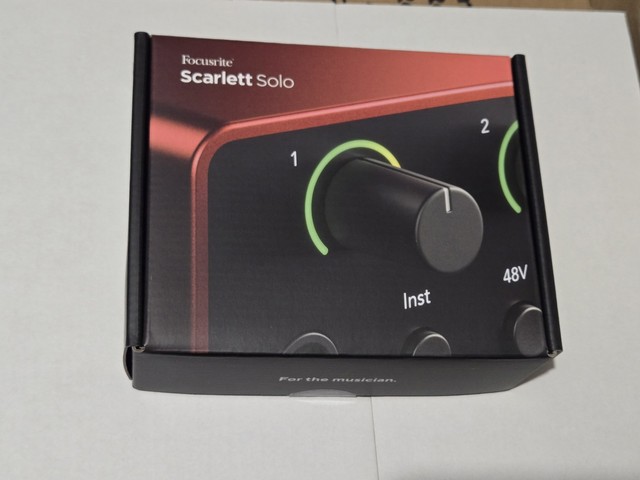
Focusrite Scarlett Solo (4th Gen)
The default clean option, and a sensible one: a 69dB gain range gives far more clean gain than the NT1’s hot output ever needs, so headroom is never the issue. It doesn’t add color of its own, which means whatever brightness the NT1 has arrives unchanged — fine if you plan to EQ later, less fine if you were hoping the preamp would soften it for you.
- 69dB of clean gain range
- 24-bit/192kHz USB-C interface
- Switchable Air mode with Presence control
- Single mic/line/instrument combo input
- Far more clean gain than the NT1 needs, so noise is never a factor
- Simple one-knob operation and broad driver support
- Cheapest way onto this list
- Adds no coloration, so a bright vocal stays bright unless you EQ it
- Air mode boosts high end — leave it off with this mic
- Only one mic input

Focusrite Scarlett 2i2 (4th Gen)
The two-input version of the Solo, for anyone tracking the NT1 alongside a second mic or a DI’d instrument. Same 69dB clean gain range and the same caution on Air mode. Standalone mode lets the interface run mic-to-headphones without a computer connected, which is handy for quick voice-memo style takes.
- Two mic preamps, 69dB gain range each
- 24-bit/192kHz, USB-C, standalone operation mode
- Switchable Air mode with Presence control
- Individual gain halos for quick level checks
- Two clean, quiet channels for the price of most single-channel boxes
- Standalone mode works without a computer
- Same trusted clean character as the Solo
- Same Air-mode caution applies — it works against this mic’s top end
- No onboard coloration if you later decide you want warmth
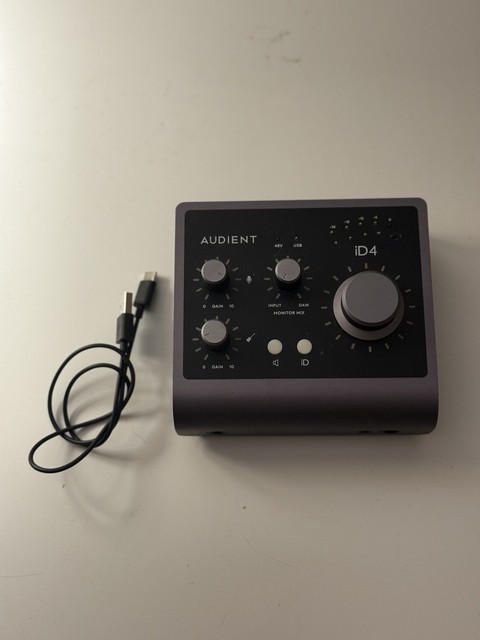
Audient iD4 MkII
Built around Audient’s own Class A 8024 console preamp circuit, and it measures genuinely transparent — 121dB of dynamic range and 58dB of mic gain, with nothing added on top of what the NT1 already gives you. The honest pick if you want a preamp that simply gets out of the way and lets you make the voicing decision later, in the mix.
- Class A 8024 console-derived mic preamp, 58dB gain
- 121dB A-D dynamic range
- JFET instrument input, 24-bit/96kHz
- Single mic/line combo input
- Genuinely transparent — doesn’t stack its own coloration on the NT1’s
- Console-grade preamp circuit at a home-studio price
- Simple, uncluttered 2-in/2-out layout
- Only one mic input
- No onboard color or processing if you want warmth later

SSL 2+
Solid State Logic’s own preamp circuit in a compact interface, with a 62dB gain range and a quoted noise floor around −130dB EIN — among the quietest preamps on this list. Each of the two inputs gets its own phantom power switch rather than one global toggle, and there are two headphone outputs, which is useful if you’re tracking the NT1 with a singer in the room.
- 62dB gain range, dual mic preamps with independent phantom switches
- Very low preamp noise floor (−130dB EIN quoted)
- Dual headphone outputs, MIDI I/O
- 24-bit/192kHz USB-C
- Extremely quiet, clean gain — nothing added to color the NT1’s sound
- Independent phantom switching per channel
- Two headphone outs useful for tracking with another person
- No onboard warmth or color circuit
- MIDI I/O is unused weight if you don’t need it

Universal Audio Volt 276
The one interface here that can actively warm the signal at the source: its Vintage Mic Preamp mode is modeled on UA’s own 610 tube preamp and adds tube-style saturation on the way in, which is a direct answer to a bright vocal. A built-in 1176-style compressor with three presets is a useful extra for controlling dynamic takes without outboard gear.
- Two mic preamps with switchable Vintage Mic Preamp (610-style) mode
- Built-in 76-style compressor, three presets
- 24-bit/192kHz, USB-C
- Vintage mode genuinely warms and softens a bright source at tracking time
- Onboard compressor is handy for vocal takes with uneven dynamics
- Solid build for the price tier
- Costlier than a base Scarlett or SSL 2
- Some engineers prefer to add saturation later in the mix rather than commit at tracking

Golden Age Project Pre73 Jr MKII
A budget entry into the Neve 1073 circuit family — discrete Class A electronics, transformer balanced in and out, with the thick, sweet low-mid emphasis that circuit is known for. That coloration is exactly the kind of counterweight that flatters the NT1’s crisp top end, and at 20–70dB of gain there’s plenty of headroom to spare.
- Discrete Class A 1073-style circuit, transformer balanced I/O
- 20–70dB gain range
- Switchable Air EQ boost and two-position high-pass filter
- Front-panel instrument DI, insert jack
- Real 1073-style low-mid warmth that counterbalances the NT1’s brightness
- Standalone box works into any interface’s line input
- Well regarded as the budget entry point into this circuit family
- Single channel only
- The Air EQ boost adds top end — leave it off if brightness is the problem you’re solving

ART Pro MPA III
A switchable tube/solid-state preamp — flip between a 12AT7 tube path for warmth and a clean FET solid-state path from the same box, which makes it an easy way to A/B how much coloration you actually want on the NT1 before committing. A separate Character switch shapes low/high response further, and it’s two channels for less than most single-channel boutique clones.
- 70dB gain across 2 channels, switchable 12AT7 tube or solid-state path
- Variable input impedance (150Ω–3kΩ)
- Character switch for additional tone shaping
- 48V phantom, 20dB pad, phase invert
- Switchable tube/solid-state lets you A/B warmth against clean in real time
- Two full channels for less than a single-channel 1073 clone
- Variable impedance is a real tone-shaping control, not a gimmick
- Not as tightly toleranced or polished-sounding as the boutique 1073-style options
- More knobs and switches to learn before dialing in a sound you like

Warm Audio WA73
A closer, hand-wired recreation of the original Neve 1073 circuit than the budget clones, built with UK Carnhill transformers and stepped gain switches for repeatable settings. The transformer coloration is exactly the gentle darkening that flatters a bright condenser like the NT1, and at 80dB of gain it has headroom to spare.
- Fully discrete Class A British 1073-style circuit
- UK Carnhill transformers, 80dB gain
- 4-position selectable high-pass filter (50/80/160/300Hz)
- Stepped gain control for repeatable settings
- Closer to the original Neve circuit than most budget clones
- Hand-wired stepped gain gives repeatable, recallable settings
- Transformer coloration is a genuine match for softening this mic’s top end
- Significant price jump over interface-based preamps
- Single channel — buying a stereo pair doubles the cost
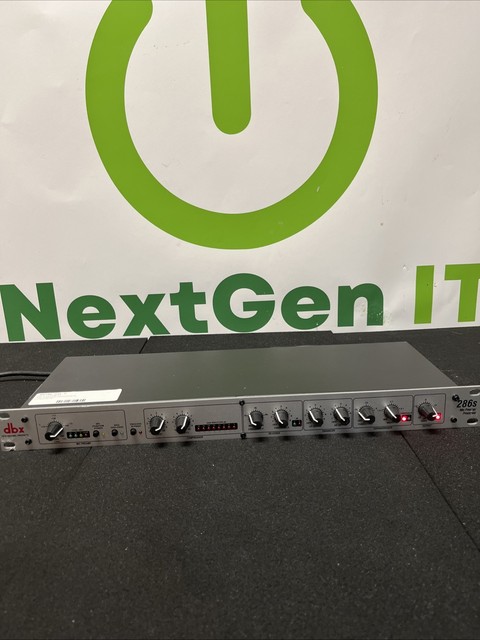
dbx 286s
Not just a preamp — a channel strip with a dedicated de-esser stage, which is the single most direct tool for the specific complaint people have about the NT1: sibilant “s” and “t” sounds riding on that bright top end. The compressor, expander/gate and enhancer can all be bypassed if you just want the clean 60dB preamp underneath.
- 60dB mic preamp gain, 48V phantom, 80Hz high-pass filter
- Dedicated de-esser stage
- OverEasy compressor and enhancer/expander sections
- XLR mic input, line input/output, insert point
- The de-esser directly solves sibilance, the most specific complaint about this mic
- Doubles as a straightforward clean preamp with everything else bypassed
- One box replaces several pieces of outboard gear
- Pushed hard, the compressor/enhancer combination can sound processed rather than transparent
- Single channel only

Cloudlifter CL-1
Included for honesty, not because the NT1 needs it: this is a clean +25dB inline gain booster built for low-output mics like ribbons and the SM7B, and the NT1 is neither. It’s worth owning only if you’re running the NT1 into a budget mixer or interface preamp that runs out of clean gain before your levels are healthy — it adds no tone shaping of its own, so it won’t touch the brightness issue at all.
- +25dB of clean inline gain
- Passive-topology discrete JFET circuit, no added coloration
- Powered by phantom power from your preamp
- Steel enclosure, stand or rack mountable
- Genuinely transparent — adds gain without adding noise or color
- Useful insurance if your actual preamp is a weak or budget one
- Works with whatever preamp voicing you’ve already chosen
- Does nothing for the NT1’s brightness — it has no tone control at all
- An unnecessary purchase for most NT1-plus-interface setups
Buying tips
- Set your gain by ear on the loudest word of the performance, not the quiet ones — the NT1’s healthy output means you’ll clip well before you run out of clean gain.
- Skip built-in “Air” or presence-boost circuits when tracking with the NT1; they add high-frequency lift this mic already has plenty of.
- If the actual complaint is sibilance rather than general brightness, reach for a de-esser (like the one built into the dbx 286s) instead of swapping preamps entirely.
- Position the mic slightly off-axis from directly in front of the mouth to tame the top end acoustically before it ever reaches the preamp — free, and often more effective than gear.
- Don’t buy a Cloudlifter or similar inline booster to “fix” the NT1’s sound; it only adds clean gain, and this mic doesn’t lack gain.
- If you’re considering a colored or tube preamp, record a few seconds dry and compare it against the mic going straight into a clean interface before committing — some “warmth” is just added noise.
- Use a pop filter and a stable, decoupled mic stand; on this mic, those two things affect recording quality more than which preamp you buy.
- Check that your interface or preamp supplies a clean, stable 48V phantom power — a cheap phantom supply is a more common noise source on the NT1 than the preamp circuit itself.
As an Amazon Associate and eBay Partner, toptenpick.com earns from qualifying purchases. Prices and availability are subject to change.