

As an Amazon Associate and eBay Partner, toptenpick.com earns from qualifying purchases. Prices and availability are subject to change.
Before the list, the constraint that decides everything: on a PT-85 the limiting component is the rotary magazine, not the barrel.
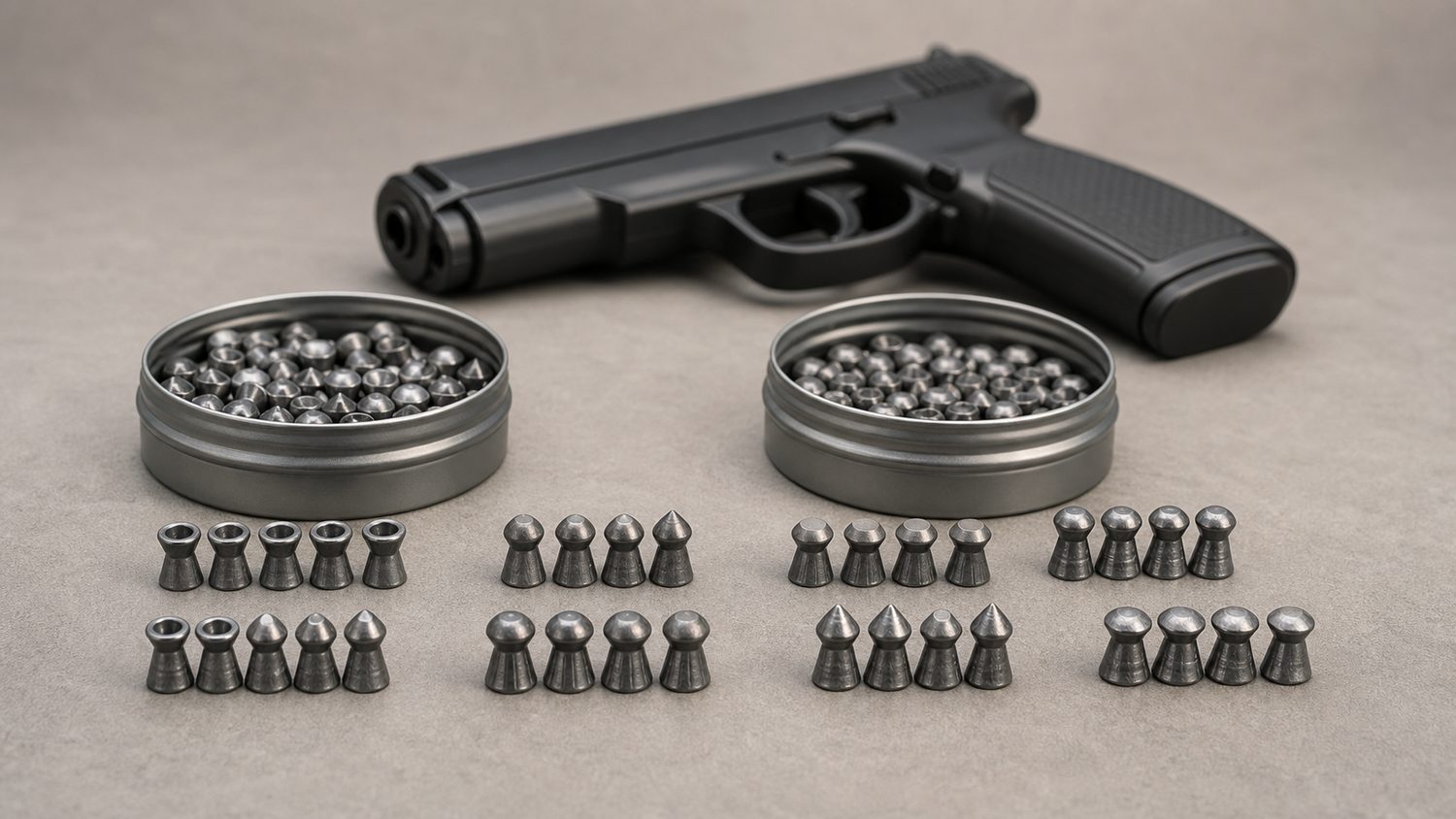
This is a blowback CO2 pistol that feeds from an eight-shot rotary magazine, and the pellet has to fit the chamber and cycle through it. Gamo’s own guidance is to use flat-head or low-domed pellets with standard skirts, and they name specific products not to use — Red Fire, PBA Bullet, Magnum, Master Point, Lethal and TS-10 among them. Long pointed pellets and oversized-skirt designs jam the magazine or damage it, and a damaged rotary magazine costs a meaningful fraction of what the pistol costs.
Weight follows from the same constraint. Around 8.5 grains is the sweet spot; heavier magnum pellets are usually physically too long to seat in the magazine regardless of how well they might shoot. So the entire premium hunting-pellet category is simply not available to you here, and that is fine — see the next point.
Because this is a 450 fps plinking and target pistol, wadcutters are the right answer anyway. Flat-nosed pellets cut clean round holes in paper, which is the whole point at ten yards, and they are the shape the magazine likes. Reports of around two-inch groups at ten yards with ordinary wadcutters are about what this pistol is capable of; if you are not getting that, the pellet is rarely the reason.
One more thing about blowback that catches new owners: it eats gas. Cycling the slide on every shot uses CO2 that a fixed-barrel pistol would put behind the pellet, so you get far fewer shots per 12g cartridge than the spec sheet optimism suggests. Budget for cartridges as a running cost, not an accessory.
Ten picks below, plus the two things worth buying alongside them.
| # | Product | Price | Where to buy |
|---|---|---|---|
| 1 | Gamo Match .177 Wadcutter Pellets | $8–$15 | Amazon · eBay |
| 2 | Gamo Pro Match .177 Pellets | $10–$18 | Amazon · eBay |
| 3 | RWS Geco .177 Wadcutter Pellets | $10–$18 | Amazon · eBay |
| 4 | RWS Meisterkugeln Pistol .177 Pellets | $12–$22 | Amazon · eBay |
| 5 | H&N Finale Match Pistol .177 Pellets | $14–$25 | Amazon |
| 6 | RWS Hobby .177 Pellets | $8–$15 | Amazon · eBay |
| 7 | JSB Match Diabolo .177 Pellets | $10–$20 | Amazon · eBay |
| 8 | H&N Excite Econ II .177 Pellets | $8–$16 | Amazon · eBay |
| 9 | 12g CO2 Cartridges (Bulk Pack) | $18–$40 | Amazon · eBay |
| 10 | Pellet Trap with Paper Targets | $25–$60 | Amazon |
The picks, in detail
Gamo Match .177 Wadcutter Pellets
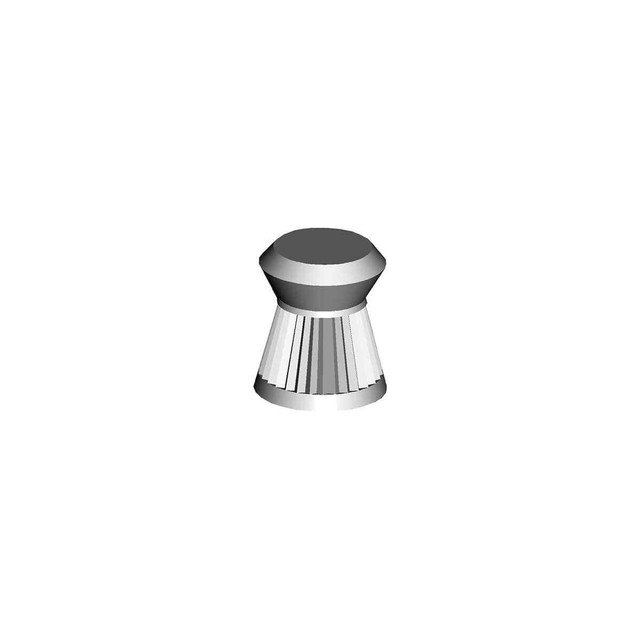
The pellet Gamo themselves name for this pistol, which settles the magazine-compatibility question before you start. A flat-head wadcutter at around 7.5 to 8 grains, cheap in tins of 250 or 500, and entirely adequate for ten-yard paper. The sensible default and the one to benchmark everything else against.
- Flat-head wadcutter, .177
- Around 7.5–8 grains
- Standard skirt — cycles correctly in the rotary magazine
- Named by Gamo as suitable for the PT-85
- Manufacturer-endorsed for this exact pistol
- Cheap and widely available
- Cuts clean holes in paper targets
- Quality control is ordinary — expect some deformed skirts in a tin
- Not a match-grade pellet
- Wadcutters lose accuracy quickly past about 15 yards
Gamo Pro Match .177 Pellets
Gamo’s step up from the standard Match — the same wadcutter shape with tighter manufacturing tolerances and more consistent weight. Worth the small premium if you are shooting groups rather than cans, because consistency between pellets is what group size actually measures at this velocity.
- Flat-head wadcutter, .177
- Tighter weight and dimensional consistency than Gamo Match
- Around 7.5–8 grains
- Standard skirt
- Noticeably more consistent than the standard Match tin
- Still inexpensive
- Same guaranteed magazine fit
- Improvement over standard Match is real but small
- Still not a true match-grade pellet
- Availability varies by retailer
RWS Geco .177 Wadcutter Pellets
Reported to give some of the best results in this pistol specifically, with groups around two inches at ten yards — which is about as well as a PT-85 shoots. RWS manufacturing is a clear step above the budget tins and Geco is their value line, so this is the best accuracy-per-dollar option on the list.
- Flat-head wadcutter, .177
- RWS manufacturing at a value price
- Around 8.2 grains
- Standard skirt
- Reported to perform particularly well in this pistol
- German manufacturing consistency at a modest price
- Good weight for the magazine
- Costs more than the Gamo tins
- Sold in smaller tins than budget brands
- Availability fluctuates
RWS Meisterkugeln Pistol .177 Pellets
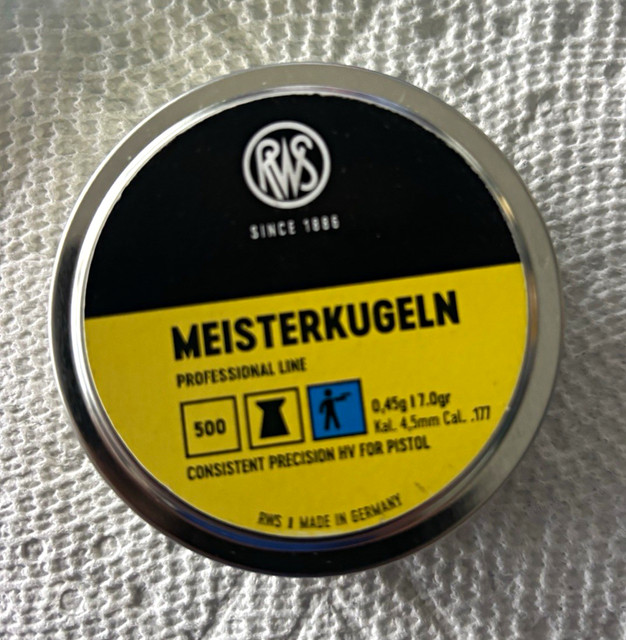
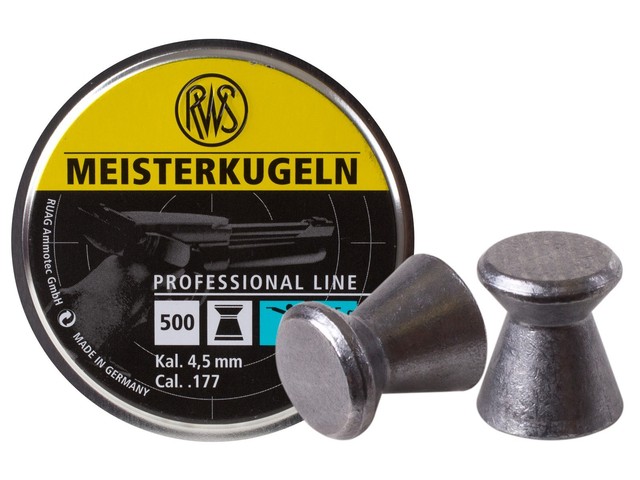
RWS’s dedicated pistol match pellet, weighted specifically for the lower velocities pistols produce rather than being a rifle pellet sold in a smaller tin. At 7 grains it is light, consistent and designed for exactly this application. The best pure target pellet here that the magazine will still feed reliably.
- Wadcutter designed for air pistol velocities
- Around 7 grains — light for lower-powered pistols
- Match-grade consistency
- Standard skirt
- Designed for pistols rather than adapted from a rifle pellet
- Excellent consistency tin to tin
- Light weight suits a 450 fps pistol
- Premium price per pellet
- Overkill for casual plinking
- Soft lead deforms easily if a tin is knocked about
H&N Finale Match Pistol .177 Pellets
The German match pellet most competitive air pistol shooters use, sorted to tight tolerances and priced accordingly. It will not turn a PT-85 into a target pistol — the gun’s mechanical accuracy is the limit — but if you want to know what the pistol is actually capable of before blaming the ammunition, this is the tin that answers the question.
- Match-grade wadcutter for pistol velocities
- Around 7.6 grains
- Tightly sorted for weight and head size
- Used in competitive air pistol
- Removes the pellet as a variable entirely
- Superb consistency
- Ideal weight and shape for the magazine
- The most expensive pellet here by some margin
- Wasted on casual plinking
- You will likely find the pistol, not the pellet, is the limit
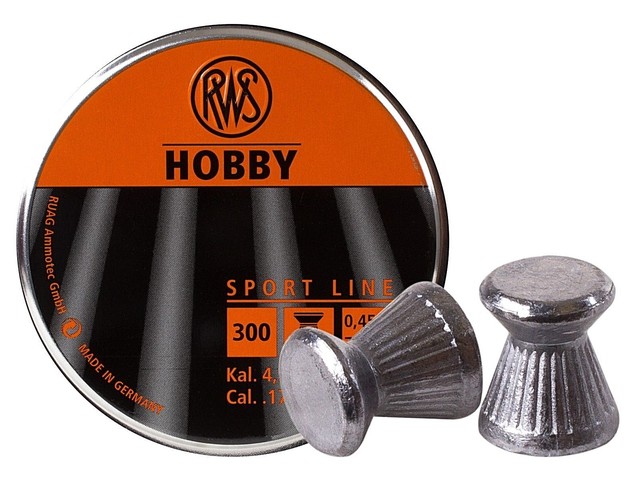
RWS Hobby .177 Pellets
The classic cheap plinking wadcutter — light at around 7 grains, soft lead, honest quality and sold in big tins. This is the pellet to buy in bulk for an afternoon of cans and spinners, keeping the expensive match tins for paper. Light weight also means slightly higher velocity, which flattens the trajectory a little at ten yards.
- Flat-head wadcutter, around 7 grains
- Soft lead, sold in 500-count tins
- Light weight for higher velocity
- Long-established RWS budget line
- Excellent value for high-volume plinking
- RWS consistency at a budget price
- Light weight suits a low-powered pistol
- Soft lead deforms if handled roughly
- Not a match pellet
- Light pellets lose energy quickly past short range
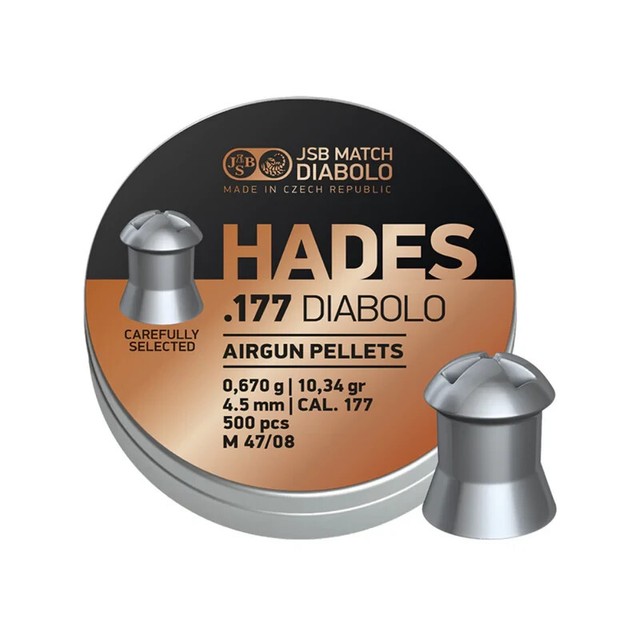
JSB Match Diabolo .177 Pellets
JSB have a strong reputation among airgunners for consistency, and their match wadcutters are a genuine alternative to the German brands at a slightly lower price. Check the weight on the specific tin before ordering — JSB sell a wide range and the heavier Exact lines are domed rifle pellets that will not suit this magazine.
- Wadcutter match pellet, .177
- Strong reputation for tin-to-tin consistency
- Available in pistol-appropriate weights
- Standard skirt
- Excellent consistency for the price
- Widely respected among airgun shooters
- Good middle ground between budget and match tins
- JSB’s range is large — easy to order the wrong line
- The heavier Exact domed pellets are unsuitable here
- Availability varies by retailer
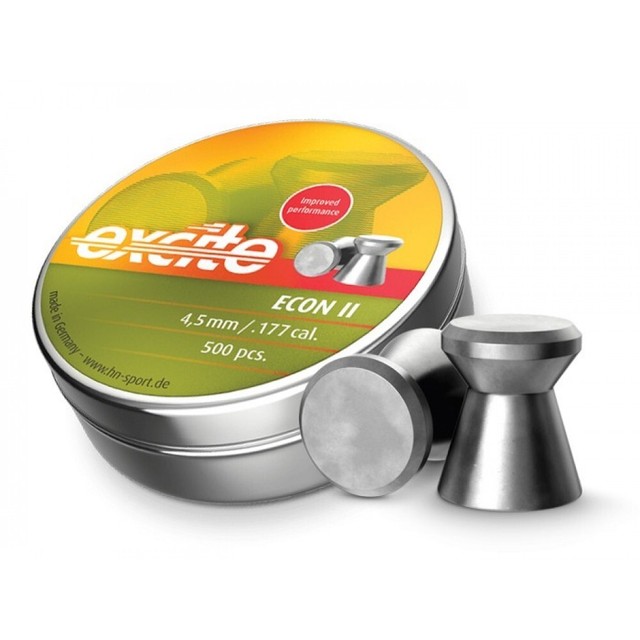
H&N Excite Econ II .177 Pellets
H&N’s budget line, and the sensible bulk option if you want German manufacturing without match pricing. Around 8.2 grains in a low-domed profile that still feeds correctly, which makes it slightly better than a wadcutter past ten yards while staying inside the magazine’s constraints. Good all-rounder for mixed plinking and paper.
- Low-domed profile, around 8.2 grains
- H&N manufacturing at a budget price
- Large-count tins
- Standard skirt
- Better than a wadcutter past ten yards while still feeding correctly
- German consistency at a low price
- Good bulk value
- Domed pellets tear ragged holes in paper rather than clean ones
- Slightly heavier, so marginally lower velocity
- Not a match pellet

12g CO2 Cartridges (Bulk Pack)
The running cost nobody budgets for. Blowback uses gas to cycle the slide on every shot, so a PT-85 gets substantially fewer shots per 12-gram cartridge than a fixed-barrel pistol does, and buying cartridges in fives at a sporting goods counter gets expensive fast. Buy them in boxes of 40 or more, from any brand — they are a commodity.
- Standard 12-gram CO2 cartridges
- Sold in bulk packs of 40 or more
- Universal fit across CO2 airguns
- Commodity product — brand makes little difference
- Bulk pricing is dramatically cheaper per cartridge
- Works with any other CO2 airgun you own
- Long shelf life if stored sealed
- Blowback uses gas quickly — expect fewer shots than advertised
- Performance drops noticeably in cold weather
- Do not store a pierced cartridge in the gun long term
Pellet Trap with Paper Targets
The accessory that makes a pistol like this genuinely usable at home. A steel trap with a rubber or duct-seal backing stops pellets and contains lead fragments, which is both a safety and a tidiness matter, and it turns any wall into a ten-yard range. Buy one rated comfortably above 450 fps so it lasts.
- Steel trap rated well above the PT-85’s 450 fps
- Rubber or duct-seal backing to stop ricochet
- Holds standard paper targets
- Contains spent pellets for disposal
- Makes indoor or garden shooting practical and tidy
- Contains lead rather than scattering it
- Cheap and lasts for years
- Steel traps are noisy
- Backing material needs replacing periodically
- Check your local rules on discharging an airgun where you live
Buying tips
- Use flat-head or low-domed pellets with standard skirts. Gamo specifically name Red Fire, PBA Bullet, Magnum, Master Point, Lethal and TS-10 as pellets not to use in these pistols.
- Stay around 8.5 grains or under. Heavier magnum pellets are usually too long to seat in the rotary magazine regardless of how well they might shoot.
- Wadcutters are the right shape here. Flat noses cut clean holes in paper and they are the profile the magazine feeds most reliably.
- Around two inches at ten yards is roughly what this pistol does. If you are there, the pellet is not your limiting factor.
- Blowback uses gas to cycle the slide, so expect far fewer shots per cartridge than a fixed-barrel pistol. Buy cartridges in bulk.
- Inspect pellets before loading. A deformed skirt is the most common cause of a flyer, and it is visible if you look.
- Do not store the pistol with a pierced cartridge in it for long periods. It keeps the seals under constant pressure.
- Check your local rules before shooting. Air pistol law varies a great deal between countries, states and even cities.
As an Amazon Associate and eBay Partner, toptenpick.com earns from qualifying purchases. Prices and availability are subject to change.