

As an Amazon Associate and eBay Partner, toptenpick.com earns from qualifying purchases. Prices and availability are subject to change.
The certification most people shop for measures the wrong moment. GREENGUARD Gold, the badge that turns up on the safest-looking cans, is awarded after a product sits in a sealed chamber for anything from a day to two weeks while its off-gassing is measured down to a steady rate. That is a test of what a cured product releases into a room afterwards. It is not a test of what you inhale during the fifteen seconds the can is in your hand — and that is the part of using a spray adhesive that actually exposes you. A GREENGUARD-certified aerosol is a real improvement over an uncertified one. It is not a reason to spray indoors with the windows shut.
The second thing worth knowing is that “non-toxic” is not a regulated claim on an aerosol. What is regulated is VOC content, and that is where the meaningful differences sit. Solvent-based sprays carry the adhesive in hydrocarbons — heptane, hexane, acetone — which is why they grab instantly and why the room smells for an hour. Water-based and low-VOC formulations carry far less of that and behave differently: slower tack, more open time, and in some cases a weaker permanent bond. You are trading, not upgrading.
And do not trust old advice about specific cans. California’s CARB and SCAQMD limits forced widespread reformulation of aerosol adhesives sold in the United States, so a can of a familiar product bought today is often not chemically the same as the one someone was complaining about on a forum in 2012. 3M’s own Super 77 and Hi-Strength 90 were reformulated and subsequently GREENGUARD certified. Check the current safety data sheet for the specific product number rather than the brand — the manufacturers publish them free.
One more label that gets blurred in the craft aisle: acid-free is a claim about the paper, not about you. It means the adhesive will not yellow or embrittle what you glue over the years. A product can be perfectly acid-free and still be a solvent aerosol you should not breathe.
The list below splits into three real categories. The temporary fabric sprays — Sulky and Odif — are the genuinely low-odour end, formulated to wash out and to be used across a sewing table. The reformulated industrial sprays are the strong permanent bonds with the VOCs pulled down as far as the chemistry allows. And the craft-aisle repositionables sit in between, convenient and weak. Match the category to the job before you compare cans within it.
| # | Product | Price | Where to buy |
|---|---|---|---|
| 1 | Sulky KK2000 Temporary Spray Adhesive | $16–$26 | Amazon · eBay |
| 2 | Odif 505 Spray and Fix Temporary Adhesive | $14–$28 | Amazon · eBay |
| 3 | 3M Super 77 Multipurpose Spray Adhesive (current low-VOC formulation) | $12–$24 | Amazon · eBay |
| 4 | 3M Foam Fast 74 Spray Adhesive (low-VOC) | $22–$40 | Amazon · eBay |
| 5 | Scotch Spray Mount Artist’s Adhesive | $16–$28 | Amazon |
| 6 | Krylon Easy-Tack Repositionable Adhesive | $12–$20 | Amazon · eBay |
| 7 | Elmer’s CraftBond Multi-Purpose Spray Adhesive | $8–$16 | Amazon · eBay |
| 8 | Aleene’s Tacky Spray Acid-Free Adhesive | $10–$18 | Amazon · eBay |
| 9 | Loctite Repositionable Spray Adhesive | $10–$18 | Amazon · eBay |
| 10 | Gorilla Spray Adhesive | $12–$22 | Amazon · eBay |
The picks, in detail

Sulky KK2000 Temporary Spray Adhesive
The quilters’ and machine-embroiderers’ default, and the one most often named when people ask for a spray they can use at a kitchen table. Sulky describes it as odourless, non-flammable and ozone-friendly, and it is formulated to dissipate rather than build up gum on a needle. It holds fabric layers for basting and then releases; it is not a permanent bond and is not sold as one.
- Temporary repositionable bond
- Formulated to dissipate over time
- Marketed as non-flammable and odourless
- Available in 3.5 oz and 6.35 oz cans
- Genuinely low odour compared with solvent sprays
- Does not gum up embroidery needles
- Washes out of fabric
- Expensive per ounce and the can does not last long
- Temporary only, so useless for permanent mounting
- Loses tack faster than 505 in humid rooms
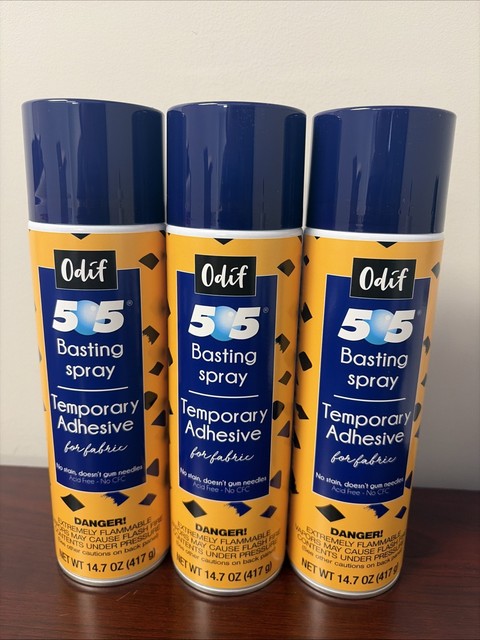
Odif 505 Spray and Fix Temporary Adhesive
The other standard basting spray, and the one most quilters settle on for large quilt sandwiches because a can goes further and the tack lasts longer between pinning and stitching. Colourless, acid-free, and formulated not to gum the needle. Like the Sulky it is a temporary bond that washes out, so treat the two as alternatives to each other rather than to a permanent adhesive.
- Temporary repositionable bond
- Acid-free and colourless
- Sold in several can sizes up to 17 oz
- Made in France by Odif
- Better coverage per can than KK2000
- Tack holds longer during a slow project
- Widely stocked in quilt shops and online
- More noticeable odour than KK2000
- Overspray is stickier and harder to clean off a table
- Still solvent-carried, so ventilate
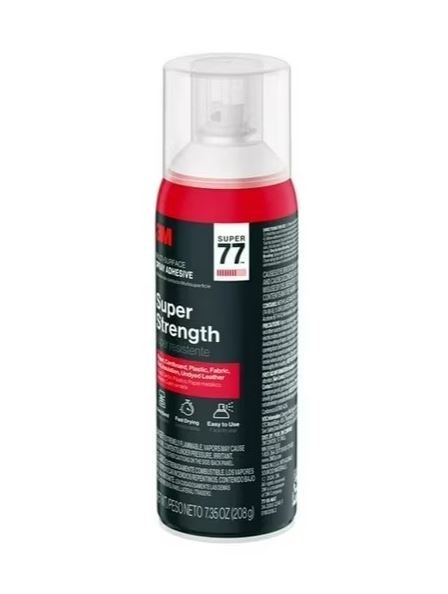
3M Super 77 Multipurpose Spray Adhesive (current low-VOC formulation)
The workshop standard, reformulated and now carrying GREENGUARD certification, which is why it appears on a list like this at all. It remains a fast, aggressive, permanent bond for paper, foam, fabric, felt and light plastics. Nothing on this list matches it for grab. Treat the certification as a reason to prefer it over an uncertified competitor, not as permission to use it in a closed room.
- Permanent multipurpose bond
- Fast tack, wide spray pattern
- GREENGUARD certified in current formulation
- Multiple can sizes including low-VOC variants
- Strongest general-purpose bond here
- Bonds materials the craft sprays will not
- Available everywhere at a sane price
- Still a solvent aerosol with real VOC content
- Almost impossible to reposition once it grabs
- Overspray travels and gets on everything
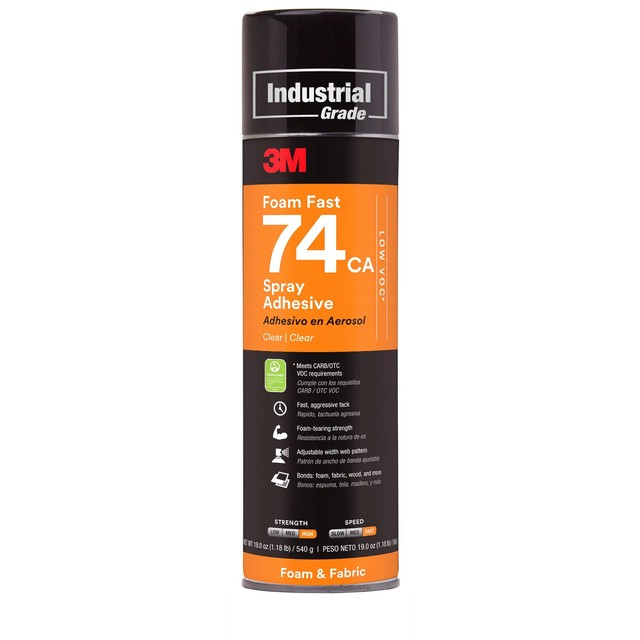
3M Foam Fast 74 Spray Adhesive (low-VOC)
The one to buy when the material is foam, because most general adhesives either fail to hold polystyrene and polyurethane or attack them chemically. The low-VOC version is CARB and SCAQMD compliant, which is a harder and more specific claim than the marketing word non-toxic. Fast tack, high strength, and it stays flexible rather than curing into a brittle line.
- Formulated for foam and fabric bonding
- Low-VOC version rated under 25 percent VOC
- CARB and SCAQMD compliant
- Orange or clear versions depending on product code
- Bonds foam without melting it
- Stays flexible after cure
- Compliance claims are specific and checkable
- Industrial pricing and can sizes
- Coloured versions can show through light fabric
- Serious overspray without a proper work area
Scotch Spray Mount Artist’s Adhesive
3M’s repositionable adhesive aimed at artwork and layout: spray one surface and you can lift and reposition the sheet for a while before it sets. It is the right tool for mounting prints and photographs where a permanent spray would ruin the piece on the first misalignment. Acid-free, which matters here because the whole point is that the artwork survives.
- Repositionable when one surface is coated
- Permanent when both surfaces are coated
- Acid-free, dries clear
- 10.25 oz can
- Repositionable, which saves expensive prints
- Very fine, even spray pattern
- Does not wrinkle thin paper the way wet glue does
- Weak permanent bond by design
- Loses hold on heavy card over time
- Solvent smell despite the artist positioning

Krylon Easy-Tack Repositionable Adhesive
The stencil and template spray. A light coat on the back of a stencil holds it flat against a wall or a canvas, then peels away without residue, and the same can will hold patterns to fabric for cutting. The bond is deliberately weak — this is its job, not a shortcoming — and it stays repositionable through many lifts rather than setting after one.
- Repositionable low-tack bond
- Acid-free formulation
- Stays tacky through repeated lifts
- 11 oz can
- The best of this group for stencils and patterns
- Lifts cleanly off most surfaces
- Cheap and easy to find
- Far too weak for any structural or mounting job
- Can lift paint from a poorly primed wall
- Tack degrades in a dusty workshop

Elmer’s CraftBond Multi-Purpose Spray Adhesive
The craft-aisle default and the cheapest way into a decent acid-free spray. It handles paper, card, photographs, fabric and light foam, and is sold in a temporary and a permanent version, so check which one is in your hand before spraying a scrapbook page. Not as strong as the 3M sprays and not as low-odour as the fabric bastings, but it is the least fussy option for mixed paper craft.
- Acid-free, photo-safe formulation
- Temporary and permanent versions sold separately
- Dries clear without wrinkling paper
- Around 11 oz
- Inexpensive and stocked in every craft shop
- Photo-safe, so it will not yellow prints
- Temporary version is genuinely repositionable
- Easy to buy the wrong version by mistake
- Weaker than 3M on fabric and foam
- Nozzle clogs if the can is not inverted and purged

Aleene’s Tacky Spray Acid-Free Adhesive
The aerosol version of the tacky glue that has been in craft cupboards for decades. It dries clear, is acid-free, and is aimed squarely at scrapbooking, card making and light fabric work. The useful characteristic is a longer open time than the 3M sprays, which means you can lay a sheet down slowly and straighten it instead of committing on contact.
- Acid-free, dries clear
- Longer open time than fast-tack sprays
- Bonds paper, fabric, ribbon and light trims
- Around 10 oz
- Forgiving open time for careful placement
- Safe for archival paper projects
- Very widely available
- Weak on anything heavier than card
- Can stay slightly tacky in humid conditions
- Sprays heavier than an artist adhesive, so mask carefully
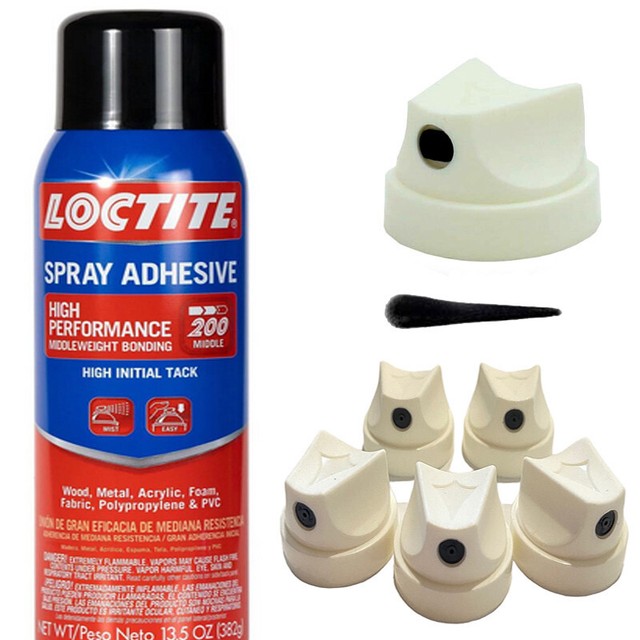
Loctite Repositionable Spray Adhesive
A general-purpose repositionable aerosol that sits between the craft sprays and the industrial ones in strength. It is the sensible pick if you want one can for household jobs — lining drawers, backing posters, holding felt and light fabric — rather than a project-specific adhesive. Acid-free and clear-drying, with a wide adjustable nozzle that helps control overspray.
- Repositionable or permanent depending on coverage
- Adjustable spray nozzle
- Dries clear, acid-free
- Around 10 oz
- Adjustable nozzle genuinely reduces waste
- Useful general-purpose strength
- Easy to find in hardware shops
- Neither the strongest nor the lowest odour option
- Coverage claims are optimistic
- Bond weakens on glossy surfaces
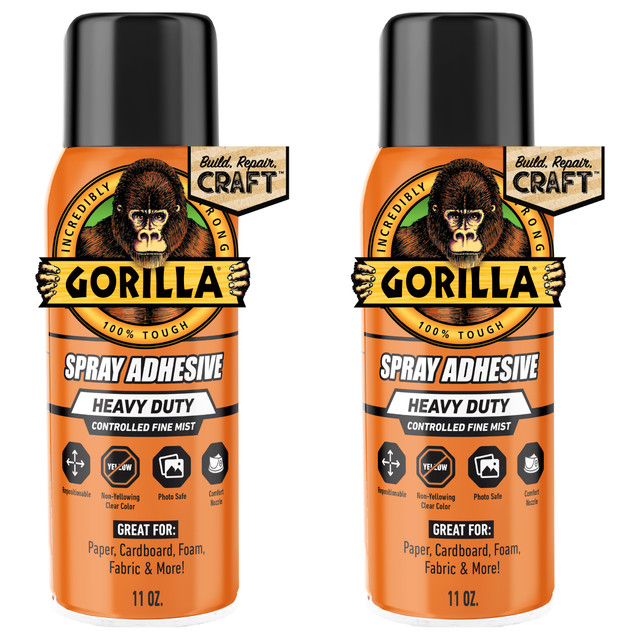
Gorilla Spray Adhesive
The heavy-duty end of the consumer aisle: a permanent, moisture-resistant bond with a controlled fan nozzle, intended for the jobs where a craft spray gives up — upholstery fabric, carpet edges, heavier foam and outdoor repairs. It is a solvent aerosol and makes no low-VOC claim, so it earns its place here only as the honest answer to what to use when the low-odour options are not strong enough.
- Permanent, moisture-resistant bond
- Controlled fan-pattern nozzle
- Clear drying
- Around 14 oz
- Strong enough for upholstery and outdoor work
- Neat spray pattern with little wandering overspray
- Widely stocked
- No low-VOC or GREENGUARD claim — use outdoors
- Permanent, with no repositioning window
- Overkill and wasteful for paper craft
Buying tips
- Read the certification claim, not the word on the front. GREENGUARD measures cured off-gassing in a chamber; it says nothing about what you breathe while spraying, and no aerosol adhesive is safe to use in a closed room.
- Download the safety data sheet for the exact product number before you buy. Manufacturers publish them free, and the VOC figure and solvent list are on them in plain language.
- Do not trust forum advice about a specific can that is more than a few years old. CARB and SCAQMD rules forced reformulations, so several familiar products are chemically different from the versions people are describing.
- Treat acid-free as a claim about the artwork, not about your lungs. It means the adhesive will not yellow the paper — a solvent aerosol can be perfectly acid-free.
- Ask whether you need an aerosol at all. A tape runner, a glue stick, a cold laminator like a Xyron, or a brushed paste does most paper-craft jobs with no airborne solvent whatsoever, and that is the genuinely non-toxic answer.
- Spray the lighter material, not the heavier one, and spray into a box. A cardboard carton on its side catches the overspray that otherwise lands on everything within a metre.
- Check whether the can says temporary or permanent before pressing the nozzle. Several brands sell both under near-identical labels, and the mistake is only discoverable afterwards.
- Invert the can and purge the nozzle for two seconds after every use. A clogged nozzle is the single most common reason a half-full can gets thrown away.
As an Amazon Associate and eBay Partner, toptenpick.com earns from qualifying purchases. Prices and availability are subject to change.