

As an Amazon Associate and eBay Partner, toptenpick.com earns from qualifying purchases. Prices and availability are subject to change.
If your 6.5 stalls, there is one test that should happen before you buy anything, and it takes no tools at all.
Does it stall when hot, and restart once it has cooled down?
If the answer is yes, you are almost certainly looking at the PMD — the pump-mounted driver, also called the FSD, the electronic module that operates the Stanadyne DS4 injection pump. GM mounted it on the side of the injection pump itself, in the valley of a diesel V8, which is about the hottest place available. They cook, and they fail progressively: hesitation first, then hot stalls, then a no-start that clears after twenty minutes at the roadside, then nothing at all. That temperature dependence is the signature. A failing lift pump produces trouble that is far more consistent — it does not care much whether the engine is hot or cold, because it is a mechanical supply problem rather than a thermal one.
This matters because the two get confused constantly, and the wrong diagnosis is expensive in both directions. People replace a perfectly good injection pump because of a twenty-dollar module. Other people replace three PMDs in a row without ever fixing the heat that is killing them.
The good news is that both are cheap to check properly. Fuel pressure at the filter should read roughly 3 to 7 psi at idle; a gauge tee’d into the line settles the lift pump question in minutes. And the PMD fix is well established: move the module off the injection pump to somewhere cool, on a proper finned heat sink — in front of the radiator support or behind the bumper — which is exactly what the relocation kits sold for this engine do.
None of that means a lift pump upgrade is pointless. The factory pump is marginal, it fails, and a healthy supply genuinely protects the DS4, which is a far more expensive part. But do the diagnosis first. The ten picks below cover the pumps, the gauge that tells you whether you need one, and the PMD relocation that a great many 6.5 owners actually need instead.
| # | Product | Price | Where to buy |
|---|---|---|---|
| 1 | OEM-Style Replacement Lift Pump | $60-$160 | Amazon · eBay |
| 2 | Frame-Mounted Electric Lift Pump Kit | $150-$400 | Amazon |
| 3 | PMD / FSD Relocation Kit with Heat Sink | $60-$200 | Amazon · eBay |
| 4 | Replacement PMD / FSD Module | $90-$300 | Amazon |
| 5 | Fuel Pressure Gauge and Test Kit | $40-$120 | Amazon · eBay |
| 6 | Fuel Filter and Water Separator Assembly | $25-$120 | Amazon · eBay |
| 7 | Injection Pump Cooler Kit | $100-$250 | Amazon |
| 8 | Fuel Line and Hose Replacement Kit | $40-$120 | Amazon · eBay |
| 9 | OBD-II Scan Tool with GM Diesel Support | $60-$300 | Amazon |
| 10 | Spare Parts Kit for the Toolbox | $50-$150 | Amazon |
The picks, in detail

OEM-Style Replacement Lift Pump
The direct replacement for the factory unit, mounted in the same place with the same fittings. If your diagnosis says the pump is genuinely dead, this is the straightforward fix — no brackets to fabricate, no wiring to modify, no new failure modes introduced. It is not an upgrade and it will eventually fail the same way the original did, but for a truck that is otherwise stock and being kept running rather than built, it is the sensible, cheap answer.
- Direct fit to the factory mounting location
- Original fitting sizes and electrical connector
- Delivers the factory 3-7 psi target
- No modification required
- Bolt-in with no fabrication or rewiring
- Cheapest way back to a working fuel supply
- Keeps the truck factory-standard
- Same design, so the same eventual failure
- No headroom if the engine is modified
Frame-Mounted Electric Lift Pump Kit
The upgrade path most 6.5 owners take, and a genuinely better arrangement. Moving the pump down to the frame rail near the tank means it pushes fuel rather than pulling it, and electric pumps are much better at pushing than at sucking — a pump mounted high has to lift fuel against gravity through a long line, which is the hardest thing you can ask of it. Kits include the bracket, hose and fittings. Mind the pressure spec: more is not better here.
- Mounts on the frame rail near the tank
- Pushes rather than pulls fuel
- Bracket, hose and fittings supplied
- Pressure-rated to suit the DS4 injection pump
- Far easier duty cycle, so longer pump life
- More consistent supply under load
- Accessible for service without reaching into the valley
- Exposed to road debris and salt on the frame
- An over-pressure pump can damage the injection pump
PMD / FSD Relocation Kit with Heat Sink
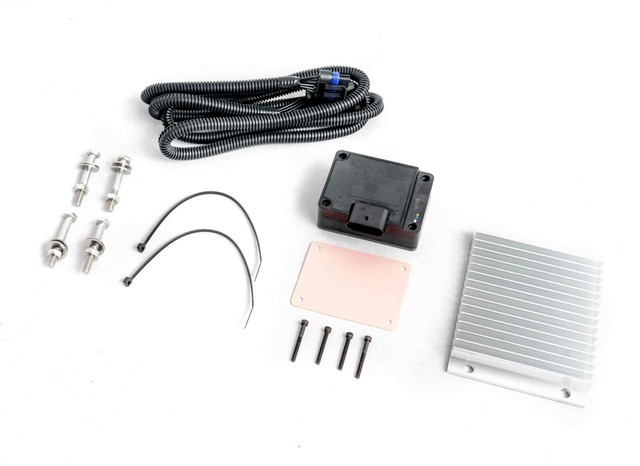
The part a great many 6.5 owners actually need, and the reason this article opens the way it does. GM mounted the pump driver on the side of the injection pump, where it overheats and fails — producing hot stalls that look exactly like a fuel supply problem. A relocation kit moves the module to a cool spot on a large finned heat sink, typically ahead of the radiator support. The extension harness is the important part of the kit; do not improvise one.
- Large finned aluminium heat sink
- Extension harness of the correct length and gauge
- Mounting hardware for the radiator support or bumper
- Compatible with the DS4 injection pump
- Addresses the actual cause of the most common 6.5 stall
- Dramatically extends module life
- Far cheaper than an injection pump
- Does not fix a module that has already failed — buy both
- Cheap extension harnesses introduce voltage drop
Replacement PMD / FSD Module
Buy this with the relocation kit rather than on its own, because fitting a new module back onto the hot injection pump simply restarts the clock. Modules are sold with a resistor code matched to the injection pump — get that wrong and the engine runs badly even though everything is new. Carrying the old one as a spare is a well-established 6.5 habit: a module that dies at the roadside can often be swapped in fifteen minutes and gets you home.
- Electronic driver for the Stanadyne DS4 pump
- Resistor code matched to the injection pump
- Available with or without a heat sink
- Direct plug-in replacement
- Cures the classic hot-stall no-start
- Cheap relative to an injection pump
- The old one makes a genuinely useful roadside spare
- The wrong resistor code makes the engine run badly
- Refitting it in the factory location will cook it again

Fuel Pressure Gauge and Test Kit
The tool that settles the entire question. Tee a gauge into the line at the filter and look for roughly 3 to 7 psi at idle — that is the single measurement that tells you whether the lift pump is doing its job, and it takes minutes. Better still, mount a permanent gauge somewhere you can see it while driving, so a supply problem announces itself as a falling needle rather than as a truck that stops. On an engine this prone to misdiagnosis, that is money extremely well spent.
- 0-15 or 0-30 psi range suited to diesel supply
- Isolator or snubber to protect the gauge
- Tee fittings and hose for the filter line
- Panel-mount versions for permanent fitting
- Answers the lift-pump question definitively in minutes
- A permanent gauge gives warning before a breakdown
- Cheap relative to the parts it stops you buying
- Any tee is a potential leak point — use proper fittings
- A bare gauge on diesel needs an isolator to last
Fuel Filter and Water Separator Assembly
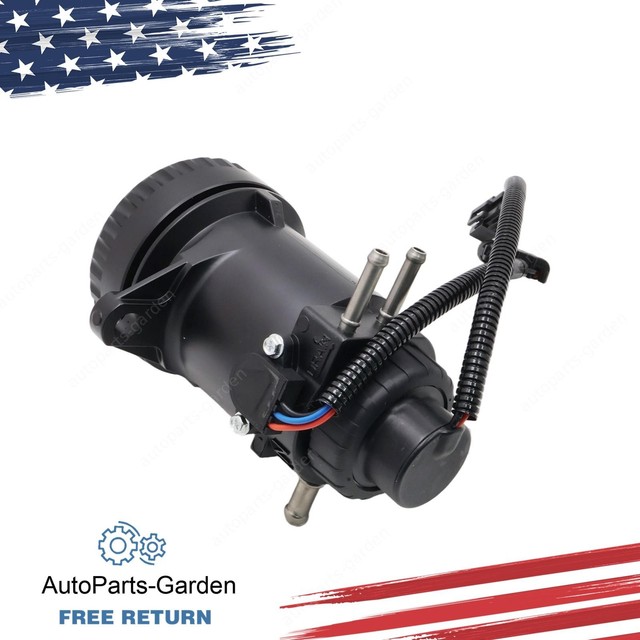
The first thing to change and the cheapest, and it is astonishing how often it is the whole answer. A restricted filter starves the injection pump and makes a healthy lift pump read as failed on a gauge — which is why the fuel pressure test is done at the filter and why the filter should be fresh when you do it. Water in diesel fuel is separately destructive to an injection pump, so a proper separator with a drain is not optional on a truck of this age.
- Spin-on or cartridge filter to the correct micron rating
- Integrated water separator with a drain
- Water-in-fuel sensor on some assemblies
- Primer pump on better units
- Cheapest possible fix, and frequently the correct one
- Protects the expensive injection pump from water
- Makes any subsequent pressure test meaningful
- Needs priming after a change or the engine will not start
- Cheap filters use looser media than the specification
Injection Pump Cooler Kit
The other half of the heat problem. Even with the module relocated, the DS4 injection pump itself runs hot, and heat is hard on it. A cooler kit circulates fuel through a small radiator before it returns to the tank, dropping the temperature the pump lives at. It is not a first purchase — do the diagnosis, the filter, the relocation first — but for a truck that is being kept long term, it addresses the underlying reason these components fail rather than replacing them repeatedly.
- Small fuel-to-air cooler in the return line
- Mounting hardware and hose supplied
- Some kits include a thermostatic bypass
- Fits the 6.5 return circuit
- Attacks the root cause rather than the symptom
- Sensible on a truck being kept for the long term
- Cheap next to an injection pump
- More hose joints, so more places to leak
- Of marginal benefit in a cold climate
Fuel Line and Hose Replacement Kit
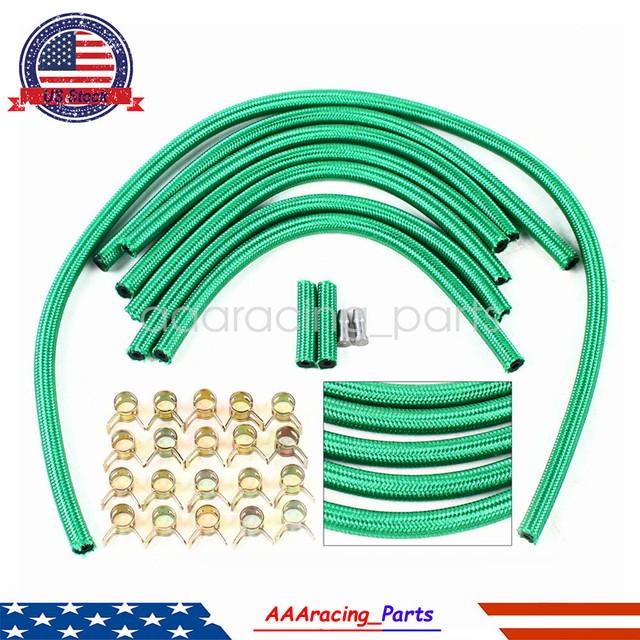
On a truck that is now thirty years old, the rubber is a live suspect. A cracked or softened suction hose lets air in, and air in a diesel supply produces rough running, hard starting and pressure readings that make no sense — symptoms that get blamed on the pump every time. Replacing the supply and return hoses with properly rated diesel-compatible hose and new clamps is cheap and removes a whole category of misdiagnosis. Do it before, not after, buying a pump.
- Diesel-rated hose in the correct sizes
- New fuel-rated clamps
- Pre-cut kits for the 6.5 available
- Submersible-rated hose for in-tank sections
- Removes air leaks that mimic pump failure
- Very cheap relative to the parts it rules out
- Thirty-year-old rubber is due regardless
- Some sections are awkward to reach
- Non-diesel-rated hose degrades from the inside and looks fine
OBD-II Scan Tool with GM Diesel Support
For 1996-and-later trucks, a scan tool that reads GM enhanced diesel codes and live data turns this whole diagnosis into a sit-down job. You can watch for the injection pump codes that accompany a failing module and see whether they appear as the engine warms — which is the temperature dependence the intro describes, captured as data rather than as a roadside impression. Earlier trucks need a different interface, so check what your model year actually speaks before buying.
- Reads GM enhanced powertrain codes
- Live data logging
- Freeze-frame capture at the moment of a fault
- Handheld and Bluetooth dongle formats
- Captures temperature-dependent faults as evidence
- Freeze-frame data shows the conditions at the stall
- Useful across the rest of the truck
- Pre-1996 trucks need a different interface entirely
- Generic readers do not show the enhanced diesel codes
Spare Parts Kit for the Toolbox
A 6.5 habit worth adopting. These trucks strand people for a short list of predictable reasons, and most of them are fixable at the roadside with the right part in the box: the old PMD, a spare fuel filter, a length of hose, a handful of clamps and the tools to fit them. It is not pessimism, it is what distinguishes an hour at the side of the road from a tow. The old module you replaced is very often still good enough to get you home.
- Your previous PMD, kept and labelled
- Spare fuel filter and O-rings
- Short lengths of diesel hose and clamps
- Basic tools and a torch in one box
- Turns the most common failures into a roadside fix
- Costs almost nothing beyond parts you already own
- The old module is a genuinely useful spare
- Rubber parts degrade in storage and need rotating
- Takes up permanent space in the truck
Buying tips
- Hot stall that restarts after cooling is the PMD, not the lift pump. That temperature dependence is the signature. A failing lift pump produces trouble that is far more consistent and much less fussy about engine temperature. Answering that one question before you buy anything is the most valuable thing in this article, and it costs nothing.
- Test fuel pressure at the filter before replacing the pump. Roughly 3 to 7 psi at idle is the target. A gauge tee’d into the line settles the question in minutes, and a permanent gauge gives you warning before a breakdown instead of after. On an engine this prone to misdiagnosis, that is one of the best purchases you can make.
- Change the fuel filter first, every time. A restricted filter starves the injection pump and makes a perfectly healthy lift pump read as failed. It is the cheapest part in the system and it is frequently the entire answer. It also makes any pressure test you do afterwards actually mean something.
- Relocate the PMD rather than replacing it in place. Refitting a new module onto the side of the injection pump puts it straight back into the heat that killed the last one. A relocation kit with a proper finned heat sink, mounted somewhere cool, is what makes the repair last. Buy the module and the kit together.
- Match the resistor code when buying a PMD. The module carries a code matched to the injection pump, and the wrong one makes the engine run badly even though every part is new. Read the code off the old module or the pump before ordering, rather than taking the year and model as sufficient.
- Suspect thirty-year-old rubber. A cracked or softened suction hose lets air into the supply, which gives rough running, hard starting and pressure readings that make no sense — all of which get blamed on the pump. Diesel-rated hose degrades from the inside and can look perfect. Replace it as a matter of course before buying expensive parts.
- Do not fit a higher-pressure pump than the system wants. More pressure is not better here: the DS4 injection pump has a supply pressure it expects, and overwhelming it causes its own problems. Buy a pump specified for this application, not a bigger one from a different engine’s kit because the fittings happen to match.
- Keep the old PMD in the toolbox. It is the single most useful spare on this engine. A module that dies on the road can often be swapped in fifteen minutes with basic tools, and the old one you replaced is frequently still good enough to get you home. Label it with its resistor code so you are not guessing in the dark.
As an Amazon Associate and eBay Partner, toptenpick.com earns from qualifying purchases. Prices and availability are subject to change.