

As an Amazon Associate and eBay Partner, toptenpick.com earns from qualifying purchases. Prices and availability are subject to change.
The mistake almost everyone makes here is picking a rail code for how realistic it looks and never checking what is actually going to ride on it. Code 83 track (0.083 inch rail) looks noticeably closer to scale than Code 100 (0.100 inch), but the wheels underneath your rolling stock decide whether that upgrade actually works, not the track itself.
Older and lower-cost HO equipment, especially anything built before the mid-1990s or sold as a toy-grade train set, often runs deep ‘pizza-cutter’ wheel flanges instead of the shallower NMRA RP-25 profile that has been standard on quality equipment for decades. Code 100’s taller rail has more clearance for that deep flange to ride through a turnout frog without catching. Drop the same car onto Code 83, and the flange can bind or hop through the same frog, especially on tighter turnouts. This is a real, checkable problem, not a theoretical one: run your actual locomotives and cars over a sample piece of Code 83 track before committing a whole layout to it, particularly if any of your fleet is inherited, secondhand, or came bundled with a starter set.
The second real decision is roadbed, and it matters more to how much time you spend building than rail code does. Integrated systems like Kato Unitrack, Bachmann E-Z Track, and Atlas True-Track snap together with the roadbed already molded on, and they can be assembled on a bare tabletop or the living-room floor in an afternoon. Bare flex track from Atlas, Peco, and Micro Engineering costs less per foot and gives you full control over curves and yard throats, but expects you to lay cork or foam roadbed underneath yourself and solder your own feeders.
Brands mix less cleanly than the matching code numbers suggest. Atlas, Peco, and Micro Engineering Code 83 rail is the same height and will physically join with the right rail joiner, but tie height, tie spacing, and turnout geometry are not identical across brands, so a mixed layout usually needs small shims or transition pieces at the seams. Decide on one flex-track brand for anything visible, and keep a second brand only for track that will be hidden or ballasted over.
None of this means Code 83 is a mistake — for a layout built entirely from equipment made in the last two decades, it is the better-looking, no-downside choice. It only means the decision runs backward from most buying guides: check your rolling stock first, then pick the rail.
| # | Product | Price | Where to buy |
|---|---|---|---|
| 1 | Atlas HO Code 100 Super-Flex Track | $4–$6 per 36-inch section | Amazon · eBay |
| 2 | Atlas HO Code 83 Super-Flex Track | $4–$6 per 36-inch section | Amazon · eBay |
| 3 | Atlas True-Track Code 83 | $6–$10 per section | Amazon · eBay |
| 4 | Peco Streamline Code 100 (SL-100) | $8–$10 per 36-inch section | Amazon · eBay |
| 5 | Peco Streamline Code 83 (SL-8300) | $9–$12 per 36-inch section | Amazon · eBay |
| 6 | Kato Unitrack HO (Code 83) | $8–$14 per section | Amazon · eBay |
| 7 | Bachmann E-Z Track HO Nickel Silver | $150–$180 for an oval set with power pack | Amazon · eBay |
| 8 | Bachmann E-Z Track HO Steel Alloy | $100–$130 for a figure-8 track pack | Amazon · eBay |
| 9 | Micro Engineering HO Code 83 Weathered Flex-Trak | $55–$65 for a 6-piece (18-foot) pack | Amazon · eBay |
| 10 | Woodland Scenics Track-Bed | $12–$18 for a 24-foot roll | Amazon · eBay |
The picks, in detail
Atlas HO Code 100 Super-Flex Track
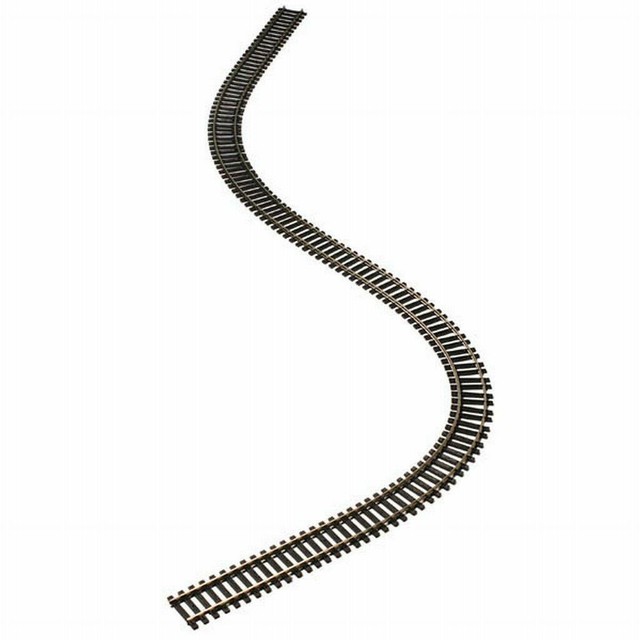
Atlas’s original HO flex track, and still the track most secondhand and starter-set locomotives were designed to run on. Because Code 100 rail sits taller than every other option here, it gives the most wheel-flange clearance in this list, which matters if you are building a layout around inherited or budget rolling stock rather than buying everything new. It is also the cheapest track in this roundup and the easiest to find at any hobby shop.
- 0.100-inch rail height, the tallest of any HO track in this roundup
- 36-inch flexible sections with black injection-molded ties
- Solid nickel-silver rail for reliable electrical contact
- Compatible with Atlas’s full Code 100 turnout and accessory line
- Widest wheel-flange clearance of any track here, including older toy-grade equipment
- Lowest price per section in this roundup
- Stocked at almost every hobby shop and online retailer
- Rail profile looks oversized next to scale-detailed equipment
- Black ties read less realistic than wood-tone options once ballasted

Atlas HO Code 83 Super-Flex Track
Atlas’s scale-proportioned counterpart to its own Code 100 line, priced the same but sized closer to real rail. Brown injection-molded ties with tie-plate and spike detail read as noticeably more realistic once ballasted, and the flexible sections reform cleanly around broad or tight curves without kinking. It is the practical default for anyone building a new layout entirely from modern equipment, which mostly runs the shallower NMRA-standard wheel profile this track was designed around.
- 0.083-inch rail height for a closer-to-scale profile
- 36-inch flexible sections with brown ties molded with tie-plate and spike detail
- Nickel-silver rail, priced the same as Atlas’s Code 100 line
- Reforms to any radius without kinking
- More realistic than Code 100 at no added cost
- Large turnout and accessory selection in the same code
- Handles broad curves and hand-laid-style yards well
- Can bind or ride roughly through turnout frogs with deep-flange older wheels
- Brown ties show scuffs and touch-up work more visibly than black

Atlas True-Track Code 83
Code 83 rail pre-mounted on a snap-together roadbed molded to look already ballasted, built for someone who wants a running loop on a folding table or living-room floor without learning to lay cork first. Sections snap and lock without glue or nails, and because the rail sits on standard Code 83 ties, pieces can later be pulled off the roadbed and reused as ordinary flex-track once you move to a permanent benchwork layout.
- Pre-ballasted-look roadbed molded onto Code 83 nickel-silver rail on brown ties
- Snap-fit section joints, no nails or glue required for a temporary layout
- Sections can be removed from the roadbed and reused as standard Atlas Code 83 flex track
- Straight, curved, and turnout sections all share the same roadbed profile
- Fastest route to a running layout with zero roadbed-building skill required
- Track investment carries forward into a permanent layout later
- Works directly on an uneven tabletop or floor
- Costs noticeably more per inch than bare flex track
- Fixed section lengths and radii limit custom track plans compared to flex
Peco Streamline Code 100 (SL-100)
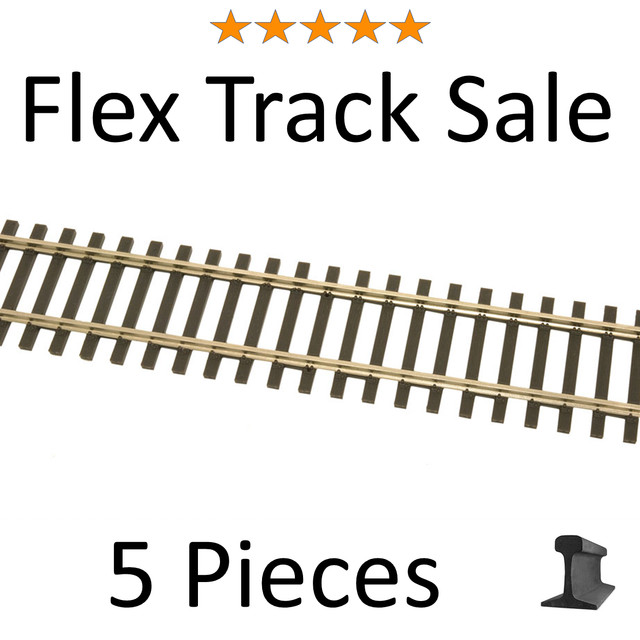
Peco’s original HO/OO flex track, built with wood-grain ties and a tie-plate pattern that reads well even at Code 100’s taller rail height. It is the track most modelers reach for when a layout has to run a genuine mix of equipment — older American rolling stock, European-outline imports, and anything else with a deeper wheel flange than modern NMRA standard, since Code 100 tolerates all of it without the fitting problems finer rail can cause.
- 0.100-inch rail height with wood-grain tie molding and printed tie-plate detail
- 36-inch flexible sections, nickel-silver rail
- Compatible with Peco’s Code 100 turnout line, including European-pattern constant-radius switches
- Widely stocked in both UK and US hobby retailers
- Accepts the broadest range of wheel profiles, including deep-flange and European stock
- Peco turnouts in this code are known for smooth, reliable frog performance
- Consistent quality section to section
- Heavier rail profile looks less refined next to Code 83 scenes
- Higher rail sits proud of ballast more than shorter-code track
Peco Streamline Code 83 (SL-8300)
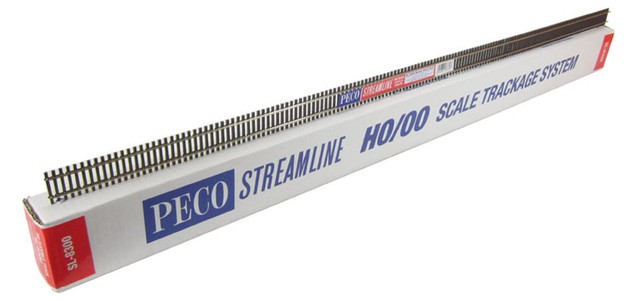
Peco’s US-prototype Code 83 line, notable because its turnouts follow American switch geometry rather than the European constant-radius pattern used in Peco’s own Code 100 turnouts — a detail that trips people up when they assume all Peco track handles the same. Wood-grain ties in a creosote-brown finish and crisp spike detail make this one of the more convincing flex tracks in this list once ballasted and painted.
- 0.083-inch rail height with US-prototype turnout geometry in the same line
- 36-inch flexible sections, creosote-brown wood-grain ties
- Nickel-silver rail for reliable conductivity
- Smooth, consistent rail profile section to section
- Turnout geometry matches North American prototype practice, not European standard
- Among the most realistic tie detail in this roundup
- Reliable, low-maintenance electrical performance
- Costs more per section than Atlas’s Code 83 line
- Narrower US retail stock than Peco’s own Code 100 range

Kato Unitrack HO (Code 83)
Snap-together Code 83 rail bonded permanently to a molded, ballast-textured roadbed, using a nickel-silver alloy Kato treats specifically to resist tarnish. It is the closest thing to a system you can assemble, take apart, and reassemble repeatedly without the electrical connections degrading — a real advantage for a portable club module, a seasonal Christmas layout, or anyone who is not ready to commit to a permanent benchwork design yet.
- Integrated roadbed molded with ballast texture around Code 83 rail
- Alloy rail formulated to resist oxidation and reduce cleaning frequency
- Positive snap joiners maintain electrical contact through repeated assembly
- Available as flex sections and a full range of curves, turnouts, and crossings
- Most reliable electrical connection of any sectional system in this list
- Survives repeated setup and teardown without loosening or dirtying
- Minimal track cleaning required over time
- Highest cost per foot of any track system here
- Smaller HO turnout and accessory range than Kato offers in N scale

Bachmann E-Z Track HO Nickel Silver
Bachmann’s snap-fit Code 100 rail on gray roadbed, sold as sectional track and as complete oval or expander sets with a power pack included — the track bundled with most entry-level HO train sets sold today. Nickel-silver rail means it resists tarnish far better than the steel-rail version of the same system, which matters if the layout is going to sit assembled on a floor or table for weeks between running sessions.
- Code 100 nickel-silver rail on integrated gray roadbed
- Snap-fit locking joiners hold sections together without extra hardware
- Full range of curves, switches, and crossings in the same system
- Oval and expander sets include a DC power pack
- Cheapest way into a full integrated-roadbed running layout with a power supply included
- Enormous new and secondhand supply
- Low-oxidation rail needs less cleaning than the steel-rail version
- Code 100 rail and gray roadbed both look toy-like next to scale scenery
- Mixing into flex track needs a transition joiner and usually a roadbed-height shim

Bachmann E-Z Track HO Steel Alloy
The budget version of Bachmann’s snap-track system, steel rail on black roadbed instead of nickel silver on gray, bundled into the lowest-priced HO train sets on toy-store shelves. It runs and connects exactly like the nickel-silver version and the two are physically compatible, but steel rail tarnishes fast enough that stalling and dirty-track complaints are the most common issue reported with this line.
- Code 100 steel-alloy rail on black roadbed
- Snap-fit joiners physically compatible with Bachmann’s nickel-silver E-Z Track line
- Sold in figure-8, oval, and expander track packs
- Bundled as the standard track in most budget Bachmann train sets
- Lowest price of any track system in this roundup
- Expands directly with Bachmann’s nickel-silver line for a mixed budget
- Replacement pieces are easy to source since it ships in so many train sets
- Steel rail oxidizes and causes stalling and dirty-wheel issues faster than any nickel-silver option here
- Black roadbed and Code 100 rail together are the least realistic combination in this list

Micro Engineering HO Code 83 Weathered Flex-Trak
Flex track with the nickel-silver rail pre-darkened and the ties toned at the factory, aimed at modelers who want a used, hand-laid look straight out of the package instead of weathering new track themselves after installation. Tie spacing is deliberately irregular rather than machine-perfect, which is the detail that actually sells the illusion once the track is ballasted, and both wood-tie and concrete-tie versions are available in the same weathered finish.
- Code 83 nickel-silver rail pre-weathered at the factory
- Scale-size ties with irregular spacing and molded tie-plate/spike detail
- Sold in 3-foot sections, six pieces (18 feet) per pack
- Available in wood-tie and concrete-tie versions
- Realistic, weathered look with no extra work required after laying it
- Irregular tie spacing reads as hand-laid rather than machine-stamped
- Rail holds a formed curve well without springing back
- Needs its own compatible rail joiners rather than generic Code 83 joiners
- Smaller turnout selection in this code than Atlas or Peco offer

Woodland Scenics Track-Bed
Not track at all, but the roadbed underneath it, and the piece most first-time flex-track buyers skip and then wish they hadn’t. It is a pre-formed foam strip that gives flex or sectional track the raised, ballasted cross-section real railroad track has, deadens the hollow rolling sound of track glued straight to plywood, and goes down with tacks or glue without the soaking and pre-bending that cork roadbed requires.
- Pre-formed sound-deadening foam roadbed profile
- Sold as rolls, pre-cut strips, and sheets for yards and sidings
- Tacks or glues down without soaking or pre-shaping
- Works under any flex or sectional HO track
- Noticeably quieter running than bare plywood or unshaped cork
- No soaking or pre-bending required, unlike cork roadbed
- One roll covers a long run cheaply
- Doesn’t replace track itself, only its base — you still need to buy rail separately
- Permanent glue-down makes later track changes more work
Buying tips
- Check the wheel flanges on your existing rolling stock before buying Code 83 — deep older or toy-grade flanges can bind or hop through a Code 83 turnout frog.
- Stick to one flex-track brand for anything visible; Atlas, Peco, and Micro Engineering share rail codes but not identical tie height or turnout geometry.
- Test a locomotive and your longest car over any new turnout before ballasting it — fixing a binding flange is far easier before the glue sets.
- Pick an integrated-roadbed system like Kato Unitrack, Bachmann E-Z Track, or Atlas True-Track if the layout has to go up and come down repeatedly.
- Solder rail joiners on curves and every few feet of flex track; unsoldered joints are the most common cause of intermittent stalling, especially on DCC.
- Keep steel-rail E-Z Track sections separate from nickel-silver ones where you can — steel tarnishes faster and drags down the whole loop’s reliability.
- Underlay flex track with foam or cork roadbed even on a plywood tabletop; bare track glued straight to wood sounds hollow and looks flat once ballasted.
- Buy a few extra rail joiners of the correct code before you start — running short mid-layout means a special order or a delayed build.
As an Amazon Associate and eBay Partner, toptenpick.com earns from qualifying purchases. Prices and availability are subject to change.