

As an Amazon Associate and eBay Partner, toptenpick.com earns from qualifying purchases. Prices and availability are subject to change.
The thing that surprises people about shooting a GoPro in the cold is not that the battery runs down faster. It is that the camera shuts off showing charge remaining, and then — brought inside, warmed in a pocket for ten minutes, put back in the camera with nothing recharged — it works again. That single observation tells you what is really happening, and it is not what the phrase “cold drains batteries” suggests.
A lithium battery in the cold has not lost its energy. Its internal resistance has gone up, because the chemistry that moves ions across the cell slows down as temperature falls. High internal resistance means that the instant the camera asks for current — and 5.3K video asks for a lot — the terminal voltage sags. The camera reads that sag as an empty battery and protects itself by shutting down. Warm the same cell and the resistance falls, the sag disappears, and the charge that was there all along becomes usable again. You are not fighting a capacity problem. You are fighting a voltage-under-load problem, and it is reversible with heat.
That reframing changes what is worth buying. It explains why GoPro’s Enduro battery helps: it is a different chemistry tuned for lower internal resistance at low temperature, not simply a bigger cell. It explains why a cheap third-party battery that tests fine in a warm room can be useless at 14 °F. And it explains why the most effective accessories on this list are not batteries at all — a pocket, a hand warmer, and an external power bank do more for a cold shoot than an extra spare does.
It also explains one counter-intuitive tactic. A GoPro recording continuously generates its own heat, and that heat keeps the cell in its working range. Stop-start shooting in the cold lets the camera cool between clips and is noticeably harder on runtime than leaving it rolling. Below are the ten things actually worth carrying, from the batteries themselves to the fifty cents of chemistry that saves a shoot.
| # | Product | Price | Where to buy |
|---|---|---|---|
| 1 | GoPro Enduro Rechargeable Battery | $25-$35 | Amazon · eBay |
| 2 | GoPro Enduro Battery 2-Pack | $45-$60 | Amazon · eBay |
| 3 | GoPro Dual Battery Charger with Batteries | $40-$70 | Amazon · eBay |
| 4 | GoPro Volta Battery Grip | $100-$150 | Amazon · eBay |
| 5 | USB-C Power Bank with Pass-Through Charging | $25-$60 | Amazon · eBay |
| 6 | Pass-Through Media Door and Right-Angle USB-C Cable | $12-$30 | Amazon |
| 7 | Disposable Air-Activated Hand Warmers | $10-$25 for a box | Amazon · eBay |
| 8 | Neoprene or Silicone Camera Sleeve | $8-$20 | Amazon · eBay |
| 9 | Hard Battery Storage Case | $8-$18 | Amazon · eBay |
| 10 | Third-Party Replacement Batteries | $20-$40 for a bundle | Amazon · eBay |
The picks, in detail

GoPro Enduro Rechargeable Battery
The direct answer, and the one that addresses the actual mechanism rather than the symptom. The Enduro uses a chemistry tuned for lower internal resistance in the cold, which is why GoPro quotes usable runtimes at 14 °F (-10 °C) where a standard battery would be struggling. It also happens to run longer at room temperature — GoPro’s own figures put it around 13 to 40 per cent ahead depending on the mode. It fits the HERO9-and-later body shape, so one battery spec covers several camera generations.
- Low-temperature chemistry rated to 14 °F / -10 °C
- Fits the HERO9 Black and later body shape
- Longer runtime than a standard battery at room temperature too
- Charges in the camera or in any GoPro dual charger
- Addresses the real cold-weather failure mode, not just capacity
- Cross-compatible across several HERO generations
- Better in warm conditions as well, so nothing is wasted
- Costs noticeably more than a standard GoPro battery
- Still needs warmth below its rated range
GoPro Enduro Battery 2-Pack
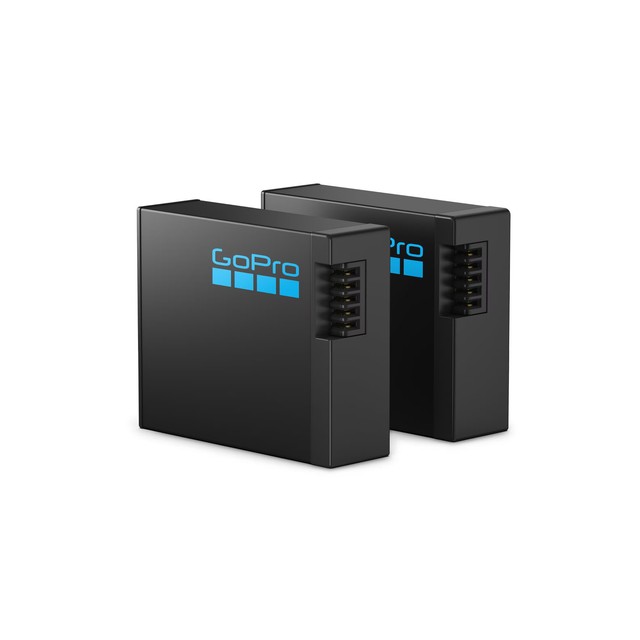
Buy the multipack. Cold-weather shooting is the one situation where battery rotation genuinely works: the cell in your inside pocket stays warm and stays useful, and you swap it in when the one in the camera sags. With a single spare you are always waiting; with two or three you can keep a genuine rotation going through a full day on the hill. The per-battery price in a pack is also meaningfully lower than buying them one at a time, which softens the premium over standard cells.
- Two Enduro cells in one pack
- Same low-temperature chemistry as the single
- Lower cost per battery than buying singly
- Compatible with GoPro dual chargers
- Enough cells for a real warm-pocket rotation
- Cheaper per unit than singles
- One purchase covers a whole day of shooting
- Significant outlay in one go
- Batteries age whether you use them or not

GoPro Dual Battery Charger with Batteries
A charger that takes two cells at once, usually bundled with batteries, and the item that makes a rotation practical overnight. The real cold-weather value is not speed — it is that you can put the day’s warmed batteries on charge together and start the next morning with everything full. A second benefit worth knowing: charging a lithium cell while it is below freezing damages it, so a charger you keep indoors and load with batteries that have come up to room temperature is protecting the cells as well as filling them.
- Charges two batteries simultaneously
- USB-C powered, works from a wall adapter or power bank
- Status LEDs per bay
- Usually bundled with one or two Enduro cells
- Turns a rotation into an overnight routine
- USB-C means it works from a van or a power bank
- Bundles often cost less than the batteries alone
- Another item to carry and keep charged
- Some bundles ship standard rather than Enduro cells
GoPro Volta Battery Grip
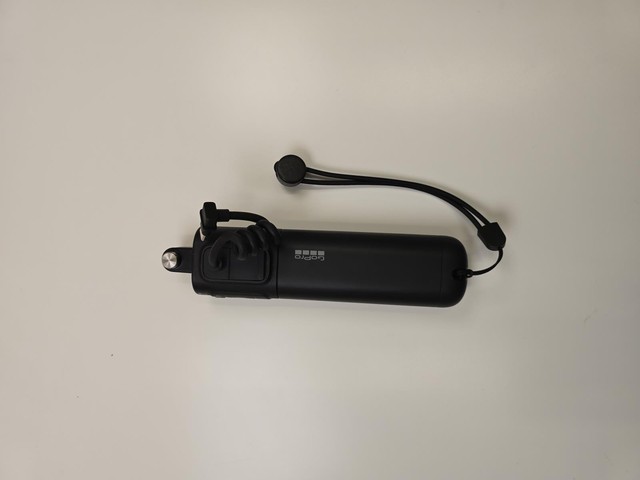
A grip, tripod and remote with a large battery built into it, and it changes the arithmetic completely: instead of a small cell in a cold camera, you have a big cell in your hand feeding the camera over USB-C. The camera’s internal battery becomes a buffer rather than the power source. For cold-weather work that matters twice over — the grip’s cell is larger to begin with, and it sits in a gloved hand rather than exposed on a helmet mount. Bulky, and not for a helmet, but excellent for handheld winter shooting.
- Large integrated battery powering the camera over USB-C
- Functions as grip, tripod and wireless remote
- Weather-resistant construction
- Shutter, mode and power controls on the handle
- Dramatically longer runtime than any internal battery
- Kept warm by your hand during use
- Replaces three accessories with one
- Far too bulky for helmet or chest mounting
- Expensive, and only worth it for handheld work
USB-C Power Bank with Pass-Through Charging
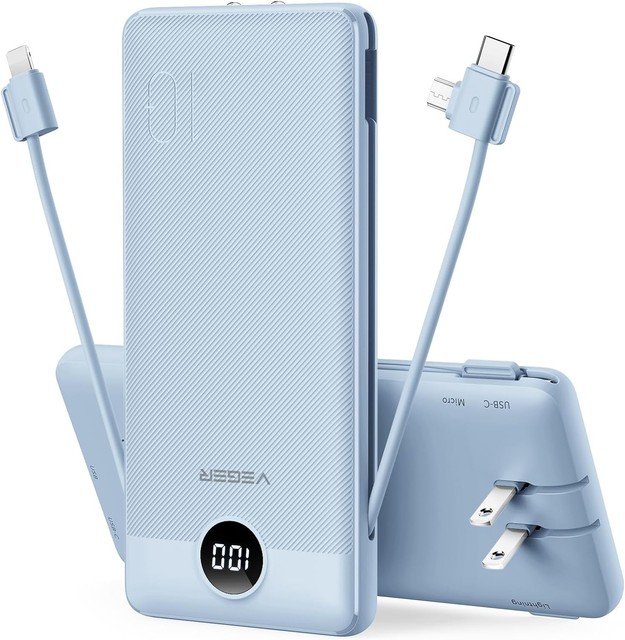
The most cost-effective cold-weather power solution there is, because it can live inside your jacket. A power bank in an inside pocket stays at body temperature, which means it stays at full capacity, and a cable run out to the camera keeps recording long past the point a bare battery would have quit. Look for one rated for low-temperature operation, with USB-C Power Delivery. A 10,000 mAh unit will run a GoPro for many hours; capacity is not the constraint here, keeping it warm is.
- USB-C Power Delivery output
- 10,000 mAh and up
- Pass-through charging on better models
- Compact enough for an inside pocket
- Kept at body temperature, so it does not sag
- Far more capacity per dollar than camera batteries
- Useful for a phone on the same trip
- A cable running to the camera limits mounting options
- Cheap cells lose a lot of capacity below freezing
Pass-Through Media Door and Right-Angle USB-C Cable
The unglamorous pair that makes the power bank idea actually work. A GoPro’s standard door has to be removed to run a cable, which leaves the port open to snow; a pass-through door closes around the cable and keeps the weather out. A right-angle USB-C cable then routes the lead down the side of the camera instead of straight out into whatever you are about to knock it against. Together they cost very little and they are the difference between a tidy powered setup and a cable you snag on the first run.
- Door with a sealed cable exit
- Right-angle USB-C connector
- Model-specific fit for HERO9 and later
- Braided cables available for abrasion resistance
- Keeps snow and spray out of the USB port
- Cable routes flat instead of protruding
- Very cheap for the problem it solves
- Doors are model-specific — check your HERO generation
- Not as fully waterproof as the standard sealed door

Disposable Air-Activated Hand Warmers
Fifty cents of iron filings that does more for a cold shoot than a spare battery. The mechanism section explains why: a cold cell is not empty, it is resistive, and heat reverses that. Keep spares in a pocket with a hand warmer and they stay in their working range instead of slowly dying in a rucksack. You can also tape one alongside the camera body on a static mount — a time-lapse rig left out overnight is the classic case — as long as you keep it clear of the lens and the vents.
- Air-activated, 8 to 12 hours of heat per pack
- No batteries, no charging, no electronics
- Cheap enough to buy in boxes of 20 or 40
- Pocket-sized and very light
- The single most cost-effective item on this list
- Works on batteries, hands, phones and gloves alike
- No failure mode more complex than forgetting to open the packet
- Single use — they are consumables
- Need a few minutes of air exposure to reach temperature
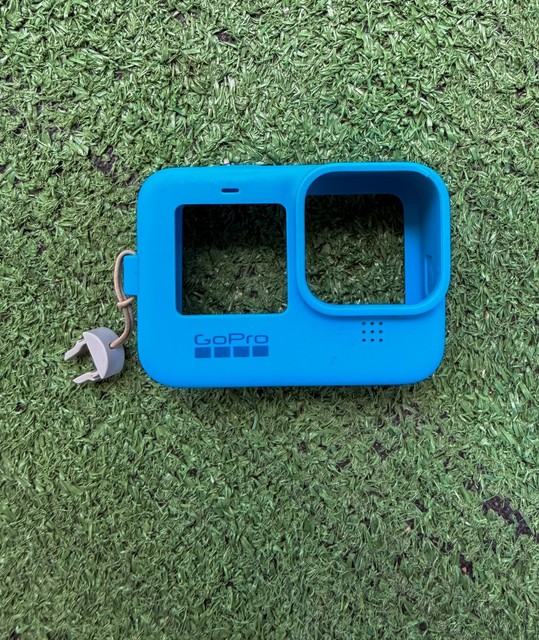
Neoprene or Silicone Camera Sleeve
A thin insulating jacket for the camera body. It will not keep a GoPro warm on its own — there is not enough heat being generated to insulate — but it slows the rate at which the camera gives its warmth up to moving air, and on a snowmobile or a chairlift the wind chill is a large part of the problem. The practical benefits stack up: it is also grippier in gloves, it absorbs knocks, and a brightly coloured one is far easier to find after you drop it in snow.
- Neoprene or moulded silicone body sleeve
- Cut-outs for lens, screen and ports
- Often bundled with a lanyard
- Bright colours available
- Reduces wind-chill losses from the camera body
- Much easier to grip with gloves on
- Cheap impact protection
- Insulation alone cannot warm a camera that is already cold
- Can trap moisture against the body if it gets wet
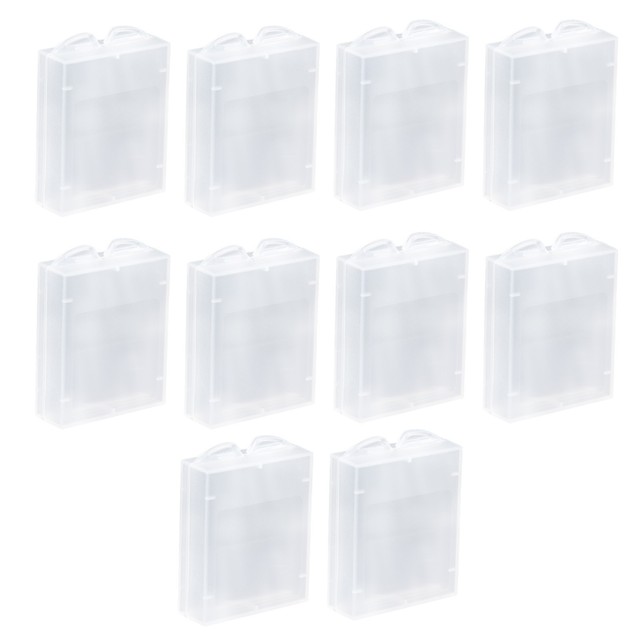
Hard Battery Storage Case
Loose lithium batteries in a pocket alongside keys and coins are a genuine short-circuit risk, and a shorted cell in a cold pocket is the worst possible outcome of an otherwise good day. A small hard case with individual battery slots and a couple of memory card slots solves that and gives you somewhere consistent to keep the warm ones. Choose a case that closes positively rather than one held shut by friction — the failure mode you care about is it opening in a rucksack.
- Individual moulded slots for each battery
- Integrated microSD card storage
- Hard shell with a positive latch
- Sized for a jacket pocket
- Removes the short-circuit risk of loose cells
- Keeps warm batteries together and findable
- Cards and batteries in one place
- Adds a small amount of bulk
- Friction-closed cheap cases pop open in a bag

Third-Party Replacement Batteries
Included with an honest warning. Third-party cells from established accessory brands are a legitimate way to have four batteries instead of two, and for warm-weather shooting the compromise is small. In the cold it is much larger, because the specific thing the Enduro does — hold its internal resistance down at low temperature — is exactly what a generic replacement cell does not do. Treat these as warm-pocket spares for mild conditions and as bulk capacity, not as the battery you rely on at 14 °F.
- Two or three cells plus a charger, typically
- Fits the HERO9-and-later body shape
- Roughly a third the price of GoPro cells
- Often bundled with a dual or triple charger
- Cheap way to have several spares
- Charger usually included in the bundle
- Perfectly adequate in mild conditions
- Markedly worse than an Enduro below freezing
- Capacity claims are often optimistic
Buying tips
- A cold battery is not an empty battery. Low temperature raises internal resistance, the voltage sags under load, and the camera shuts down to protect itself. Warm the same cell in an inside pocket for ten minutes and it will work again with nothing recharged. Once you understand that, battery rotation stops being a workaround and becomes the actual technique.
- Carry spares against your body, not in a rucksack. An inside jacket pocket sits near body temperature; a bag pocket sits at ambient. That difference is the whole ballgame. A hand warmer in the same pocket keeps the cells comfortably in range through a full day and costs a fraction of a spare battery.
- Continuous recording beats stop-start in the cold. A recording GoPro generates enough heat to keep its own cell in the working range. Stopping between clips lets it cool, and each restart draws a surge from a colder battery. If you are shooting a run, leave it rolling and cut in the edit — it is easier on the battery and you miss fewer shots.
- Never charge a lithium cell that is below freezing. Charging a cold lithium battery plates metallic lithium onto the anode, which permanently reduces capacity and is a genuine safety issue. Bring batteries indoors, let them reach room temperature, and then charge. This applies to the camera-as-charger too, so do not plug a freezing GoPro into a power bank to top it up.
- Drop the resolution if runtime matters more than detail. The current draw is what triggers the voltage sag, and 5.3K60 draws far more than 1080p30. GoPro’s own cold-weather figures show roughly double the runtime at the lower setting. On a long day in genuine cold, shooting 2.7K instead of 5.3K can be the difference between coming home with footage and coming home with a dead camera.
- Power the camera externally when you can. A power bank inside your jacket stays warm, so it stays at full capacity, and a cable out to the camera sidesteps the cold-battery problem entirely. Add a pass-through door so the USB port is not left open to snow. This is the cheapest large improvement available and it is routinely overlooked.
- Let the camera warm up slowly, and expect condensation. Taking a very cold camera straight into a warm room condenses moisture inside the housing and on the lens. Put it in a sealed bag before you go indoors and let it come up to temperature in the bag, so the moisture forms on the outside of the bag instead of on your sensor.
- Use anti-fog inserts, because the lens will fog before the battery quits. Temperature swings inside a sealed housing produce fogging that ruins otherwise good footage, and the failure is silent — you will not know until you review the clips. A packet of desiccant inserts costs very little, tucks in beside the camera in the housing, and can be dried out and reused.
As an Amazon Associate and eBay Partner, toptenpick.com earns from qualifying purchases. Prices and availability are subject to change.