

As an Amazon Associate and eBay Partner, toptenpick.com earns from qualifying purchases. Prices and availability are subject to change.
Nearly every golf cart battery meter sold is a voltmeter with a fuel-gauge face printed on it. It reads the pack voltage and translates it into bars or a percentage. That works, in one specific circumstance, and fails in exactly the circumstance you use it in.
A lead-acid battery’s resting voltage is a decent indicator of its state of charge — but only at rest, after the pack has been sitting for a while with nothing drawing from it. The moment you press the pedal, the pack’s internal resistance causes the voltage to sag, and it sags more the flatter and the older the batteries are. So the gauge drops as you accelerate, recovers when you coast, and reads low on a hill. Owners learn to interpret the wobble, which is a way of saying the instrument is not doing its job. The meter tells you the truth when you are parked and lies to you when you are driving.
There are two ways out, and both are worth knowing. The first is a smarter voltage meter — one with damping, or a proper discharge curve for your battery chemistry rather than a generic one. The second is the real fix: a coulomb counter, which measures the current flowing in and out through a shunt and keeps a running total of amp-hours. That is measuring the fuel, not inferring it from pressure, and it stays accurate under load.
The chemistry point matters more than it used to. A 48 V system might be six 8 V batteries, eight 6 V batteries, four 12 V batteries, or a lithium pack — and lithium has a nearly flat discharge curve, sitting at almost the same voltage from full to nearly empty and then falling off a cliff. A voltage meter calibrated for lead-acid reads a lithium pack as full right up until it stops. If you have converted to lithium, or plan to, a voltage-based gauge is not merely imprecise, it is actively misleading.
Ten picks below, from a ten-dollar panel meter to the shunt-based monitor that actually answers the question.
| # | Product | Price | Where to buy |
|---|---|---|---|
| 1 | Coulomb-Counting Battery Monitor with Shunt | $60-$200 | Amazon |
| 2 | Bluetooth Battery Monitor with Phone App | $70-$180 | Amazon |
| 3 | Digital 48 V Voltmeter with Percentage Display | $20-$50 | Amazon · eBay |
| 4 | LED Bar-Graph Charge Indicator | $15-$45 | Amazon |
| 5 | Battery Monitor with Hour Meter | $30-$70 | Amazon · eBay |
| 6 | Individual Battery Voltage Monitor | $70-$200 | Amazon · eBay |
| 7 | Digital Multimeter | $20-$70 | Amazon · eBay |
| 8 | Hydrometer or Refractometer | $15-$60 | Amazon |
| 9 | Battery Watering System | $70-$180 | Amazon · eBay |
| 10 | Terminal Cleaning Kit and Anti-Corrosion Protectant | $15-$35 | Amazon · eBay |
The picks, in detail
Coulomb-Counting Battery Monitor with Shunt
The one that actually measures the fuel. A shunt sits in the pack’s negative lead and the monitor counts every amp flowing in and out, keeping a running amp-hour total — so the reading stays honest under load, on a hill, and on a hot day. It also shows instantaneous current draw, which tells you things a voltage gauge never will, such as whether your motor is pulling more than it should. Installation means breaking into the main negative cable, which is the only real barrier.
- Shunt measures actual current in and out
- Amp-hour counting rather than voltage inference
- Shows live current draw, voltage and consumed capacity
- Programmable for pack capacity and chemistry
- Stays accurate under load, unlike any voltmeter
- Works correctly with lithium’s flat discharge curve
- Live current draw reveals developing faults
- Must be wired into the main negative cable
- Needs correct capacity programming to read truly
Bluetooth Battery Monitor with Phone App
A shunt-based monitor that puts the display on your phone instead of the dash, which suits a golf cart particularly well — there is often nowhere sensible to mount a gauge, and you are usually carrying a phone anyway. The genuine advantage over a panel meter is history: the app logs charge and discharge cycles over weeks, so you can see capacity fading before it strands you. That trend is far more useful than any single reading.
- Shunt-based measurement with Bluetooth link
- Phone app with historical logging
- Alarms for low state of charge
- No dash cutout required
- History shows capacity fading before it becomes a problem
- No hole to cut in the dash
- Alarms warn you before the pack is flat
- Useless if the phone is flat or the app is not installed
- Bluetooth range is short — it will not read from the clubhouse
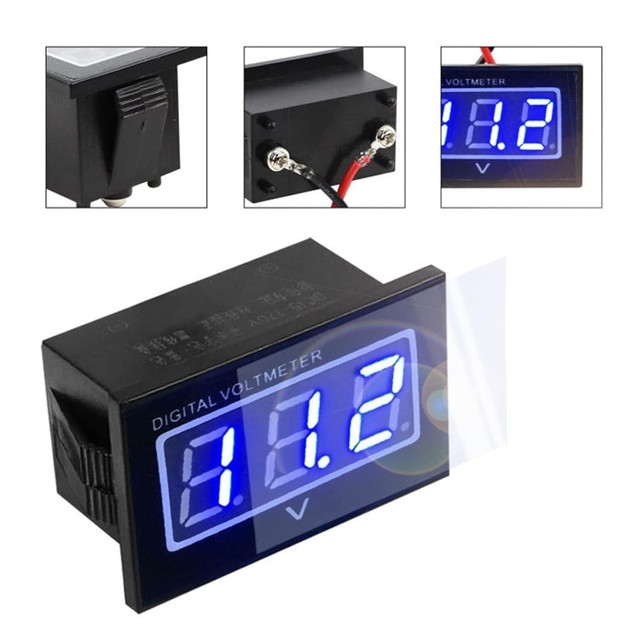
Digital 48 V Voltmeter with Percentage Display
The straightforward voltage gauge, done properly. A digital readout showing both actual voltage and a percentage gives you something a bar display never does — the raw number, which you can interpret yourself and compare against a published discharge table for your battery type. It still sags under load, per the introduction, but at least you can see by how much, and the size of that sag is itself a useful health indicator on an ageing pack.
- Digital voltage and percentage display
- 48 V system calibration
- Panel mount with a standard cutout
- Backlit display for low light
- Raw voltage is more useful than a bar graph
- The size of the voltage sag indicates pack health
- Simple two-wire installation
- Still reads low under load like any voltmeter
- Percentage curve is usually generic, not chemistry specific
LED Bar-Graph Charge Indicator
The classic golf cart gauge — a row of LEDs from green through amber to red. Its virtue is glanceability: you read it without focusing on it, which suits a vehicle you are driving. Its weakness is resolution, since each bar covers a wide voltage band, and at the low end the bars go out quickly and alarmingly. Fine as a rough indicator, poor as a way to judge whether you can make it round another nine holes.
- LED bar display, typically five to ten segments
- Calibrated for 48 V lead-acid
- Two-wire installation
- Sealed against weather on outdoor-rated models
- Readable at a glance while driving
- Cheap and very simple to fit
- Sealed versions survive the weather
- Very coarse resolution
- Calibrated for lead-acid, so useless on lithium

Battery Monitor with Hour Meter
A combination gauge that adds a running hour counter to the charge display, and the hour meter is the underrated part. Batteries age by cycles and by time, not by calendar dates you will remember, and knowing your pack has done a certain number of hours tells you where it is in its life far better than how it looks. It also puts service intervals — watering, terminal cleaning, equalising — on a real schedule rather than on good intentions.
- Charge indicator plus running hour meter
- Non-resettable hours for an honest record
- Some include a service-interval reminder
- Panel mount
- Hours are the honest measure of battery age
- Puts maintenance on a real schedule
- One gauge instead of two
- Charge side is still voltage based
- Hour meters on used carts may already be running
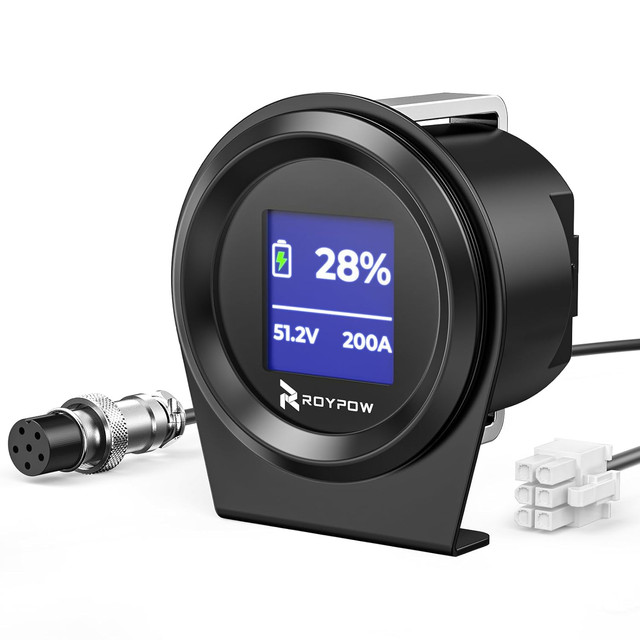
Individual Battery Voltage Monitor
The diagnostic gauge, and the one that finds the actual problem. A 48 V pack is a series string, and its performance is set by its weakest member — one failing 8 V battery drags the entire pack down, and a pack-level gauge shows you a low reading with no clue as to which one. A monitor reading each battery individually points straight at it. That matters enormously at replacement time, when the difference is one battery or six.
- Reads each battery in the string separately
- Highlights the weakest cell or battery
- Wired to each battery’s terminals
- Display or app output
- Finds the single battery dragging the pack down
- Turns a guess at replacement time into a measurement
- Catches a failing battery before it damages the others
- Considerably more wiring to install
- More connections in a corrosive environment
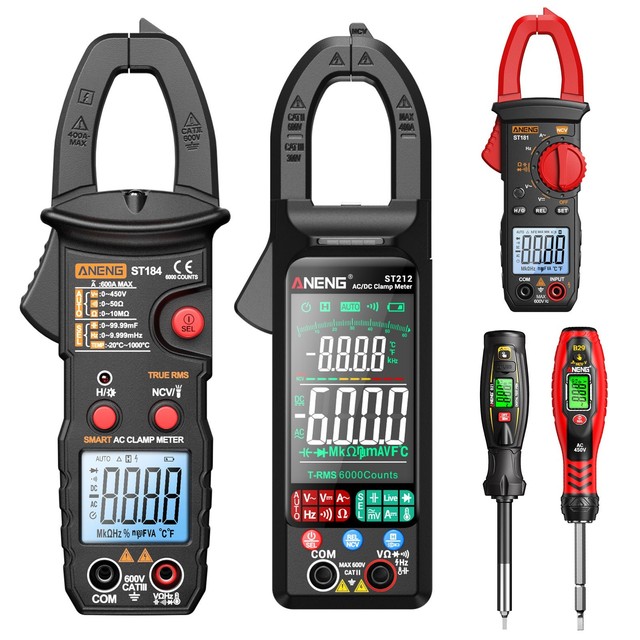
Digital Multimeter
The tool that calibrates and checks everything else. A meter lets you measure each battery at rest, confirm what your dash gauge is telling you, check the charger’s output and find the corroded connection that is causing a voltage drop nobody can see. It is also how you verify a new gauge is reading correctly rather than trusting it. Twenty dollars, and it will settle more arguments about a golf cart pack than any panel gauge will.
- DC voltage measurement to 600 V
- Continuity and resistance testing
- Auto-ranging on better models
- Compact enough for the cart’s storage tray
- Verifies whether the dash gauge is honest
- Finds bad connections causing false readings
- Essential for measuring individual batteries
- Requires you to actually get to the batteries
- Very cheap meters read inaccurately at low voltages
Hydrometer or Refractometer
For flooded lead-acid packs, this is the gold standard and it embarrasses every electronic gauge. Specific gravity measures the actual chemistry of the electrolyte, so it tells you the true state of charge of each individual cell regardless of load, temperature or age. It is the only way to find a single bad cell inside an otherwise healthy-looking battery. A refractometer is easier to read accurately than a float hydrometer and worth the extra.
- Measures electrolyte specific gravity
- Per-cell resolution
- Temperature compensation on better units
- Refractometer or float designs
- The most accurate state-of-charge measurement available
- Finds a single bad cell inside a battery
- Unaffected by load or gauge calibration
- Only works on flooded batteries, not sealed or lithium
- Means handling battery acid — gloves and eye protection

Battery Watering System
Related to metering because a pack low on water reads badly and then genuinely is bad. Flooded lead-acid batteries lose water during charging, and plates exposed to air are permanently damaged — which is the most common way golf cart packs die early. A single-point watering system fills every cell to the correct level from one connection in about a minute, which turns a tedious job people skip into one they actually do. For a six or eight battery pack that is a substantial difference.
- Single-point fill for the whole pack
- Automatic shut-off at the correct level
- Fits most common golf cart batteries
- Hand pump or gravity feed
- Turns a skipped job into a one-minute one
- Automatic levels prevent over- and under-filling
- Directly extends pack life
- Kits are battery-model specific
- Does not apply to sealed AGM or lithium packs

Terminal Cleaning Kit and Anti-Corrosion Protectant
The cheapest fix for a gauge reading wrong. Corroded terminals add resistance, resistance causes voltage drop under load, and that drop makes an otherwise healthy pack read flat on any voltage gauge — so you replace batteries that were fine. A wire brush, a terminal cleaner and anti-corrosion spray or felt washers cost very little and should be the first thing you do when a gauge starts reading low. Clean them, then re-read, then decide.
- Terminal and post cleaning brushes
- Anti-corrosion spray or grease
- Felt protector washers
- Baking soda neutraliser in some kits
- Cures gauge readings that look like dead batteries
- Very cheap and takes half an hour
- Prevents the corrosion recurring
- Needs doing periodically, not once
- Battery acid handling requires gloves and eye protection
Buying tips
- A voltage gauge only tells the truth at rest. Under load the pack’s internal resistance makes the voltage sag, more so as the batteries age and discharge — so the gauge reads low when you accelerate and on hills, and recovers when you coast. If you are judging your remaining range while driving, you are reading the instrument at its least reliable moment.
- Check the state of charge with the cart parked and switched off. Give it at least twenty minutes with nothing drawing from the pack, then read the voltage. That number means something. The number on the gauge halfway up a hill does not. Make this your habit before you conclude anything about the batteries.
- A coulomb counter is the real answer. It measures current through a shunt and keeps a running amp-hour total, which is measuring the fuel rather than inferring it from pressure. It stays accurate under load and it works with any chemistry. The installation — breaking into the main negative cable — is the only real barrier, and it is a one-off.
- If you have lithium, a voltage gauge is actively misleading. Lithium sits at nearly the same voltage from full to almost empty, then falls away sharply. A gauge calibrated for lead-acid will read full right up until the cart stops. Anyone who has converted, or plans to, needs a coulomb counter rather than a better voltmeter.
- Clean the terminals before you believe a low reading. Corrosion adds resistance, resistance causes voltage drop under load, and that drop looks exactly like a flat pack on any voltage gauge. People replace perfectly good batteries over this. A wire brush and half an hour costs nothing and should always come first.
- Measure each battery, not just the pack. A 48 V string performs to its weakest member, and a pack-level gauge cannot tell you which one that is. One failing battery drags the whole cart down and, if left, damages the rest. Ten minutes with a multimeter across each battery at rest finds it, and that is the difference between replacing one and replacing six.
- Keep flooded batteries topped up, and only after charging. Plates exposed to air are permanently damaged, and this is the leading cause of golf cart packs dying early. Fill after charging, never before — electrolyte expands during charge and filling first will make it overflow. A single-point watering system turns this into a one-minute job.
- Track hours, not months. Batteries age by cycles and usage, not by the date on the invoice, and an hour meter gives you an honest record of where a pack is in its life. It also puts watering, terminal cleaning and equalising on a real schedule. On a used cart, check whether the hour meter has been running from new.
As an Amazon Associate and eBay Partner, toptenpick.com earns from qualifying purchases. Prices and availability are subject to change.