

As an Amazon Associate and eBay Partner, toptenpick.com earns from qualifying purchases. Prices and availability are subject to change.
Most buyers price this category by wingspan, as if a bigger plane simply goes further. It doesn’t work that way. Range on a long-range FPV setup is set almost entirely by two radio links and a battery — the control link that carries your stick inputs out, and the video link that carries the picture back — and the airframe’s real job is to carry that gear efficiently, not to define the distance itself.
The two links rarely fail at the same range. A well-built ExpressLRS or TBS Crossfire control link, run with a sensible antenna, can reliably reach tens of kilometers — pilots have logged 15-30km on modest gear and considerably more on tuned setups. Analog 5.8GHz video is usually the weaker of the two and tends to break up well before the control link does; DJI’s and HDZero’s digital video systems close that gap but add weight and cost. Whichever pair you run, your actual range is set by whichever link quits first, not by the stronger one.
That’s what the airframe is actually for: efficient enough glide and low enough current draw to stretch a battery, plus a payload bay big enough for a serious antenna and a spare pack without flying nose-heavy. A 2kg-payload flying wing and an 800g glider solve different problems — the wing hauls more gear, the glider covers more distance per watt — and neither adds range on its own without the radio system behind it.
The legal side is not optional, and it’s stricter than it looks. In the US, first-person-view flying legally requires a visual observer standing next to you in direct contact, because FPV goggles take away your own ability to see the aircraft — there is currently no waiver path around that for recreational flyers, only for licensed Part 107 pilots. Remote ID broadcast is required on most drones now, registration kicks in above 250g, and true beyond-visual-line-of-sight flight needs a waiver most hobbyists don’t hold. Check your own country’s rules before you plan a flight further than your observer can see.
None of the ten airframes below have been flown or tested by this site — they’re chosen from manufacturer specs, documented builds and long-standing reputations in the FPV community, split roughly between ready-to-fly wings, bare kits that need their own electronics, and dedicated gliders built for efficiency over speed. Whichever you pick, the radio, video and battery you pair it with will matter more than the plane.
| # | Product | Price | Where to buy |
|---|---|---|---|
| 1 | Volantex Ranger EX (757-3) | $220–$270 | Amazon |
| 2 | ZOHD Talon GT Rebel | $210–$230 | Amazon |
| 3 | Volantex Ranger 2000 (757-8) | $100–$140 | Amazon · eBay |
| 4 | ATOMRC Seal Wing G1500 | $230–$260 | Amazon |
| 5 | ZOHD Drift FPV Glider | $130–$150 | Amazon · eBay |
| 6 | Sonicmodell AR Wing Pro | $115–$140 | Amazon · eBay |
| 7 | HEEWING T1 Ranger | $100–$180 | Amazon · eBay |
| 8 | X-UAV Talon 1718mm | $110–$140 | Amazon |
| 9 | X-UAV Mini Talon | $85–$105 | Amazon |
| 10 | Skywalker X8 | $70–$100 | Amazon |
The picks, in detail
Volantex Ranger EX (757-3)
Volantex built this one specifically as a long-range platform rather than adapting a sport wing — 1980mm span, big enough payload bay for a spare battery and a video transmitter side by side, and the fuselage ships with motor, ESC and servos preinstalled so there’s less to get wrong on a first long-range build. It won’t out-glide a dedicated soaring wing, but it’s the closest thing to a known quantity in this class.
- 1980mm wingspan, EPO foam fuselage
- Motor, ESC and servos factory-installed (PNP)
- Roomy nose bay for FPV gear and a spare battery
- Detachable wings for transport
- Widely documented builds and setup guides
- Forgiving flight characteristics for a first long-range attempt
- Large enough payload bay to run redundant power
- Heavier and less efficient than a dedicated glider wing
- Transmitter, receiver and FPV system all sold separately
ZOHD Talon GT Rebel
A compact twin-motor V-tail built for pilots who want speed and range from the same airframe rather than choosing one. The 1000mm span and BEPP foam construction keep it light enough to still glide efficiently on a dead battery, and the twin-motor layout adds redundancy a single-motor wing doesn’t have if one motor drops out mid-flight.
- 1000mm V-tail flying wing, twin motors
- BEPP crash-resistant foam construction
- Factory-installed motors, ESCs and servos (PNP)
- Detachable wing and tail for transport
- Redundant power from two motors
- Genuinely portable for a long-range wing
- Good glide characteristics if power is lost
- Smaller payload bay than the larger wings on this list
- Twin-motor wiring adds a second thing to maintain

Volantex Ranger 2000 (757-8)
The 2000mm pusher-glider version of the Ranger line, built around a plastic unibody fuselage rather than foam, which holds up to hand-launches and rough landings far better over a season of flying. The larger span and glider layout trade outright speed for efficiency — exactly the trade a long-range mission wants — at a price well under most of the purpose-built gliders on this list.
- 2000mm wingspan, unibody plastic fuselage
- Pusher-prop glider layout for efficient cruise
- Two-piece wing with spar reinforcement
- Camera bay sized for a full FPV stack
- Most affordable large-wingspan option here
- Durable fuselage survives repeated belly landings
- Efficient cruise extends real flight time
- Slower and less aerobatic than the powered wings
- Bare fuselage needs a separate flight controller for automated return
ATOMRC Seal Wing G1500
Built by a team that also makes long-range flight controllers, so the Seal Wing is designed around endurance first — glider proportions, a deep battery bay, and a published flight-time figure well beyond most flying wings. The 1500mm/1100mm swappable wingtip system lets one fuselage serve as either a max-range glider or a more compact travel wing.
- 1500mm wingspan (1100mm swappable wingtips)
- EPO foam glider construction
- Deep battery bay for large-capacity packs
- Compatible with Spektrum, Crossfire and standard receivers
- Purpose-built for endurance rather than adapted from a racer
- Swappable wingtips add flexibility for travel
- Strong reputation in the long-range FPV community
- Among the pricier wings here
- Glider layout limits useful payload beyond the battery

ZOHD Drift FPV Glider
The one wing on this list actually aimed at people who haven’t flown long-range before. It ships with ZOHD’s own Kopilot Lite flight controller built in, which handles self-leveling and a failsafe recovery mode — a real safety net the first time a video or control link genuinely drops out over unfamiliar ground. It can also be built light enough to fall under some sub-250g registration thresholds.
- 877mm wingspan, EPP foam construction
- Built-in Kopilot Lite flight controller with self-level/failsafe
- Camera bay with carbon reinforcement
- Detachable wings
- Built-in flight controller lowers the beginner barrier
- Light and portable
- Crash-resistant EPP foam
- Smaller battery bay limits real-world range versus the bigger wings here
- Built-in FC is basic next to a standalone ArduPilot or INAV setup

Sonicmodell AR Wing Pro
The budget entry point for this category, and because of that the wing most long-range pilots actually cut their teeth on — cheap enough to crash without a financial hangover while you’re still learning to manage a radio link at distance. The 1000mm EPP wing accepts DJI’s Digital FPV System mounting directly, which sidesteps the weaker-video-link problem analog 5.8GHz setups run into first.
- 1000mm wingspan, EPP foam wing
- DJI Digital FPV System compatible mounting
- PNP or kit versions available
- Wide aftermarket parts support
- Lowest cost of entry on this list
- Large community with shared setup files
- DJI digital compatibility improves video range
- Motor and servos not preinstalled on the PNP version — some assembly required
- Smallest payload bay of the group
HEEWING T1 Ranger
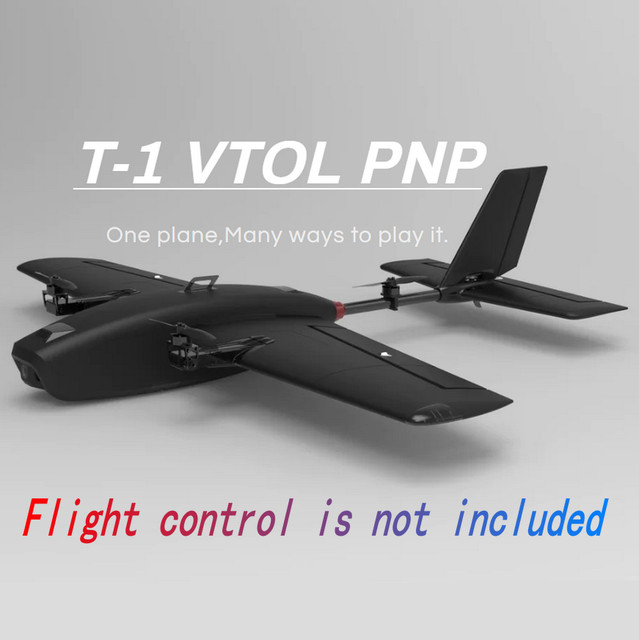
A small twin-motor V-tail built around portability rather than payload — it breaks down small enough to fit in a backpack, which matters more than it sounds once ‘long range’ means driving somewhere remote to fly. The twin-motor setup gives a thrust-to-weight ratio well above 1:1, so it climbs out fast and still has reserve power if one motor underperforms.
- 730mm wingspan, dual-motor EPP wing
- Metal-geared digital servos on the Pro version
- Quick-disassembly design for transport
- Flight controller included
- Very portable for its power
- Redundant twin-motor layout
- Comes with a flight controller rather than requiring a separate one
- Smallest wingspan on this list limits glide efficiency
- Payload bay is tight for larger battery packs
X-UAV Talon 1718mm
The older, larger sibling in X-UAV’s Talon line, closer to a mapping platform than a hobby wing — a deep fuselage designed to carry a gimbal or a full long-range radio stack rather than being stretched to fit one. It’s sold as a bare kit, which keeps the price down but means the buyer supplies motor, ESC, servos and receiver.
- 1718mm wingspan, EPO V-tail flying wing
- Deep fuselage payload bay
- Detachable wing panels
- Widely used base for ArduPilot builds
- Large payload capacity for gear and battery
- Long track record in the mapping and long-range community
- Stable in wind due to its size
- Bare kit — no motor, ESC, servos or electronics included
- Large enough that it needs a car, not a backpack, to transport
X-UAV Mini Talon
A scaled-down version of the Talon that keeps the same deep-fuselage layout in a size that’s actually easy to hand-launch and transport. It’s the cheapest way onto this list to get a genuine payload bay rather than a wing with electronics wedged into it, but like the larger Talon it ships as a bare airframe.
- 1300mm wingspan, EPO V-tail flying wing
- Payload bay sized for a standard FPV stack
- Detachable wings
- Lightweight foam construction
- Most affordable Talon-family option
- Good balance of portability and payload room
- Established, well-documented airframe
- Bare kit — electronics sold separately
- Less wind-stable than the larger 1718mm Talon
Skywalker X8
The heavy hauler of this list — a 2120mm flying wing with roughly 2kg of payload capacity, built for pilots who want to carry a full long-range setup (bigger battery, dedicated video antenna, a second radio) rather than choose between them. It’s a bare airframe kit, and the size alone makes it the least practical wing here to travel with.
- 2120mm wingspan flying wing
- Roughly 2kg payload capacity
- EPO foam construction
- Large internal bay for multiple batteries or gear
- Largest payload capacity on this list
- Stable, forgiving flight characteristics for its size
- Long-standing favorite in the mapping and long-range FPV community
- Bare kit — no motor, ESC, servos or electronics included
- Wingspan makes it impractical without a large vehicle
Buying tips
- Buy your control-link radio (ExpressLRS or Crossfire) and antenna before you finalize a video system — the video link is usually what actually runs out of range first, not the control link.
- Match your video system to the airframe’s payload bay: analog 5.8GHz is lighter and cheaper, while a DJI or HDZero digital system flies further per watt but adds weight and cost.
- Weigh the completed aircraft, including the battery, before your first long-range flight — in the US, going over 250g triggers FAA registration, and the rules change again above 55lbs.
- Check whether your country requires Remote ID broadcast on the aircraft; it’s now enforced in the US for most registered drones and for flight above 400 ft.
- A visual observer standing next to you, in direct contact, is currently the only legal way to fly FPV further than you could personally see with your own eyes as a recreational pilot — plan for one before you plan a long flight path.
- Beyond-visual-line-of-sight flight generally needs a waiver under commercial (Part 107) rules; there is no waiver path for recreational flyers, so ‘how far can I legally go’ is a real constraint, not a technicality.
- A bigger wingspan does not automatically mean longer range — it means more payload capacity for the batteries and radio gear that actually determine range, so budget for those separately.
- Check whether a listing is a ‘kit’ or ‘PNP’ before ordering — bare kits like the Talon and Skywalker X8 need their own motor, ESC, servos and receiver bought separately.
As an Amazon Associate and eBay Partner, toptenpick.com earns from qualifying purchases. Prices and availability are subject to change.