

As an Amazon Associate and eBay Partner, toptenpick.com earns from qualifying purchases. Prices and availability are subject to change.
The purchase price of a flue gas analyser is the smaller half of what it costs, and buying on it is how engineers end up with an instrument they resent. BS 7967, Technical Bulletin 143 and BS EN 50379 all require these to be professionally calibrated at least every twelve months against UKAS-traceable reference gas — and an analyser with an expired certificate does not merely drift, it produces readings that are invalid. Any report written with it is invalid too, which matters enormously when the report says an appliance is safe. So the real question when comparing two analysers is not which is cheaper today. It is what the annual calibration costs, how long the turnaround is, and whether you can get a loan unit while yours is away.
That turnaround is a working-week problem, not an administrative one. An analyser away for calibration is an engineer who cannot certify work. Manufacturers and service centres differ enormously — some offer a same-week service or a swap unit, others take a fortnight — and for a sole trader that difference is real money. Ask before buying, not when the certificate is about to expire.
The second cost is sensors, and it is the one people are genuinely surprised by. Electrochemical CO and O₂ cells are consumables with a finite life, typically a few years, and they are replaced during calibration when they fall out of tolerance. On some instruments that is a modest part cost; on others it approaches the price of a new analyser, at which point people simply replace the unit. Ask what a cell change costs before you buy, because it determines whether the instrument has a five-year life or a two-year one.
On features, be honest about what you actually certify. A basic analyser measuring CO, CO₂, O₂ and flue temperature covers domestic gas work and the CO/CO₂ ratio that the standards are built around. Printer support matters if your paperwork demands a printed ticket; Bluetooth and app reporting matter if it does not. NOₓ, pressure and ambient CO are genuinely useful in commercial work and genuinely unnecessary for a domestic boiler round.
And a practical one that shortens sensor life more than anything else: run the pump on clean air at the end of a test until the readings return to baseline. Leaving a probe full of condensate and combustion products between jobs is the fastest way to kill a cell early and bring the next calibration bill forward.
| # | Product | Price | Where to buy |
|---|---|---|---|
| 1 | Kane 458s | $550–$900 | Amazon |
| 2 | Testo 300 / 300 Longlife | $900–$1,600 | Amazon · eBay |
| 3 | Anton Sprint eVo | $500–$900 | Amazon · eBay |
| 4 | TPI 709R | $400–$750 | Amazon |
| 5 | Annual Calibration Service | $120–$250 | Amazon |
| 6 | Replacement CO and O2 Sensor Cells | $90–$300 | Amazon |
| 7 | Spare Probe, Hose and Water Trap | $80–$220 | Amazon |
| 8 | Bluetooth Printer | $150–$300 | Amazon |
| 9 | Ambient CO Monitor / Personal Alarm | $90–$200 | Amazon |
| 10 | Cheap Unbranded Analyser (understand what you are buying) | $120–$300 | Amazon |
The picks, in detail
Kane 458s
A domestic-focused analyser from a manufacturer with a substantial UK service network, which is the part that matters over the instrument’s life. It covers the CO, CO₂, O₂ and flue temperature measurements domestic work is built around, with Bluetooth reporting to a phone. The reason to shortlist it is calibration logistics: a maker with many service centres generally means shorter turnarounds.
- CO, CO₂, O₂ and flue temperature
- Bluetooth app reporting
- Rechargeable battery
- Broad UK service and calibration network
- Established service network means realistic turnaround
- Covers everything a domestic round needs
- App reporting removes the printer question
- Annual calibration is an unavoidable recurring cost
- Sensor replacement adds to that at intervals
- More instrument than a very occasional user needs

Testo 300 / 300 Longlife
Testo’s current domestic and light commercial instrument, and the Longlife variant is worth understanding because it addresses exactly the cost problem above: a sensor designed for a longer service life reduces how often a calibration visit turns into a sensor bill. Large colour touchscreen, which sounds like a luxury until you are reading it in a dark airing cupboard.
- Colour touchscreen interface
- Longlife sensor option for extended cell life
- Wireless reporting and printing
- Rugged case with magnets
- Longlife sensors cut the recurring cell cost
- Screen genuinely easier to read in poor light
- Strong build and good service network
- Expensive up front
- Touchscreen is harder with gloves on
- Longlife options carry a price premium
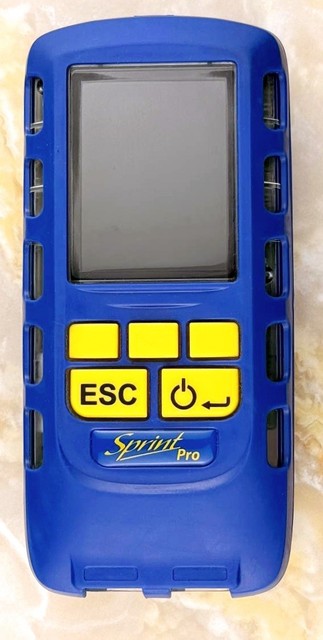
Anton Sprint eVo
A long-standing domestic analyser range with a strong following among UK gas engineers, and a sensible middle option between the budget and premium ends. The eVo covers the standard domestic suite, prints via a compatible printer and reports over Bluetooth. Check which model in the range you are buying — the numbering covers quite different feature sets at quite different prices.
- CO, CO₂, O₂ and flue temperature
- Bluetooth and optional printer
- Rugged rubberised case
- Several models within the range
- Well regarded among domestic engineers
- Robust construction for van life
- Good middle ground on price
- Range numbering is confusing — check the specific model
- Printer is a separate purchase
- Calibration turnaround varies by service centre
TPI 709R
A competitively priced analyser that regularly appears on the shortlist for engineers buying their first instrument. The 709R covers the domestic measurement set with an integral printer option, and TPI’s calibration pricing is generally at the sensible end. As always, confirm the current calibration cost and turnaround for your region before committing.
- CO, CO₂, O₂ and flue temperature
- Integral or companion printer options
- Hard carry case included on most kits
- Competitive calibration pricing
- Good value for a first professional instrument
- Sensible ongoing calibration cost
- Complete kits with case and probe
- Interface less polished than the premium units
- Fewer service centres than the biggest names
- Printer paper is another consumable
Annual Calibration Service
The recurring cost that defines ownership, and it belongs on this list as a line item rather than a footnote. Calibration must be against UKAS-traceable certified reference gas and at least every twelve months, and the certificate must be in date for a reading to be valid — including for assessment purposes. Budget for it annually, book it before expiry rather than after, and ask about loan units.
- UKAS-traceable reference gas calibration
- Certificate valid for twelve months
- Sensor check and replacement where out of tolerance
- Loan units offered by some providers
- Makes your readings and reports valid — without it they are not
- Catches failing sensors before they cost you a job
- Some providers offer a loan unit to cover downtime
- Unavoidable annual cost regardless of usage
- Turnaround can leave you without an instrument for days
- Sensor replacements are billed on top
Replacement CO and O2 Sensor Cells
The consumable that decides whether your analyser has a long life or a short one. Electrochemical cells degrade over a few years whether or not the instrument is used heavily, and they are replaced at calibration once out of tolerance. Find out the cell price for your specific model before you buy the instrument — on some units it is a modest part, on others it approaches the cost of replacing the analyser entirely.
- Electrochemical CO and O₂ cells
- Model-specific parts
- Typically replaced at calibration
- Finite shelf and service life
- Restores an otherwise sound instrument
- Usually fitted during the annual calibration
- Cheaper than a new analyser on most models
- Degrade with age whether used or not
- On some models the cost approaches a new unit
- Must be fitted and calibrated professionally
Spare Probe, Hose and Water Trap
The parts that break, and a probe with a kinked hose or a saturated water trap will give you readings that look like a faulty appliance. The trap is doing a real job — condensate reaching a sensor damages it — so filters are a genuine consumable rather than an accessory. Carry a spare of each; a failed probe on site is a wasted visit, and they cost a fraction of a call-out.
- Flue probe with thermocouple
- Sample hose and water trap assembly
- Replaceable particulate filters
- Model-specific fittings
- Prevents a wasted site visit
- Filters protect sensors from condensate
- Cheap relative to a lost job
- Fittings are model-specific — check before ordering
- Filters need replacing regularly
- Probes are easily damaged in a van
Bluetooth Printer
Worth buying if your customers, your landlord clients or your paperwork process want a printed ticket at the door. Modern analysers report to an app and email a PDF, which is better in most respects — but a printed ticket handed over at the end of a visit still closes a job cleanly for some customers. Thermal paper fades, so tell customers to photograph anything they need to keep.
- Bluetooth thermal printer
- Battery powered
- Rolls of thermal paper
- Pairs with most current analysers
- Closes a job with a physical document
- Works where there is no phone signal
- Small enough for a tool bag
- Thermal prints fade within months
- Another battery to charge
- Paper is an ongoing consumable
Ambient CO Monitor / Personal Alarm
A different instrument for a different purpose, and worth owning alongside. An analyser samples the flue; a personal CO alarm watches the room you are standing in, and it is the one that protects you rather than the certificate. Clip-on personal monitors are inexpensive and many engineers treat them as standard kit for the same reason they wear boots.
- Continuous ambient CO monitoring
- Audible and vibrating alarm
- Clip-on personal format
- Multi-year sealed sensor on many
- Protects the engineer rather than the paperwork
- Cheap relative to the risk
- Sealed units need little maintenance
- Not a substitute for a flue gas analyser
- Sealed units expire and must be replaced whole
- False alarms in some environments
Cheap Unbranded Analyser (understand what you are buying)
Named because these fill marketplace listings at a fraction of the price. The measurement may well be adequate; the problem is everything around it. Without a UKAS-traceable calibration certificate the readings are not valid for certification work, and an instrument with no service network cannot be recertified — which makes it a device that produces numbers rather than an instrument you can sign work off with.
- CO, CO₂ and O₂ measurement
- Very low purchase price
- No established calibration or service route
- Generic or rotating brand names
- Cheap
- May be adequate for non-certification curiosity
- No UKAS-traceable calibration route, so readings are not valid for certification
- No service network means it cannot be recertified
- A report written with it is invalid, which is a liability rather than a saving
Buying tips
- Compare the annual calibration cost, not just the purchase price. BS 7967, TB143 and BS EN 50379 require professional calibration at least every twelve months against UKAS-traceable gas, and that bill arrives every year.
- Understand that an expired certificate invalidates the reading, not just the accuracy. A report written with an out-of-calibration analyser is invalid too, which is a liability when the report says an appliance is safe.
- Ask about turnaround and loan units before buying. An analyser away for a fortnight is an engineer who cannot certify work, and service centres differ enormously.
- Ask what a sensor cell costs for that specific model. Electrochemical cells are consumables with a finite life, and on some instruments a replacement approaches the cost of a new unit.
- Buy for the work you actually certify. CO, CO₂, O₂ and flue temperature covers domestic gas; NOₓ, pressure and ambient CO are commercial features you may never use.
- Purge the pump on clean air at the end of every test until readings return to baseline. Leaving combustion products and condensate in the probe is the fastest way to kill a cell early.
- Carry a spare probe assembly and filters. A kinked hose or a saturated water trap produces readings that look exactly like a faulty appliance, and a failed probe on site is a wasted visit.
- Book calibration before the certificate expires, not after. Working with a lapsed certificate is not a paperwork problem — it is work you cannot legitimately sign off.
As an Amazon Associate and eBay Partner, toptenpick.com earns from qualifying purchases. Prices and availability are subject to change.