

As an Amazon Associate and eBay Partner, toptenpick.com earns from qualifying purchases. Prices and availability are subject to change.
The single mistake that undoes a water lily feeding routine is treating it like a houseplant you water with diluted fertilizer. Water lilies and lotus feed almost entirely through roots sitting in a submerged pot of heavy garden loam, not through open water. Any fertilizer that ends up dissolved in the pond itself — a liquid feed, a loose granule, a tablet that crumbles before it’s buried — never reaches those roots. It just becomes free nutrient sitting in open water, which is exactly what algae is waiting for.
That’s not a vague warning; there’s a specific mechanism behind it. In freshwater, phosphorus is almost always the nutrient that caps how much algae a pond can grow — a single pound of available phosphorus can support roughly 500 pounds of algae. So the fertilizer’s middle number, the P in N-P-K, is the one that matters most once any of it is loose in open water. A low-phosphorus tablet buried in the pot is safe; the same tablet dissolved loose in the pond is feeding the exact bloom you’re trying to avoid.
Every fertilizer below is built to be pushed into soil, not sprinkled on water, and the label says so. Push a tablet or capsule a few inches deep near the plant’s root zone, away from direct contact with the roots themselves (contact can burn them), then press soil back over the top so nothing is left exposed. Lotus shouldn’t be fed at all until it has at least two aerial leaves standing above the water — feed it earlier and you’re feeding the pond, not the plant.
N-P-K ratios vary more across these brands than you’d guess given they’re all sold as pond-safe. Several run a phosphorus figure around 14, one runs closer to 3, two run above 20. All are formulated for buried application and none feed algae if buried as directed — but a lower-phosphorus formula is the more forgiving choice if a tablet ever crumbles loose, gets dug up by a fish, or you’re feeding a shallow container where a few inches of soil depth is hard to get.
None of this requires guessing at dosage. Every product here states tablets per gallon of pot soil and a feeding interval, generally every two to four weeks through the growing season, more often once water warms past 75°F. Stick to the stated rate — overfeeding buried fertilizer doesn’t reach the plant any faster, it just sits unused in the pot.
| # | Product | Price | Where to buy |
|---|---|---|---|
| 1 | Aquascape Once-A-Year Pond Plant Fertilizer Tablets | $10–$18 | Amazon · eBay |
| 2 | Aquascape Once-A-Year Pond Plant Fertilizer Capsules | $12–$20 | Amazon · eBay |
| 3 | CrystalClear Thrive Aquatic Plant Fertilizer Tablets | $8–$16 | Amazon · eBay |
| 4 | PondTabbs Fertilizer Tablets | $10–$20 | Amazon · eBay |
| 5 | API PondCare Aquatic Plant Food Tablets | $6–$12 | Amazon · eBay |
| 6 | Chalily Aquatic Plant Fertilizer for Water Lily and Lotus | $10–$18 | Amazon · eBay |
| 7 | Waterlily World Fertilizer Tabs | $10–$20 | Amazon |
| 8 | GreenPro Root Tabs Fertilizer Tablets | $8–$14 | Amazon · eBay |
| 9 | Bitex Fertilizer For Lotus & Water Lily | $8–$14 | Amazon · eBay |
The picks, in detail
Aquascape Once-A-Year Pond Plant Fertilizer Tablets
A genuinely low-phosphorus formula (the 3 in its 11-3-14) aimed at cutting algae risk if any nutrient escapes the pot, with enough potassium to still push strong blooms. Formulated as a single, slow 180-day release rather than a repeat monthly dose, so it suits an owner who doesn’t want to remember a feeding schedule. Best for lilies already established in their pots rather than a fresh planting.
- 11-3-14 NPK, slow release
- 180-day feeding duration per application
- Low phosphorus formula
- Tablet form for potted plants
- Lowest phosphorus figure on this list, safest if any dissolves loose
- One application covers most of the growing season
- High potassium supports bloom production
- A single big dose is less flexible than monthly tablets if growth is uneven
- Costs more per feeding than the monthly tablet brands
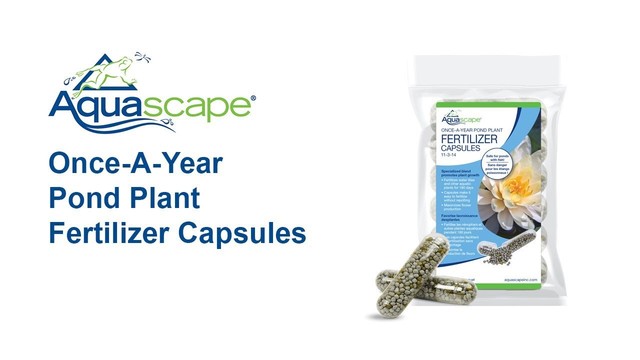
Aquascape Once-A-Year Pond Plant Fertilizer Capsules
The same low-phosphorus 11-3-14 formula as Aquascape’s tablets, in a rigid capsule meant to be pushed into an already-established, potted plant without repotting or disturbing the roots. The harder shell survives being driven several inches into packed soil better than a softer tablet does. The tablet version is the better buy for a brand-new planting where the soil is loose and being mixed anyway.
- 11-3-14 NPK, slow release
- Rigid capsule for pushing into packed soil
- 180-day feeding duration
- No repotting required
- Easier to drive deep into an established, root-bound pot than a tablet
- Same low-phosphorus safety margin as the tablet version
- One application per season
- No real advantage over the tablet for a fresh planting
- Same higher per-feeding cost as the tablet version

CrystalClear Thrive Aquatic Plant Fertilizer Tablets
A widely stocked monthly tablet with a mid-range phosphorus figure, sold in 30, 60 or 200-count bags so it scales from a single container pot to a multi-plant pond. The label calls for one tablet per gallon of pot soil, pushed a finger-depth in and roughly three inches from the crown, with more frequent feeding once water temperature climbs past 75°F.
- 10-14-8 NPK
- Sold in 30/60/200-tablet counts
- 1 tablet per gallon of soil, monthly
- Fish-safe formulation
- Available in a size that matches almost any pot count
- Straightforward, well-documented dosing
- Widely available at pond and general retailers
- Higher phosphorus than the Aquascape line, less margin for error if not fully buried
- Needs monthly reapplication rather than one seasonal dose

PondTabbs Fertilizer Tablets
A fast-acting monthly tablet at 10-14-8, dosed at two tablets per gallon of pot soil every four weeks through the growing season — a higher tablet count per gallon than most competitors here, which some growers prefer for a quicker initial nutrient release. Sold in bulk counts up to 1,200 tablets for anyone running several pots or a larger pond.
- 10-14-8 NPK
- 2 tablets per gallon of soil, every 4 weeks
- Fast-acting release
- Bulk counts available up to 1,200 tablets
- Bulk pricing scales well for multiple pots
- Fast initial nutrient release
- Long track record in the water-garden trade
- Same mid-range phosphorus figure as most of this list, not the low-P option
- Higher tablet-per-gallon rate means more product used per feeding

API PondCare Aquatic Plant Food Tablets
The tablet most likely to already be sold alongside general pond-care supplies rather than specialty water-garden retailers, since API is primarily a fishkeeping brand. Runs 10-12-8, a touch lower in phosphorus than the fertilizers built specifically for lily and lotus growers, and includes the same trace minerals — iron, manganese, zinc, boron — most of the others carry.
- 10-12-8 NPK
- Includes iron, manganese, zinc, boron trace minerals
- 25-tablet, 3.8oz package
- Push-into-soil tablet form
- Easy to find at general pet and garden retailers
- Slightly lower phosphorus than most of the monthly tablets here
- Recognizable, long-established brand
- Smaller package size than the dedicated pond brands
- Less specialized than fertilizers formulated specifically for lilies and lotus
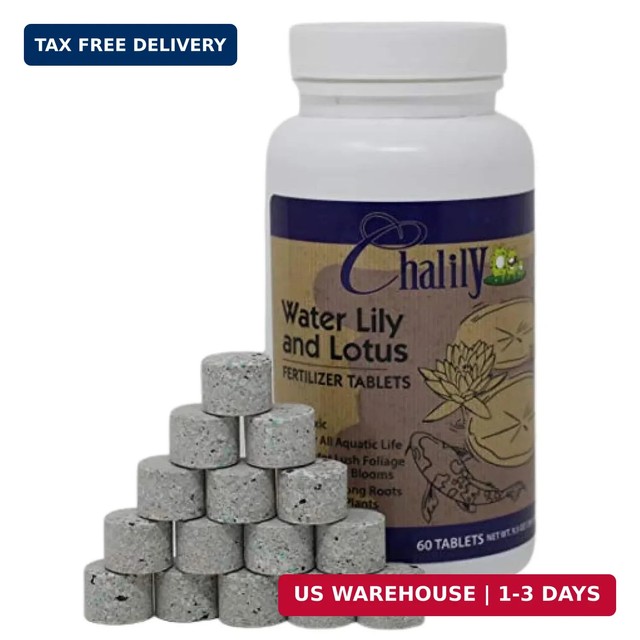
Chalily Aquatic Plant Fertilizer for Water Lily and Lotus
A 10-14-8 tablet formulated with added humates, sold specifically for water lily and lotus growers rather than general pond plants, with a twice-monthly dosing schedule (the 1st and 15th, April through August) instead of the once-a-month rate most competitors use. Sold in counts from 60 up to 4,000 tablets for large-scale water gardens.
- 10-14-8 NPK with humates
- 1 tablet per gallon of soil, twice monthly
- Counts from 60 to 4,000 tablets
- Formulated specifically for lily and lotus
- Humate content is a genuine point of difference from the plain NPK tablets
- Scales to very large plantings
- Clear, specific dosing calendar
- Twice-monthly feeding is more upkeep than the once-a-month brands
- Same mid-range phosphorus as most of this list
Waterlily World Fertilizer Tabs
Another 10-14-8 tablet, this one marketed on binding to the clay particles in loam potting soil so the nutrient stays put in heavy pond soil rather than washing free. Waterlily World is explicit that lotus shouldn’t be fed until the plant has at least two aerial leaves above the waterline — feeding a young, fully submerged lotus just feeds the water.
- 10-14-8 NPK
- Formulated to bind with clay-loam potting soil
- 2 tablets per gallon of soil, every 4 weeks
- Available in 60/300/1,200-tablet counts
- Clay-binding claim addresses a real risk of tablets washing loose in loose soil
- Explicit, correct guidance on when to start feeding lotus
- Bulk counts for larger ponds
- No independent testing found on the clay-binding claim beyond the manufacturer’s own description
- Same mid-range phosphorus as most tablets on this list
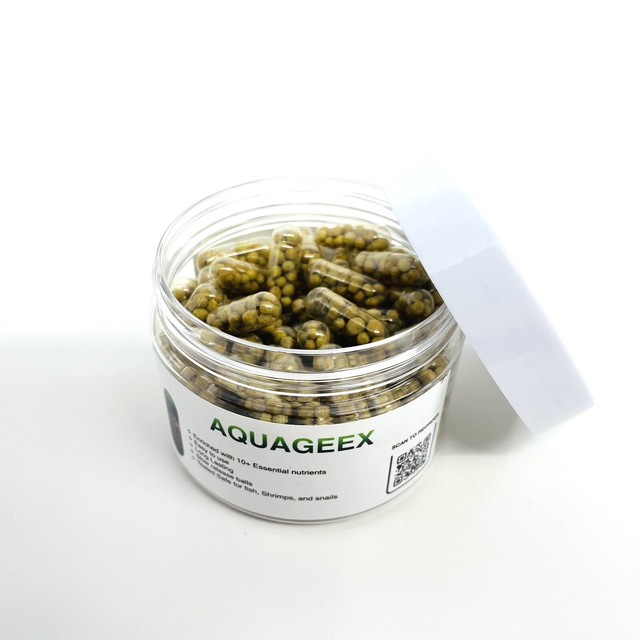
GreenPro Root Tabs Fertilizer Tablets
Runs 9-23-20, meaningfully higher in phosphorus than every other tablet on this list, which pushes more aggressively toward bloom and root growth but leaves the least margin for error if a tablet isn’t fully buried. Sold in small 12-count packs aimed at aquarium and small container use as much as full ponds, so it fits a tub or half-barrel water garden better than a large pond.
- 9-23-20 NPK
- 12-count pack size
- Push-into-substrate tablet
- Marketed for aquarium, tank and container use as well as ponds
- Small pack size suits a single container or tub water garden
- High phosphorus and potassium for aggressive bloom growth
- Doubles as an aquarium root tab
- Highest phosphorus figure on this list — the least forgiving if a tablet crumbles loose in the water
- Small pack count means frequent reordering for a full pond
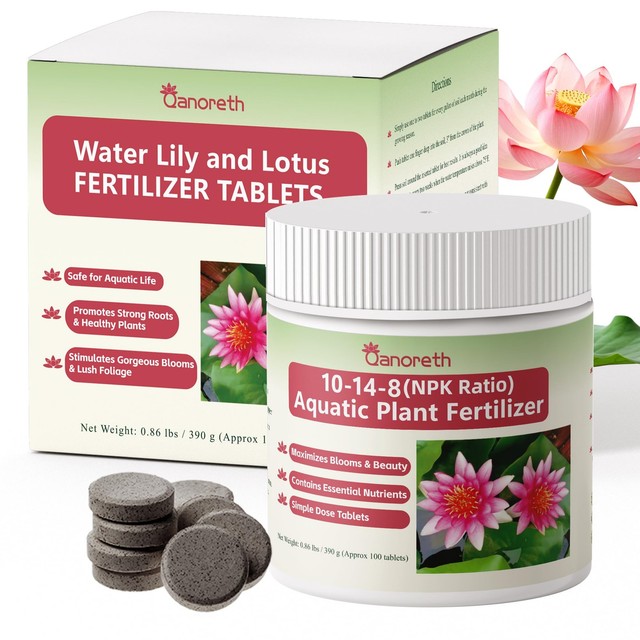
Bitex Fertilizer For Lotus & Water Lily
Also runs 9-23-20, the same high-phosphorus profile as GreenPro, dosed monthly at two to four tablets depending on plant and container size. Sold in small 12-tablet packs through Amazon’s US, UK and Canadian storefronts. Fine for a grower who wants maximum bloom push in a small container and is careful about burying every tablet fully.
- 9-23-20 NPK
- 12-tablet pack
- 2-4 tablets monthly per plant, by size
- Marketed specifically for lotus and water lily
- High phosphorus and potassium for strong bloom production
- Simple, size-scaled dosing guidance
- Compact pack suits a small water garden
- Same high-phosphorus caution as GreenPro — least forgiving if not fully buried
- Small pack size, higher cost per tablet than the bulk pond brands
Buying tips
- Push every tablet or capsule at least a couple of inches into the potting soil and press soil back over it — never drop one loose on top of the soil or into open water.
- Keep the tablet away from direct contact with the plant’s roots; touching roots directly can burn them, so aim for the edge of the pot rather than the crown.
- Check the middle number on the guaranteed-analysis label before buying — that’s the phosphorus figure, and it’s the nutrient most responsible for algae growth if any fertilizer ever escapes into open water.
- Don’t feed a newly planted lotus until it has at least two aerial leaves standing above the water; feeding it while fully submerged just feeds the pond.
- Stick to the tablets-per-gallon-of-soil rate stated on the label rather than guessing — overfeeding buried fertilizer doesn’t reach the plant any faster, it just sits in the pot.
- Increase feeding frequency once water temperature climbs above 75°F, when lilies are actively growing fastest and pulling nutrients quickest.
- Use a heavy garden loam, not a light potting mix, in the plant’s container — loose, light soil lets nutrients and fine sediment drift free into the water more easily.
- Re-pot and refresh the soil every couple of years rather than relying on fertilizer alone — old, exhausted soil holds nutrients and root systems less well no matter how much tablet you add.
As an Amazon Associate and eBay Partner, toptenpick.com earns from qualifying purchases. Prices and availability are subject to change.