

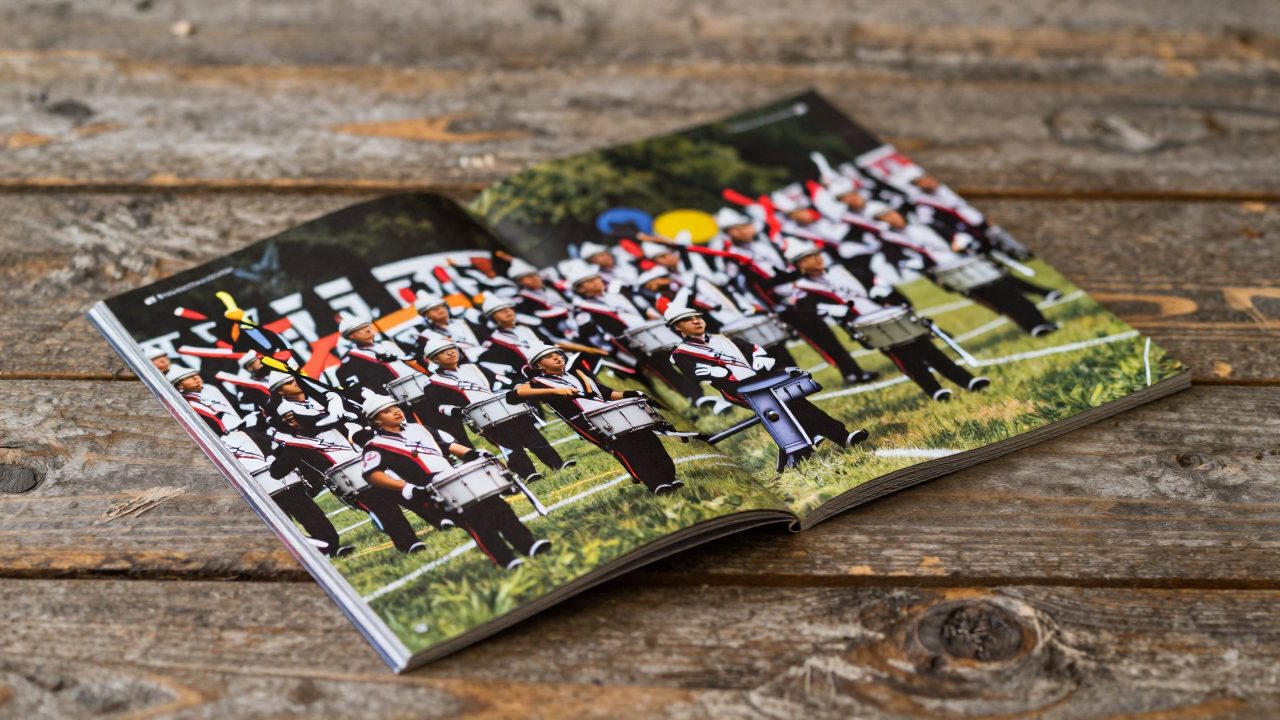
There is no objective answer to the best drum corps show ever. A show can be a competitive landmark, a design breakthrough, a personal favorite or all three, and those measures do not always agree. Start by deciding what you want from the viewing: unusually clean performance, memorable music, creative visual staging, a particular corps, or a snapshot of an era. That keeps a greatest-shows list from becoming a disguised list of final scores.
Use results as context, not a verdict
Championship results are a useful starting point because they record what judges rewarded under that season’s sheets. They are not a permanent ranking of entertainment value. The Cavaliers’ 2002 Frameworks won the DCI title with 99.15 and completed an undefeated season; Santa Clara Vanguard’s 2018 Babylon won with 98.625. Those facts make both sensible reference points, but they do not compel every viewer to prefer them to a lower-scoring finalist, an Open Class production or a show from a different rules era. Read the official score and recap, then watch the performance.
Scores also need their setting. Repertoire, field staging, amplification rules, judging criteria, venue acoustics and the practical demands on performers have changed substantially over time. Comparing two final scores from different decades as if the numbers came from one unchanged test gives the number more authority than it has. A better comparison asks what each production was attempting, whether its performers carried that idea through the full program, and what it contributed to the activity’s larger design vocabulary.
Watch more than one performance
A single finals video can be thrilling, but it can also conceal the season’s arc. Early-season recordings reveal how a program developed; regional and semifinal performances can show a different camera angle, weather condition or ensemble balance. When possible, compare at least two performances of the same show. Listen for whether musical ideas remain clear at different tempos and look for visual effects that read from a high angle as well as from the stands. A production that depends on one perfect camera shot may still be good, but it deserves a different evaluation from one that communicates consistently.
Use official archives, legally licensed recordings and corps channels when available. Video uploads can have altered audio, incomplete movements, inaccurate year labels or commentary that confuses rehearsal material with a final production. Credit the corps, arranger, composer and original source instead of treating a repost as the work itself. Respecting copyright also means avoiding unofficial download links: a show can be discussed in detail without distributing its recording.
Separate the design layers
Music is usually the clearest entry point. Ask whether the repertoire has a coherent arc, whether transitions make musical sense and whether the brass, percussion and electronic layers leave room for each other. A difficult book is not automatically effective; clarity, phrase shape and dynamic contrast matter as much as density. For percussion, notice both the written demand and how the battery, front ensemble and winds make space for one another. For brass, listen for balance across registers instead of concentrating only on volume.
Visual design deserves the same attention. Drill can create direction, mass, isolation, acceleration and surprise, but it should serve the musical moment rather than merely demonstrate mileage. Props, costumes and color-guard equipment are strongest when they clarify scale or story without blocking performers or making the field feel crowded. When a show has an explicit theme, test whether a viewer unfamiliar with the program note can perceive its main idea. Ambiguity can be intentional; confusion is not automatically depth.
Make a personal shortlist fairly
Build a shortlist across eras and corps rather than asking one production to carry every criterion. One show might be your choice for visual architecture, another for brass sound, another for emotional pacing and another for historical influence. Write a brief note after each viewing with the date, recording source and the moments that stayed with you. That prevents the newest or loudest viewing from automatically replacing a show that earned its place over repeated listens.
It is also useful to distinguish favorite from greatest. A favorite can be tied to a first live event, a former school program or a particular recording. A greatest claim asks for a reason that another viewer can examine: competitive achievement, sustained execution, influential design or unusual artistic coherence. Neither label is superior. Naming which one you mean makes discussion kinder and more specific.
A practical viewing order
Begin with an official champion list to establish dates and results, then select shows from several periods. Add a finalist that did not win, an Open Class or historic corps performance, and a recent program whose design language differs from the older selections. Watch once for the broad effect, once for music and once for visual detail. If a show remains compelling after those different passes, it belongs in your own conversation.
The best drum corps show is therefore not a title handed down by a score sheet. It is a production whose purpose, performance and lasting impact line up for the viewer making the choice. Use official results to ground the history, use complete legal recordings to evaluate the work, and leave room for reasonable disagreement. That approach produces a much better answer than pretending that a single number can settle an art form.