

As an Amazon Associate and eBay Partner, toptenpick.com earns from qualifying purchases. Prices and availability are subject to change.
An IS250 is now old enough that the most important suspension component on it is probably not a component you are shopping for. It is rubber.
Every arm, every link and every subframe mount on this car locates itself through a bonded rubber bush, and rubber does not last. After fifteen years and a hundred thousand miles those bushes are softened, cracked and deflecting under load — which means the wheel is not where the geometry says it is at the exact moment you are asking the car to do something. That is what produces the vagueness people describe as the car feeling “floaty” or “loose”, and it is the reason a set of expensive coilovers so often disappoints. A precise damper bolted to imprecise mounting points cannot produce a precise car. Worse, a stiffer setup loads worn bushes harder and makes their deflection more obvious, so the car can feel genuinely worse after the upgrade.
So before the coilover question, there is a diagnosis: put the car on a lift and have someone lever each arm while you watch the bushes. If they are visibly moving in their housings or cracked through, that is where the first money goes.
The second thing specific to this car: the IS250 is not an IS350 or an IS-F, and kits are often specced for the heavier, more powerful versions. The 2.5 V6 is a lighter engine and the car carries less weight over the nose. Front spring rates chosen for an IS-F will be too stiff for an IS250, which pushes the balance towards understeer and costs ride quality for nothing. Check that a kit lists the IS250 specifically, and check what the rates actually are rather than trusting a chassis-code fitment table.
Third, and it applies to this chassis as much as any other multi-link car: lowering it changes the rear geometry. The arms swing through an arc and pull in negative camber and toe change, which destroys the inside shoulders of the rear tyres within a few thousand miles. Adjustable rear arms and a proper alignment are part of the job, not an extra.
Ten picks below, in roughly the order the money should be spent.
| # | Product | Price | Where to buy |
|---|---|---|---|
| 1 | Front and Rear Suspension Bushing Kit | $200-$600 in parts | Amazon · eBay |
| 2 | Street-Rate Coilover Kit Specified for the IS250 | $800-$1,800 | Amazon · eBay |
| 3 | Lowering Springs with Matched Dampers | $500-$1,000 | Amazon |
| 4 | Adjustable Rear Camber and Toe Arms | $250-$600 for the set | Amazon · eBay |
| 5 | Strut Mounts and Bump Stops | $100-$250 | Amazon |
| 6 | Rear Shock Absorbers (Separate from the Springs) | $150-$450 a pair | Amazon · eBay |
| 7 | Rear Subframe and Differential Bushings | $150-$400 | Amazon · eBay |
| 8 | Four-Wheel Alignment and Corner Balance | $100-$250 | Amazon |
| 9 | Anti-Roll Bars and End Links | $300-$700 | Amazon · eBay |
| 10 | Performance Tyres in the Correct Size | $500-$1,200 a set | Amazon |
The picks, in detail
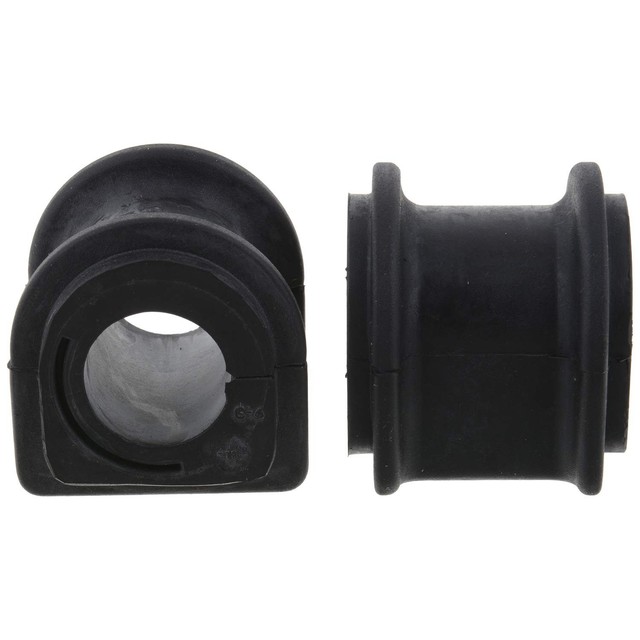
Front and Rear Suspension Bushing Kit
The first purchase, and on a car of this age very often the one that produces the biggest improvement. A full set of arm and link bushes restores the geometry to actually holding still under load, which is the precondition for anything else working. Rubber replacements ride closest to how the car left the factory; polyurethane is stiffer, lasts longer and transmits more noise. Either beats fifteen-year-old cracked rubber by a wide margin. It is labour-intensive, which is the real cost.
- Complete front and rear arm and link bushings
- Rubber or polyurethane options
- Includes subframe and differential mounts in full kits
- Direct fit for the XE20 chassis
- Frequently the largest single improvement on an old car
- Restores the precision coilovers depend on
- Cheaper in parts than a coilover kit
- Very labour-intensive — a press is usually needed
- Polyurethane transmits noticeably more road noise

Street-Rate Coilover Kit Specified for the IS250
The kit to look for once the bushings are sound: moderate spring rates chosen for the lighter 2.5 V6 rather than for an IS-F, with adjustable damping and adjustable ride height. Check the published spring rates rather than trusting the fitment table — plenty of kits list the whole XE20 range and use one set of rates across it. A lighter front end wants softer front springs, and getting that wrong pushes the car towards understeer and ruins the ride.
- Spring rates specified for the IS250 specifically
- Adjustable damping
- Height adjustment via the lower bracket on better kits
- Camber plates included on some
- Rates appropriate for the lighter engine
- Adjustable for both height and damping
- Better ride than an IS-F-rated kit on this car
- Many kits list one rate across the whole range
- Still firmer than stock at every setting
Lowering Springs with Matched Dampers
The often-better answer for a road car, and the one enthusiasts dismiss too quickly. A quality lowering spring paired with a damper valved for it gives you a modest drop, improved body control and a ride that remains civilised — and it costs a fraction of a coilover kit. What you give up is adjustability, and for a car that will sit at one ride height for its whole life that is not much of a loss. The essential part is matching: springs on stock dampers wears the dampers out fast.
- Progressive-rate lowering springs
- Dampers valved to match the spring rate
- Typical drop of 25-40 mm
- Sold as matched kits by better makers
- Far cheaper than coilovers
- Civilised ride for a daily driver
- Fewer parts to adjust, corrode or seize
- No ride height or damping adjustment at all
- Springs on unmatched dampers destroys the dampers

Adjustable Rear Camber and Toe Arms
Required once the car is lowered. The multi-link rear swings the arms through an arc as the car drops, adding negative camber and changing toe — and the result is destroyed inside shoulders on the rear tyres within a few thousand miles. Adjustable arms give the alignment technician the range to bring the geometry back to a sensible specification. Budget for them with the suspension, not afterwards, since fitting them later means paying for a second alignment.
- Adjustable rear camber and toe arms
- Extended adjustment range for lowered cars
- Spherical or bushed ends
- Direct fit for the XE20 rear
- Prevents rapid inner tyre wear
- Cheaper than the tyres they save
- No extra labour if fitted with the suspension
- Spherical versions add cabin noise
- Require an alignment afterwards
Strut Mounts and Bump Stops
The small parts that come with the strut and that people reuse to save money, then regret. A collapsed strut mount produces a clonk over bumps that sounds exactly like a worn damper, and a perished bump stop means the suspension hits bare metal at the end of its travel — which is harsh, damaging, and much more likely on a lowered car with less travel to begin with. Both are cheap and both are already exposed when the strut is out. Replace them.
- Upper strut mounts with bearings
- Progressive bump stops
- Dust boots to protect the shaft
- Sold as kits per corner
- Cures a clonk commonly blamed on the damper
- Zero extra labour during a suspension change
- Lowered cars rely on bump stops more, not less
- Some coilover kits supply their own — do not double up
- Easy to forget until the strut is already back in

Rear Shock Absorbers (Separate from the Springs)
Worth understanding about this chassis: the rear damper and spring are separate units rather than a combined coilover assembly. That has a practical consequence — you can replace rear dampers without touching the springs, which makes refreshing a tired rear end far cheaper than a full coilover kit. If the car’s problem is simply worn dampers rather than a desire to lower it, this is the targeted, inexpensive fix that a great many IS250s actually need.
- Separate rear damper units
- OE-equivalent and uprated options
- No spring compressor needed at the rear
- Direct fit
- Refreshes a tired rear end cheaply
- Much simpler job than the front struts
- No spring compression required
- Does not change ride height
- Mismatched front and rear damping feels odd
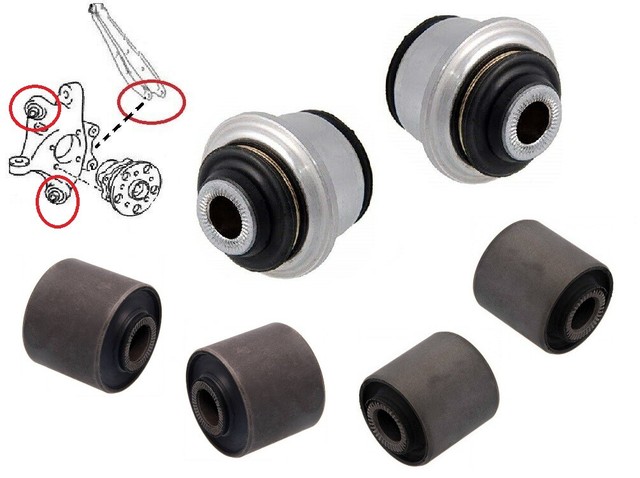
Rear Subframe and Differential Bushings
The bushings people miss, and on a rear-wheel-drive Lexus of this age they matter. Worn subframe mounts let the entire rear assembly shift slightly under power and braking, which produces a vague, delayed feel and a clunk on throttle transitions that gets blamed on the differential. Replacing them tightens up the whole back of the car in a way no damper can. It is a substantial job, so do it at the same time as anything else back there.
- Rear subframe mounting bushes
- Differential mount bushings
- Rubber or polyurethane
- Solid aluminium options for track use
- Removes vagueness and clunks blamed on the diff
- Tightens the whole rear of the car
- Often overlooked on high-mileage examples
- Significant labour — the subframe must be dropped
- Solid mounts transmit substantial noise and vibration
Four-Wheel Alignment and Corner Balance
The step that makes everything above worth having. After changing ride height or any arm, the car needs a proper four-wheel alignment — and on a lowered car it wants target figures that differ from the factory numbers, which not every shop will know or offer. Ask beforehand whether they are comfortable with lowered cars and adjustable arms. Corner balancing, where available, evens out the weight on each wheel and is worth it if you have adjustable coilovers.
- Four-wheel alignment on a proper rack
- Camber, caster and toe at all corners
- Corner weighting at specialist shops
- Printed before-and-after readings
- Everything above is wasted without it
- Printed figures prove what was set
- A good shop advises on targets for a lowered car
- Must be repeated after any height change
- Not every shop understands lowered geometry

Anti-Roll Bars and End Links
Often the better handling upgrade for the money on this car. Stiffer bars reduce body roll without stiffening the suspension in a straight line, so ride quality over bumps is unaffected — unlike stiffer springs. A stiffer rear bar in particular reduces the IS250’s natural understeer. And while you are there, replace the end links: worn links produce a rattle over small bumps that is commonly blamed on the dampers and costs very little to fix.
- Thicker front and rear bars
- Multiple mounting holes for adjustable stiffness
- Polyurethane or greaseable bushings
- Replacement end links with sealed joints
- Reduces roll without harming straight-line ride
- A rear bar directly addresses understeer
- End links cure a common rattle cheaply
- Too stiff a rear bar makes the car snappy at the limit
- Polyurethane bar bushes squeak without grease
Performance Tyres in the Correct Size
The unfashionable truth about handling: tyres matter more than any suspension part, and a set of good tyres on healthy stock suspension will outperform mediocre tyres on expensive coilovers. Worth stating on a coilover list because the money is very often better spent here first, particularly on an IS250 whose factory tyres were chosen for comfort and rolling resistance. If you are lowering the car, check arch clearance for your chosen size before committing to the drop.
- Summer or all-season performance compounds
- Staggered sizing on some IS250 configurations
- Treadwear ratings indicating compound softness
- Load and speed ratings matched to the car
- The single largest influence on how the car handles
- Immediate improvement with no installation complexity
- Cheaper than any suspension kit here
- Soft compounds wear fast and are poor in cold weather
- Lowering reduces arch clearance — check for rubbing
Buying tips
- Check the bushings before you buy dampers. On a car this old the rubber is softened and cracked, and a precise damper bolted to imprecise mounting points cannot make a precise car. Worse, a stiffer setup loads worn bushes harder and makes the vagueness more obvious — which is why people fit coilovers and report the car feeling worse.
- Verify the spring rates are for an IS250, not an IS-F. The 2.5 V6 is lighter and the car carries less weight over the nose. Kits frequently list the whole chassis range and use one set of rates across it, which means front springs specified for a heavier car. That pushes the balance towards understeer and costs ride quality for no benefit.
- Adjustable rear arms are part of the job when you lower it. The multi-link rear gains negative camber and changes toe as the car drops, and the result is destroyed inner shoulders on the rear tyres within a few thousand miles. The arms cost less than the tyres they save, and fitting them with the suspension avoids a second alignment bill.
- Replace strut mounts and bump stops while you are in there. A collapsed mount clonks over bumps in a way that sounds exactly like a worn damper, and a perished bump stop means metal-to-metal contact at the end of travel — which a lowered car reaches far more often, because it starts with less travel. Both are cheap and already exposed.
- Consider lowering springs with matched dampers instead. For a car that will live at one ride height, adjustability buys you little, and a good spring-and-damper pairing gives a modest drop with a civilised ride for a fraction of the cost. The critical word is matched — springs on unmatched dampers wears the dampers out quickly.
- Do not chase the lowest ride height. Every millimetre of drop removes suspension travel, and a car with no travel left crashes into its bump stops over every imperfection — worse for ride and worse for grip. A modest drop with the geometry corrected handles better than a slammed car on the same parts, and it keeps your tyres.
- Anti-roll bars are frequently the better value. They reduce body roll in corners without stiffening the car in a straight line, so ride over bumps is unaffected. A stiffer rear bar directly reduces this car’s natural understeer. Replace the end links at the same time — worn ones rattle over small bumps and get blamed on the dampers.
- Spend on tyres first if the budget is limited. Tyres influence how a car handles more than any suspension component, and the IS250’s factory rubber was chosen for comfort and rolling resistance rather than grip. Good tyres on sound stock suspension beat average tyres on expensive coilovers, every time.
As an Amazon Associate and eBay Partner, toptenpick.com earns from qualifying purchases. Prices and availability are subject to change.