

As an Amazon Associate and eBay Partner, toptenpick.com earns from qualifying purchases. Prices and availability are subject to change.
A 2080 Ti today is a used card going into a budget build, not a new one, and that changes what “will it fit” actually means. Nvidia’s own Founders Edition is 267mm long, but the partner cards buyers usually find secondhand run longer and heavier: ASUS’s Strix measures 304.7mm, MSI’s Gaming X Trio stretches to 327mm, Gigabyte’s Aorus Xtreme sits at 290mm. Sixty millimeters of spread across three well-known board partners means a case’s “up to 400mm GPU support” spec doesn’t settle anything by itself — you need your specific card’s listed length, not just the model name on the box.
The number that decides how well a case handles this card isn’t length, though — it’s the front panel. Nvidia rates the 2080 Ti at 260W, but independent power testing has measured it pulling closer to 275-280W under sustained gaming load, and a solid glass or solid steel front panel is a known bottleneck for exactly that kind of draw. It blocks direct intake air and forces front fans to pull through side vents or a narrow gap instead, and case reviewers have repeatedly measured GPU temperatures running 8-12°C hotter in a closed-front case than the same hardware in a mesh-front one. For a card this old, with years of dust in the heatsink and thermal paste that’s probably never been replaced, that gap can be the difference between running cool and throttling under load.
So the buying order that actually matters: confirm your specific 2080 Ti’s length against the case’s stated GPU clearance with a few centimeters of slack, since front fans and cable headers eat into that number in practice. Then pick a case with a mesh or heavily perforated front rather than the tempered-glass case that photographs better. Every pick below has a mesh or perforated front for exactly that reason — a $60 mesh case will very likely run this card cooler than a $150 case with a solid glass front.
One more thing worth knowing before you shop: a card this size and this power-hungry also wants real clearance around it, not just in front of it. A case rated for 400mm of GPU length that’s also packed with three front fans or a thick radiator can eat into that clearance fast, so check radiator support and GPU clearance together if you’re planning liquid cooling alongside it.
| # | Product | Price | Where to buy |
|---|---|---|---|
| 1 | Corsair 4000D Airflow | $80–$105 | Amazon · eBay |
| 2 | Phanteks Eclipse P400A | $60–$75 | Amazon · eBay |
| 3 | Montech Air 903 Max | $60–$80 | Amazon · eBay |
| 4 | Cooler Master MasterBox TD500 Mesh | $90–$100 | Amazon · eBay |
| 5 | Lian Li Lancool 215 | $69–$85 | Amazon |
| 6 | be quiet! Pure Base 500DX | $80–$130 | Amazon · eBay |
| 7 | Lian Li Lancool 216 | $98–$113 | Amazon · eBay |
| 8 | NZXT H5 Flow (2024) | $85–$95 | Amazon · eBay |
| 9 | NZXT H7 Flow | $130–$150 | Amazon · eBay |
| 10 | Fractal Design Meshify 2 Compact | $110–$150 | Amazon · eBay |
The picks, in detail

Corsair 4000D Airflow
The default recommendation for a reason: 360mm of GPU clearance covers every 2080 Ti board partner with room to spare, a mesh front panel that actually delivers on its airflow claims rather than just looking vented, and enough review volume and reseller stock that finding fitment answers online is never hard.
- 360mm GPU clearance
- Mesh front panel, 2 pre-installed 120mm fans
- ATX mid-tower, tempered glass side panel
- Bottom-mount PSU shroud with cable routing channels
- Clears even the longest 2080 Ti partner cards (MSI’s 327mm Gaming X Trio) with room to spare
- Mesh front is a genuine airflow design, not a glass panel with a few slots cut in
- Widely available with plenty of documented fitment reports online
- Only two fans included — budget for at least one more front intake
- Plain styling compared with newer RGB-forward cases
- No included fan/RGB hub, so extra fans mean more cable runs to the motherboard

Phanteks Eclipse P400A
The cheapest case on this list and still rated for 420mm of GPU clearance, more than any 2080 Ti board partner needs. Its mesh front panel was one of the designs that popularized airflow-first budget cases, and it still holds up thermally against pricier, newer competition.
- 420mm GPU clearance
- Full mesh front panel
- ATX mid-tower, tempered glass side panel
- 3 pre-installed 120mm fans on most SKUs
- Most GPU clearance for the least money on this list
- Mesh front panel design has years of positive thermal reviews behind it
- Ships with three fans already installed on most versions
- Cable management channels are tighter than pricier cases
- Fan hub and RGB features vary by SKU — check which variant you’re buying
- Steel gauge is thinner than the $100+ options here

Montech Air 903 Max
An E-ATX case with 400mm of GPU clearance and a front panel rated at roughly 51% open area, aimed at buyers who want maximum airflow without premium-brand pricing. Four 140mm fans come pre-installed, which is unusually generous for the price, and the E-ATX-sized interior leaves noticeably more room around a long 2080 Ti than a strictly ATX-sized budget case would.
- 400mm GPU clearance (about 320mm with a 360mm front radiator installed)
- High-open-area mesh front panel, 4 pre-installed 140mm PWM fans
- E-ATX support, vertical GPU mount compatible
- 360mm radiator support, front and top
- Most fans included out of the box for the price on this list
- E-ATX support gives extra motherboard headroom for future upgrades
- High mesh open-area rating backs up its airflow claims
- Front radiator installation cuts GPU clearance by roughly 80mm
- Larger E-ATX footprint takes up more desk or floor space than a standard mid-tower
- Newer, less established brand track record than Corsair, Fractal, or NZXT

Cooler Master MasterBox TD500 Mesh
A polygonal mesh front panel with three ARGB fans pre-installed, and 410mm of GPU clearance that comfortably clears the whole 2080 Ti lineup, including MSI’s 327mm Gaming X Trio. Cooler Master’s front-panel button cycles lighting modes without installing any software, a small but genuinely useful touch for a case at this price.
- 410mm GPU clearance
- Polygonal mesh front panel, 3 pre-installed 120mm ARGB fans
- ATX mid-tower, crystalline tempered glass side panel
- Front-panel ARGB mode button, no software required
- Three ARGB fans included covers most of the front intake out of the box
- Distinctive mesh design tests well for real airflow, not just looks
- Front-panel lighting control works without installing software
- Heavier than most cases on this list, less convenient to move often
- ARGB fans add a cable-management step the plainer cases skip
- Sits at the pricier end of this list’s budget options
Lian Li Lancool 215
Two pre-installed 200mm intake fans move a lot of air for the price, through a mesh front panel built specifically around them. GPU clearance comfortably covers the whole 2080 Ti lineup, and at under $80 it undercuts most of the mesh-front competition on this list while still shipping three fans in the box.
- About 368mm (14.5″) GPU clearance
- Mesh front panel, 2 pre-installed 200mm ARGB fans plus 1 rear 120mm
- ATX mid-tower, tempered glass side panel
- Removable dust filters, front and top
- Large 200mm intake fans move significant air at low noise for the price
- Clears every 2080 Ti partner card with margin to spare
- One of the least expensive genuine mesh-front cases available
- 200mm fans are a non-standard size — replacing them later means shopping a smaller market
- Reviewers note the stock fans are good, not class-leading
- Fewer color and finish options than the bigger case brands
be quiet! Pure Base 500DX
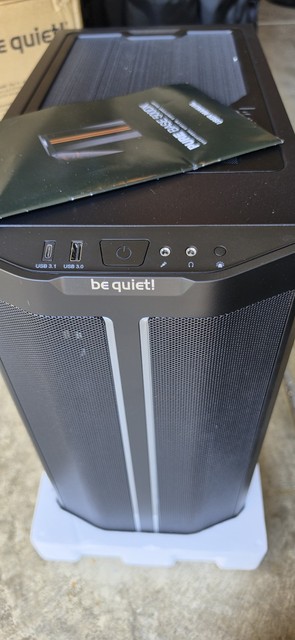
be quiet!’s reputation is for quiet operation, and the 500DX is its airflow-focused case: a mesh front, three pre-installed Pure Wings 2 fans, and a dedicated ARGB controller that skips motherboard headers entirely. 369mm of GPU clearance covers the 2080 Ti lineup with room to spare.
- 369mm GPU clearance
- Mesh front panel, 3 pre-installed Pure Wings 2 140mm fans
- ATX mid-tower, tempered glass side panel
- Dedicated be quiet! ARGB controller included
- Three quality fans pre-installed, not the generic ones some budget cases ship with
- Dedicated ARGB controller means lighting doesn’t compete for motherboard headers
- be quiet!’s acoustic engineering keeps airflow gains from costing you in noise
- Costs more than the Phanteks or Montech options for similar clearance
- Mesh front is less aggressively open than the Montech or TD500, slightly less peak airflow
- Interior cable routing is tighter than the larger 5000D-class cases

Lian Li Lancool 216
A step up from the 215 with 392mm of clearance and two larger 160mm front fans instead of 200mm units, aimed at buyers who want more conventional fan sizing for easier future upgrades while keeping the same mesh-first airflow approach that made the smaller Lancool a budget favorite.
- 392mm GPU clearance
- Mesh front panel, 2 pre-installed 160mm PWM fans plus 1 rear 140mm
- ATX mid-tower, tempered glass side panel
- Supports up to 10 fans total for further airflow tuning
- 160mm fans are a more common size than the 215’s 200mm units for future swaps
- Clears the full 2080 Ti lineup, including the longest 327mm partner cards
- Supports heavy fan configurations if you want to push airflow further
- Priced noticeably above its own smaller Lancool 215 sibling
- Standard ATX only, no E-ATX support for a future motherboard upgrade
- RGB version costs meaningfully more than the plain black SKU

NZXT H5 Flow (2024)
NZXT’s compact-but-not-cramped airflow case, with a perforated front panel and the clean internal cable routing that’s become the brand’s signature. GPU clearance comfortably clears every 2080 Ti variant, with headroom left over even after accounting for a front radiator, in a footprint smaller than most cases on this list.
- Up to 400mm GPU clearance, reduced with a front radiator installed
- Perforated mesh front panel, 2 pre-installed 120mm fans
- ATX mid-tower, tempered glass side panel
- 360mm front radiator support
- Clean, minimal internal cable routing that’s genuinely easier to build in
- GPU clearance comfortably covers the longest 2080 Ti partner cards
- Compact footprint without sacrificing mesh-front airflow
- Only two fans included — a card this power-hungry benefits from a third
- Front radiator installation eats meaningfully into the GPU clearance number
- NZXT’s companion CAM software is unnecessary overhead if you don’t want RGB control

NZXT H7 Flow
The larger sibling to the H5 Flow, with more interior volume for cable management and radiator support alongside the same perforated-front airflow approach. Worth the step up if you want room to add a front radiator later without touching GPU clearance, or simply want an easier case to build a first PC in.
- 410mm GPU clearance
- Perforated mesh front panel, bottom-mount fan option for direct GPU cooling
- ATX mid-tower, tempered glass side panel
- 420mm front radiator support
- Bottom-mount fan placement is a genuine airflow feature, not just marketing
- More interior room than the H5 Flow makes cable management noticeably easier
- 420mm radiator support leaves GPU clearance largely untouched
- Most expensive case on this list
- Larger footprint needs more desk or floor space than the compact options here
- Overkill if you’re not also planning liquid cooling or a heavy fan setup

Fractal Design Meshify 2 Compact
The tightest fit on this list at 341mm with the stock front fan installed — enough for most 2080 Ti cards but worth double-checking against the longest partner boards like MSI’s 327mm Gaming X Trio before buying. In exchange you get Fractal’s respected build quality and one of the more refined mesh-front designs available.
- 341mm GPU clearance with the front fan installed
- Fractal’s Aspect mesh front panel, 2 pre-installed 140mm fans
- ATX mid-tower, tempered glass or solid side panel options
- Removable, washable front dust filter
- Fractal’s build quality and fit-and-finish are a step above most budget cases
- Compact footprint without giving up a mesh front
- Dust filtering is more thorough than most cases at this price
- Clearance is genuinely tight against the longest 2080 Ti partner cards — measure first
- Removing the front fan to gain clearance costs you an intake fan
- Costs more than the Phanteks or Montech for less GPU clearance
Buying tips
- Look up your specific 2080 Ti model’s length — Founders Edition is 267mm, board-partner cards run up to 327mm — before checking it against any case’s GPU clearance spec.
- Subtract some slack from a case’s stated clearance number for front fans, radiators, or cable headers that eat into it in practice.
- Choose a mesh or heavily perforated front panel over tempered glass or solid steel — testing consistently shows meaningfully cooler GPU temperatures with mesh.
- Budget for at least one extra intake fan if the case only ships with two — a 260W+ card benefits from more airflow than the stock fan count usually provides.
- Check your power supply’s PCIe connectors before buying — most 2080 Ti cards need two 8-pin connectors, and an older PSU may only have one.
- Clean a used 2080 Ti’s heatsink and consider repasting it before final assembly — a secondhand card’s thermal paste is likely years old and degraded.
- Leave the case’s dust filters in place and clean them periodically — a mesh front’s airflow advantage only holds if the filter isn’t clogged.
- If you’re also adding an AIO or custom loop, check radiator support and GPU clearance together, since a front radiator often reduces both at once.
As an Amazon Associate and eBay Partner, toptenpick.com earns from qualifying purchases. Prices and availability are subject to change.