

As an Amazon Associate and eBay Partner, toptenpick.com earns from qualifying purchases. Prices and availability are subject to change.
A Jaguar does not fit a Stratocaster case, and the reason is worth understanding because it eliminates most of what is sold as a “Fender case”.
The Jaguar is an offset — its two body waists are not symmetrical, the lower horn sits differently, and the body is both wider and shaped differently from the Stratocaster and Telecaster that most cases are moulded for. It also has a shorter 24-inch scale, which changes where the body sits relative to the neck and headstock inside a case. Put a Jaguar in a Strat case and one of two things happens: it does not close, or it closes with the body free to move inside, which is worse. A guitar rattling inside a case is barely protected at all — the case absorbs an impact and then the guitar hits the inside of the case.
The practical consequence is a shopping rule: look for cases specified for offset bodies — Jaguar, Jazzmaster, Mustang, Jag-Stang and similar — and treat “fits Fender guitars” as meaningless. Jaguar and Jazzmaster bodies are close enough that a case for one almost always suits the other, which widens your options considerably.
There is a second Jaguar-specific point that catches people out. The bridge and the tremolo hardware stand proud of the body more than on a Stratocaster, and a case with a tight, flat interior can press on them. Over time that is how a bridge gets knocked out of position in transit, and on a Jaguar the bridge is famously willing to move. A case with enough depth over the hardware matters.
And one thing that applies to any guitar and gets forgotten with vintage-style instruments: a sealed case is a humidity chamber. Whatever the air was like when you closed it is what the guitar lives in until you open it. That is fine most of the time and it is the mechanism behind cracked finishes and lifted fingerboards when a guitar is stored somewhere cold or very dry.
Ten picks below, from a gig bag to a flight case.
| # | Product | Price | Where to buy |
|---|---|---|---|
| 1 | Moulded Hardshell Case for Offset Bodies | $120-$300 | Amazon · eBay |
| 2 | Fender Deluxe Moulded Case | $140-$280 | Amazon · eBay |
| 3 | Vintage-Style Tolex Case | $180-$400 | Amazon |
| 4 | Padded Gig Bag for Offset Guitars | $60-$180 | Amazon · eBay |
| 5 | Hybrid Semi-Rigid Case | $150-$350 | Amazon |
| 6 | Flight Case (ATA Rated) | $300-$700 | Amazon · eBay |
| 7 | Case Humidifier | $15-$45 | Amazon |
| 8 | Digital Hygrometer for the Case | $10-$30 | Amazon · eBay |
| 9 | Neck Support Cradle or Foam Block | $10-$30 | Amazon · eBay |
| 10 | Case Straps, Locks and Luggage Tags | $15-$45 | Amazon |
The picks, in detail

Moulded Hardshell Case for Offset Bodies
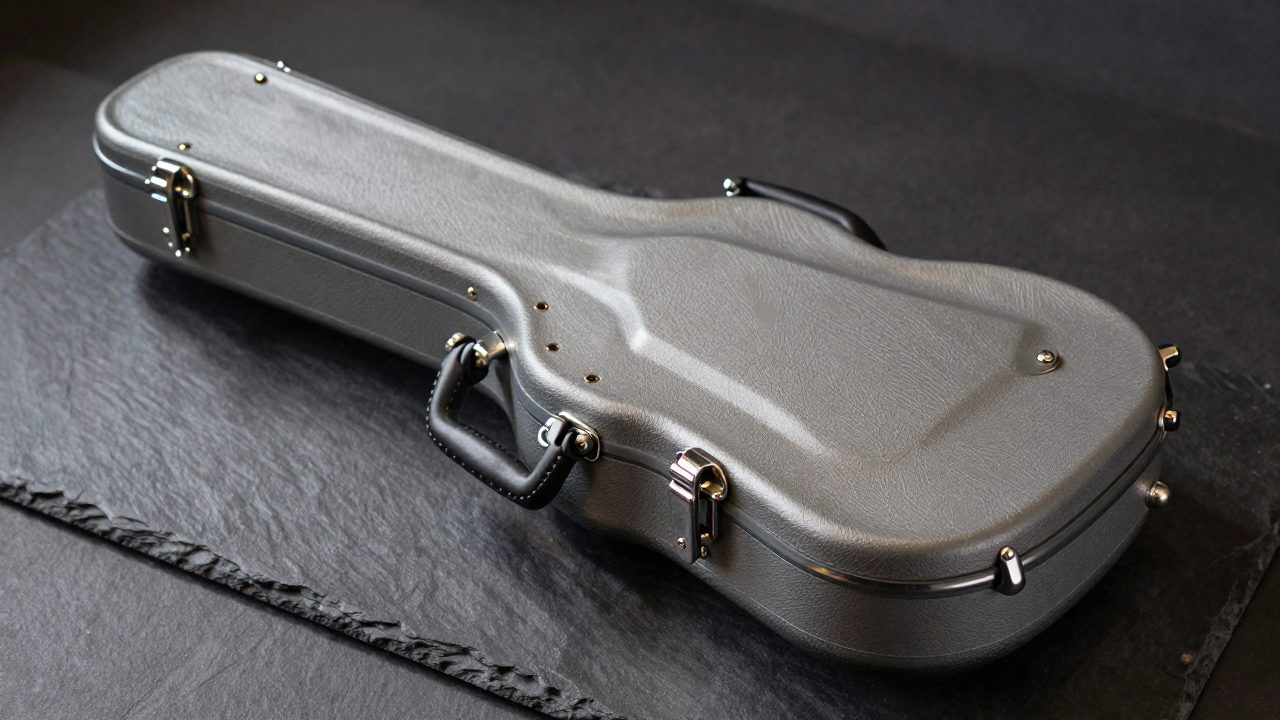
The default and the right answer for most owners. A hardshell case moulded specifically for the Jaguar and Jazzmaster body shape holds the guitar with no movement, which is the entire point — the interior should be snug enough that the instrument does not shift when you tip the case. Look for a plush-lined interior, an accessory compartment large enough for leads and a strap, and latches that engage firmly. Check the depth over the bridge if your Jaguar has a tall-set tremolo.
- Moulded for the offset body shape
- Plush-lined interior with neck support
- Accessory compartment
- Multiple latches, often with a lock
- No movement inside, which is what protection means
- Proper neck support under the headstock
- Suits Jazzmaster bodies too
- Heavy compared with a gig bag
- Rigid shape is awkward on public transport

Fender Deluxe Moulded Case
Fender’s own moulded cases are made for their body shapes, and the offset versions fit a Jaguar exactly as they should — which removes all the guesswork this article is about. Modern moulded ABS shells are lighter than the older wood-and-tolex construction while protecting as well or better, and the interiors are shaped rather than simply padded. As always, confirm the specific model is the offset one; Fender sells cases for several body shapes under similar names.
- Moulded ABS shell
- Shaped interior for the offset body
- Lighter than traditional wood construction
- Lockable latches
- Exact fit with no compatibility question
- Lighter than a traditional tolex case
- Widely available
- Several similar-sounding models — check the body shape
- Moulded shells scuff and cannot be refinished
Vintage-Style Tolex Case
The traditional wood-and-tolex construction, and the one that looks right with a vintage-style instrument. Wood shells are stiffer than moulded plastic and the plush interiors are usually more generous, and a tolex case can be recovered or repaired where a cracked moulded shell cannot. The costs are weight and price. If the guitar is a reissue or a genuinely old instrument that will mostly live at home and occasionally travel, this is the case that suits it.
- Plywood shell covered in tolex
- Deep plush interior
- Traditional latches and handle
- Repairable and recoverable
- Very stiff shell
- Can be repaired rather than replaced
- Looks correct with a vintage-style guitar
- Heavy
- Tolex marks and scuffs easily

Padded Gig Bag for Offset Guitars
For anyone who walks, cycles or takes public transport. A good gig bag with 20 mm or more of padding, a reinforced neck block and proper backpack straps is far more practical to carry than a hardshell and protects well against the knocks that actually happen in transit. It will not survive being dropped or put in a vehicle hold. Check that it is cut for an offset body — a bag that is too big lets the guitar move, which defeats the padding.
- 20 mm or thicker padding
- Reinforced neck and headstock protection
- Padded backpack straps
- External pockets for leads and pedals
- Far easier to carry any distance
- Backpack straps free both hands
- Pockets take leads, cables and a tuner
- No protection against a drop or a crush
- A loose fit lets the guitar move inside
Hybrid Semi-Rigid Case
The middle ground, and an increasingly good one. A semi-rigid case has a moulded or reinforced frame under a fabric exterior, giving structural protection much closer to a hardshell at gig-bag weight, with backpack straps and pockets. For a guitar that travels regularly by car and occasionally on foot, this is frequently the most sensible purchase on the list. Check the neck support specifically — the headstock area is where semi-rigid designs vary most.
- Moulded frame under a fabric shell
- Backpack straps and pockets
- Much lighter than a hardshell
- Water-resistant outer
- Close to hardshell protection at gig-bag weight
- Carries like a rucksack
- Storage pockets a hardshell does not have
- Neck support quality varies a lot between models
- Not rated for air travel

Flight Case (ATA Rated)
For actual air travel or touring. An ATA-rated case has a rigid shell, recessed hardware, foam fitted to the instrument and latches designed to survive baggage handling — which a normal hardshell is not. It is heavy and expensive and completely unnecessary for a guitar that goes to rehearsal in a car. But if your Jaguar is going in an aircraft hold, this is the only category on this list that is designed for that, and the difference is not marginal.
- ATA 300 rated construction
- Recessed latches and handles
- Fitted foam interior
- Ball corners and edge protection
- Designed for baggage handling
- Fitted foam holds the guitar absolutely still
- Recessed hardware survives stacking
- Very heavy and expensive
- Excessive for anything short of air travel
Case Humidifier
Directly relevant because a closed case is a sealed environment, and whatever the air was like when you shut it is what the guitar breathes until you open it. In a dry winter house, a fingerboard shrinks and the fret ends become sharp; in the extreme, finishes crack. A small case humidifier holds the interior in a sensible range. Choose a design that cannot leak — a gel or membrane humidifier is safer than a sponge in a tube, which can drip onto a finish.
- Sits in the case accessory compartment
- Gel or membrane designs that cannot drip
- Two-way versions absorb as well as release
- Refillable
- Prevents shrinkage and sharp fret ends in dry weather
- Two-way units manage both directions
- Cheap relative to a finish repair
- Sponge-type humidifiers can drip on a finish
- Needs refilling and checking regularly
Digital Hygrometer for the Case
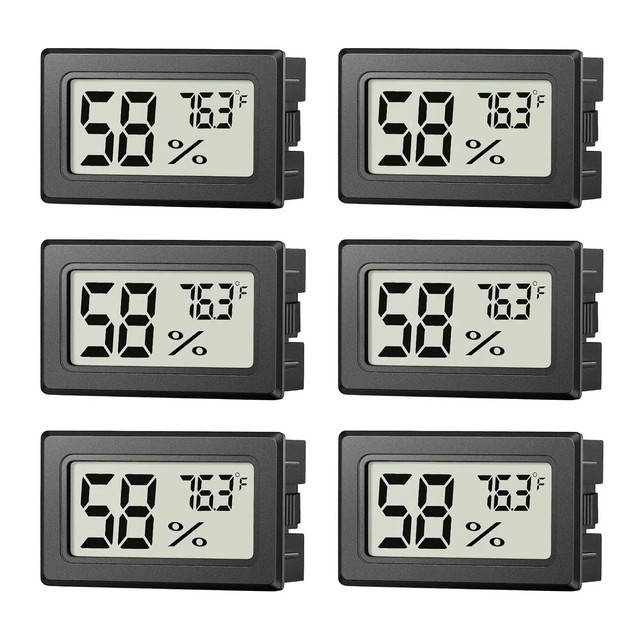
The instrument that tells you whether the humidifier is needed at all. A small hygrometer in the accessory compartment shows what the guitar is actually living in, which is the only way to know whether you have a problem — and guessing produces both under- and over-humidified guitars, the second of which is also damaging. Roughly 45 to 55 per cent relative humidity is the usual target. Check the reading against a known reference occasionally, since cheap hygrometers drift.
- Small digital hygrometer and thermometer
- Min/max recording on better units
- Fits an accessory compartment
- Battery lasts many months
- Turns humidity management into a measurement
- Min/max shows what happened while the case was shut
- Very cheap
- Cheap units drift and need checking
- Tells you nothing unless you actually look at it

Neck Support Cradle or Foam Block
A small fix for a real problem, particularly with an offset guitar whose body sits differently in a case than the case designer may have assumed. If the neck is not supported under the headstock, the guitar’s weight rests on the neck joint and the body edges, and a knock to the case transmits straight into the most vulnerable part of the instrument. A shaped foam block or cradle takes the load. It also stops the guitar sliding lengthways in a case that is slightly too long.
- Shaped foam supporting the neck under the headstock
- Fills gaps in a slightly oversized case
- Non-marking surface
- Trimmable to fit
- Takes the load off the neck joint
- Stops lengthways movement in a loose case
- Costs very little
- Cheap foam degrades and can mark a finish
- Not a substitute for a correctly sized case
Case Straps, Locks and Luggage Tags
Small hardware that solves the ways a case fails in the real world. A case strap adds a shoulder carry to a hardshell that only has a handle, which matters over any distance. Latch locks deter casual opening and, more usefully, stop a latch springing open if the case is knocked. And a luggage tag with your phone number on the outside, plus a card inside the case, is how a guitar left in a venue or on a train actually comes back to you. All of it costs very little.
- Adjustable shoulder strap with case clips
- Small padlocks for latch holes
- Luggage tags and internal identification cards
- Reflective or distinctive strap options
- Shoulder carry on a handle-only case
- Locks stop latches springing open on impact
- Identification is how lost guitars get returned
- Locks are a deterrent, not real security
- Cheap strap clips can fail under load
Buying tips
- Buy a case specified for offset bodies, not for Fender generally. The Jaguar’s body is asymmetric and wider than a Stratocaster’s, and its 24-inch scale changes where the body sits relative to the neck. A Strat case either will not close or will close loosely. Jaguar and Jazzmaster cases are almost always interchangeable, which widens your options.
- A guitar that moves inside a case is barely protected. The case absorbs the impact and then the guitar hits the inside of the case. Close a prospective case with the guitar in it and tip it gently — if you feel or hear anything shift, it is the wrong case, however good the shell is.
- Check the depth over the bridge. Jaguar bridge and tremolo hardware stands proud of the body more than on a Stratocaster, and a shallow interior presses on it. That is how a bridge gets knocked out of position in transit — and the Jaguar bridge is already famously willing to move. Look at the clearance with the lid closed.
- Loosen the strings a little for long storage or air travel. A quarter to a half turn on each takes some tension off the neck without leaving the truss rod completely unloaded, which matters across big temperature swings. Do not slacken them completely for ordinary transport — that removes the tension the neck is set up under.
- Let the case warm up before you open it. A guitar brought in from a cold car and opened straight away goes through a rapid temperature change, and lacquer contracts faster than wood does — which is what causes finish checking. Leave the case shut for an hour in the room first. This is the single most preventable damage a guitar suffers.
- A closed case is a humidity chamber. Whatever the air was like when you shut it is what the guitar lives in. In a dry house that means shrinkage and sharp fret ends; in a damp one it means swelling and sluggish action. A small hygrometer in the accessory compartment costs very little and turns guessing into knowing.
- Do not store the case flat with the guitar’s weight on the neck joint. Stand it upright, or lay it flat only if the interior supports the neck under the headstock. An unsupported neck carrying the body’s weight through the joint is a slow, avoidable stress. A shaped foam block fixes it for very little if your case’s support is inadequate.
- Put your name and number inside the case as well as on it. Outside tags fall off and get removed; a card inside is what identifies the instrument if it turns up somewhere. Photograph the serial number and any distinctive marks too — that record is what makes a stolen guitar recoverable and an insurance claim straightforward.
As an Amazon Associate and eBay Partner, toptenpick.com earns from qualifying purchases. Prices and availability are subject to change.