

As an Amazon Associate and eBay Partner, toptenpick.com earns from qualifying purchases. Prices and availability are subject to change.
Almost every claim made for C60 traces back to a single 2012 paper, and that paper was not a lifespan study. Baati and colleagues gave rats C60 dissolved in olive oil as part of a toxicity experiment — they were checking whether it caused harm — and reported, in a small number of animals, that the treated group lived considerably longer. It was published in a biomaterials journal rather than an ageing one, the group sizes were small, and the result was extraordinary enough that it would have faced a much harder time in a specialist venue. That is the entire foundation of the market you are shopping in.
Two later mouse studies looked for the effect and did not find it. Grohn and colleagues and Shytikov and colleagues, both published in 2021, ran C60-in-olive-oil lifespan experiments in mice and reported no life-extension. Non-replication is the ordinary outcome for a striking single result, and it is the most important thing a prospective buyer can know.
One of those studies also found something that changes how you would store the stuff. C60 is photoreactive: under light it can generate reactive oxygen species, and the 2021 work reported light-dependent toxicity in mice given C60 in olive oil. Whatever you make of the benefit claims, that is a concrete handling instruction — amber glass, kept in the dark, not on a sunny windowsill.
The manufacturing side deserves scrutiny because this is an unregulated market. C60 is produced and purified using organic solvents, toluene among them, and the meaningful quality question is whether a given product has been properly purified of solvent residue and how it was dissolved. Sublimed, high-purity material dissolved slowly without heat is the expensive route; the cheap route is not always disclosed. Ask for a certificate of analysis. A vendor who cannot produce one has told you something.
What this page is and is not. This is a shopping guide to a supplement that is not approved to treat or prevent anything, whose central claim rests on one unreplicated rodent result, and which has a known photochemistry issue. Nothing here is medical advice, and anything you are taking for a real health concern is a conversation for your doctor. If after all that you still want to try it, the list below is about how to buy it sensibly rather than why you should.
| # | Product | Price | Where to buy |
|---|---|---|---|
| 1 | C60 Purple Power C60 in Organic Olive Oil | $50–$120 | Amazon · eBay |
| 2 | C60 Evo C60 in Extra Virgin Olive Oil | $45–$110 | Amazon · eBay |
| 3 | C60 in Organic Avocado Oil | $45–$100 | Amazon |
| 4 | C60 in MCT / Coconut Oil | $40–$100 | Amazon · eBay |
| 5 | Raw Sublimed C60 Powder (99.95%+) | $60–$200 | Amazon |
| 6 | Amber Glass Dropper Bottles | $10–$25 | Amazon · eBay |
| 7 | Extra Virgin Olive Oil (high polyphenol) | $15–$40 | Amazon · eBay |
| 8 | C60 Topical Oil or Serum | $40–$90 | Amazon |
| 9 | C60 Capsules or Softgels | $40–$90 | Amazon |
| 10 | Certificate of Analysis Verification (what to ask for) | $0–$10 | Amazon |
The picks, in detail

C60 Purple Power C60 in Organic Olive Oil
One of the longest-established sellers in this niche and among the more transparent about sourcing, publishing purity figures and certificates for its batches. It uses 99.99% sublimed C60 in organic olive oil, which is the formulation the original rat study used, and ships in amber glass. That combination — the studied carrier, stated purity, documentation — is the most defensible version of this purchase.
- 99.99% sublimed C60 stated
- Organic olive oil carrier
- Amber glass bottle
- Batch certificates published
- Matches the carrier used in the study people cite
- Purity and testing documentation available
- Long trading history in a market full of newcomers
- Expensive per millilitre
- The underlying evidence remains one unreplicated rodent study
- No approved health claim of any kind

C60 Evo C60 in Extra Virgin Olive Oil
Another established vendor with published third-party testing, again using olive oil as the carrier. The reason to shortlist by carrier is simple: olive oil is what the 2012 experiment used, so anything else is a further step away from the only data that exists. Amber glass and a dropper top, which matters given the photoreactivity issue.
- Sublimed C60 in extra virgin olive oil
- Third-party test results published
- Amber glass with dropper
- Several bottle sizes
- Third-party testing rather than self-reported purity
- Carrier matches the cited research
- Light-blocking packaging as standard
- Premium pricing
- Marketing leans on the 2012 study without mentioning the failed replications
- Unregulated category with no oversight
C60 in Organic Avocado Oil
A common alternative carrier, chosen for taste and for a higher smoke point, and worth understanding rather than assuming. Avocado oil has a different fatty acid profile from olive oil, so absorption and shelf life differ — and nothing in the published work used it. If your reason for buying is the rat study, an avocado-oil product is one variable further from it. If your reason is that you dislike the taste of olive oil, it is a reasonable swap.
- Avocado oil carrier
- Milder flavour than olive oil
- Amber glass packaging
- Similar C60 concentrations to olive oil products
- More palatable for daily use
- Longer shelf stability than some oils
- Widely available from several vendors
- Not the carrier used in any of the cited research
- Absorption differences are unstudied
- Priced the same as olive oil versions despite the cheaper base
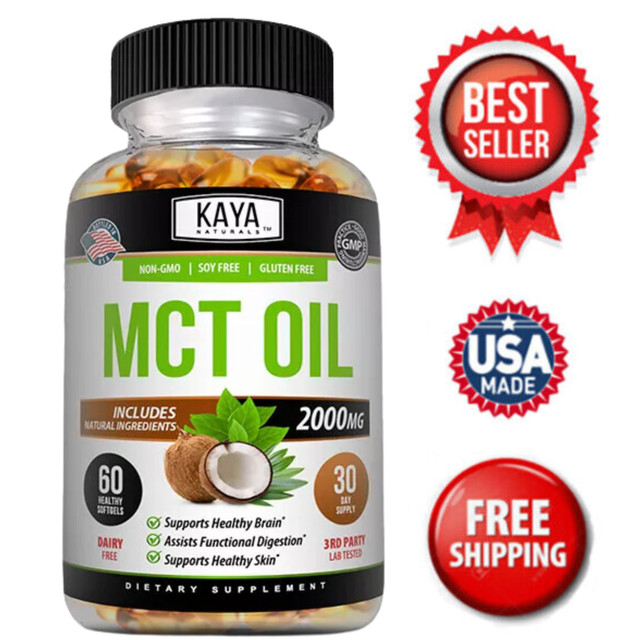
C60 in MCT / Coconut Oil
The third common carrier, sold on the argument that medium-chain triglycerides are absorbed differently. As with avocado oil, this is vendor reasoning rather than published evidence for C60 specifically. MCT oil is clear and thin, which makes it easier to dose by dropper, and it stays liquid in a cold room where coconut oil solidifies — a small practical point that matters more than the marketing.
- MCT or fractionated coconut oil carrier
- Stays liquid at room temperature
- Thin consistency for dosing
- Amber glass on reputable brands
- Easy to dose accurately
- Neutral taste
- Does not solidify in a cold cupboard
- No published C60 research uses this carrier
- MCT oil causes digestive upset for some people
- Claims about improved absorption are unsupported
Raw Sublimed C60 Powder (99.95%+)
The input rather than the product, for people who intend to dissolve their own. Buying sublimed powder and mixing it yourself is cheaper per dose and gives you control over the carrier and the purity you start from. It is also slow — proper dissolution takes weeks of stirring in the dark, not an afternoon — and undissolved crystalline C60 is not the same material as the solution the research used.
- Sublimed powder, purity typically 99.5–99.99%
- Sold by the gram
- Requires dissolution in a carrier oil
- Certificates of analysis on reputable suppliers
- Far cheaper per dose than ready-made
- You choose the carrier and verify the starting purity
- No vendor markup on oil
- Proper dissolution takes weeks and is easy to get wrong
- Undissolved particles are not equivalent to a solution
- Handling fine nanoparticle powder has its own risks

Amber Glass Dropper Bottles
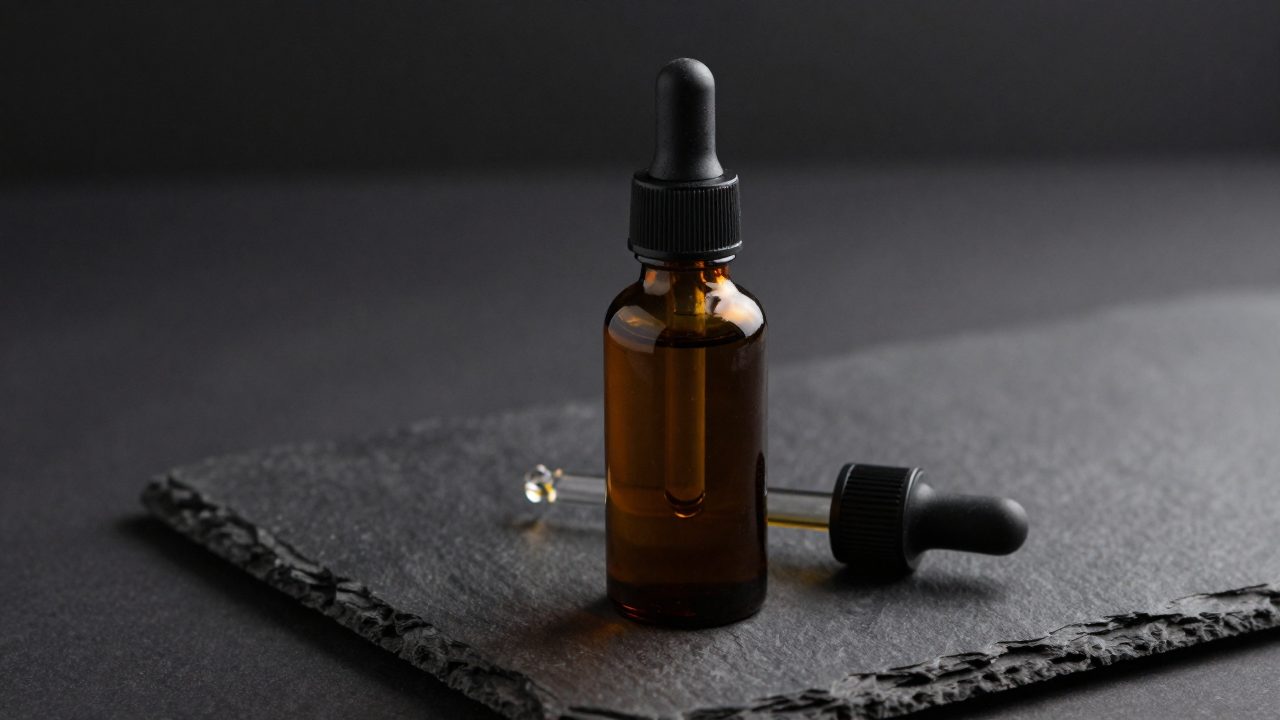
Directly relevant rather than an accessory, because the photochemistry is the one safety finding here that is not in dispute. C60 generates reactive oxygen species under light, and the 2021 mouse work reported light-dependent toxicity. If you decant, transport or make your own, it belongs in amber or cobalt glass, capped, in a dark cupboard — and never in the clear bottle a cheap vendor sometimes ships.
- UV-blocking amber or cobalt glass
- Graduated glass pipette droppers
- Various sizes from 10 ml upward
- Sold in multipacks
- Addresses the one well-supported safety issue
- Cheap
- Graduated droppers make dosing repeatable
- Does nothing about product quality itself
- Glass droppers break easily
- Requires careful cleaning between uses

Extra Virgin Olive Oil (high polyphenol)
The honest comparison purchase. Olive oil was the carrier in the study, and olive oil itself has a substantial, replicated evidence base behind it for cardiovascular health — far stronger than anything C60 can point to. If the appeal of a C60 product is partly the olive oil it is dissolved in, a good bottle of high-polyphenol extra virgin oil costs a fraction as much and is not speculative.
- Cold-pressed extra virgin olive oil
- Polyphenol content published by some producers
- Dark glass or tin packaging
- Harvest date on quality bottles
- Genuinely well-supported by research, unlike C60
- A fraction of the price
- Useful whatever you conclude about supplements
- Not what you came to this page for
- Quality and freshness vary enormously
- Degrades once opened
C60 Topical Oil or Serum
Sold for skin rather than ingestion, and worth flagging for one specific reason: the photoreactivity issue is most obviously relevant to a product applied to skin that then goes outside. Whatever the cosmetic argument, putting a light-activated compound on exposed skin in daylight is the scenario the light-dependent toxicity finding describes. Manufacturers generally advise night-time use, which tells you they know.
- C60 dissolved in cosmetic oil bases
- Marketed for skin appearance
- Amber or opaque packaging
- Usually advised for night use
- Avoids ingestion entirely
- Small quantities, so a bottle lasts
- Night-use guidance is at least explicit
- Photoreactivity is most relevant on exposed skin
- No meaningful cosmetic evidence base
- Priced as a luxury serum
C60 Capsules or Softgels
The convenience format, and a poor fit for this particular compound. The dose in the studies was delivered as a solution in oil, and a capsule is opaque about how much dissolved C60 it actually contains versus suspended powder. Dosing by drops from a known concentration is at least arithmetically transparent. Capsules are easier to take and harder to verify, which is the wrong trade in an unregulated category.
- Pre-measured softgel or capsule format
- Oil-based fill on most products
- No dropper required
- Travel-friendly
- Convenient and portable
- No taste
- Pre-measured doses
- Opaque about dissolved versus suspended content
- Harder to verify against a certificate of analysis
- Generally poorer value per milligram
Certificate of Analysis Verification (what to ask for)
Not a product, and the single most useful thing on this page. In an unregulated market the only lever a buyer has is documentation: ask for a batch-specific certificate of analysis showing C60 purity, residual solvent testing (toluene in particular), and heavy metals. A reputable vendor publishes these. One that offers a generic manufacturer datasheet, or nothing, has answered the question.
- Batch-specific rather than generic documentation
- Purity, residual solvent and heavy metal results
- Issued by an independent laboratory
- Should be free on request
- The only real quality signal in an unregulated category
- Costs nothing to ask
- A refusal is itself informative
- Certificates can be old, generic or unverifiable
- Requires you to read them properly
- No guarantee the tested batch is the one you receive
Buying tips
- Know what the famous study actually was. Baati 2012 was a toxicity experiment in a small number of rats that reported a lifespan effect as a secondary finding, published in a biomaterials journal rather than an ageing one.
- Know that it did not replicate. Two 2021 mouse lifespan studies looked for the effect and did not find it, which is the ordinary fate of a striking single result and the most useful fact here.
- Keep it in the dark, in amber glass. C60 is photoreactive and the 2021 work reported light-dependent toxicity in mice — that is a handling instruction regardless of what you think of the benefits.
- Ask for a batch-specific certificate of analysis showing purity, residual solvents and heavy metals. C60 is purified using organic solvents including toluene, and this is an unregulated market where documentation is the only lever you have.
- Prefer olive oil as the carrier if your reason for buying is the research. Avocado and MCT versions are one more variable away from the only data that exists.
- Treat dissolution claims sceptically if you buy powder. Proper dissolution takes weeks in the dark, and suspended crystalline C60 is not the same material as a solution.
- Be wary of any vendor citing the 2012 study without mentioning the failed replications. That omission is a reliable signal about everything else on the page.
- Talk to your doctor before adding this to anything you are already taking, and never in place of treatment for a real condition. It is not approved to treat or prevent anything.
As an Amazon Associate and eBay Partner, toptenpick.com earns from qualifying purchases. Prices and availability are subject to change.