

As an Amazon Associate and eBay Partner, toptenpick.com earns from qualifying purchases. Prices and availability are subject to change.
Two things about builder gel brushes are worth knowing before you buy one, and the second one saves you money repeatedly.
Builder gel is thick, and the brush has to push it rather than carry it. A regular gel polish brush is soft and floppy because polish is thin and self-levelling — it only needs spreading. Builder gel has to be placed, shaped, pushed towards the cuticle line and pulled into an apex, and a soft brush simply collapses under it. What you want is a flat or oval synthetic brush with real spring: firm enough to move a viscous product deliberately, flexible enough to feather an edge. Too stiff and you drag lines into the surface; too soft and you cannot control where the product goes at all. That balance is the entire skill of the tool.
And the material is not a preference. Synthetic filament — usually Taklon — is what gel brushes use, and natural hair is for acrylic. Natural bristles absorb monomer and behave badly with gel; synthetic filaments do not absorb, release the product cleanly, and hold their shape.
Never clean a gel brush with acetone. This is the one that costs people brush after brush. Acetone dissolves the adhesive that holds the filaments into the metal ferrule, so a brush cleaned with it sheds bristles into your work and then falls apart entirely — and the damage is cumulative and invisible until it happens. Clean with isopropyl alcohol or a purpose-made brush cleaner, wiping the filaments on lint-free wipes rather than soaking them.
One more that ruins brushes silently: keep the brush out of the lamp and out of daylight. Gel cures under UV, and a brush with product in it left near a window or waved under a curing lamp will set solid at the ferrule, where you cannot get it out. Wipe it clean before you cure anything and keep it capped.
Ten picks below.
| # | Product | Price | Where to buy |
|---|---|---|---|
| 1 | Flat Oval Synthetic Gel Brush (Size 6 or 8) | $12-$40 | Amazon |
| 2 | Square Flat Gel Brush | $12-$40 | Amazon |
| 3 | Angled or Slanted Gel Brush | $12-$35 | Amazon · eBay |
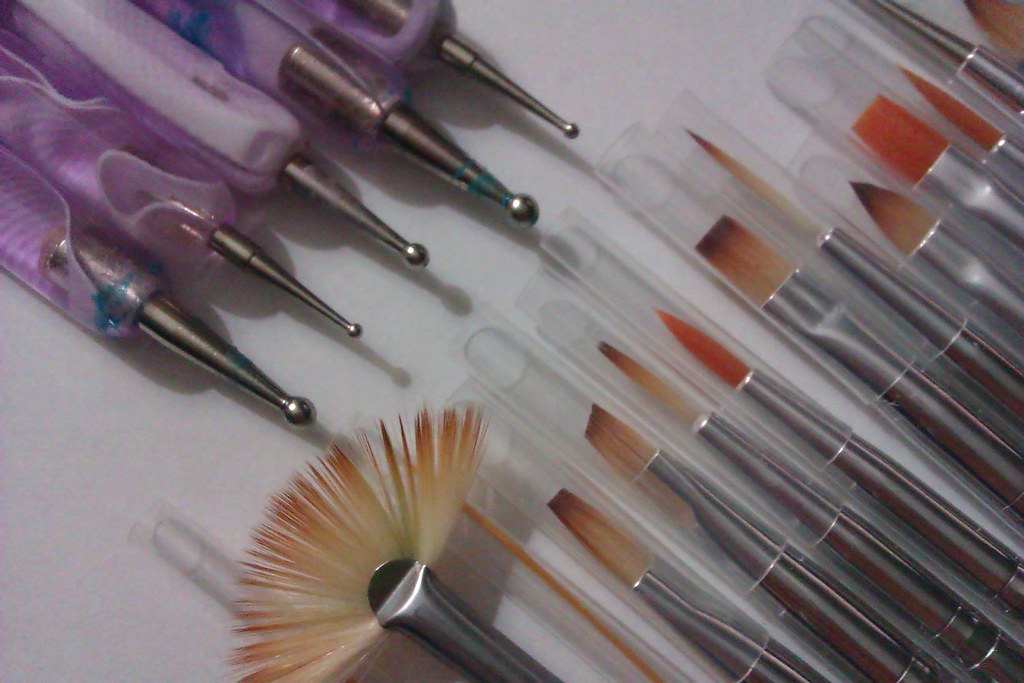
| 4 | Detail or Liner Brush | $10-$30 | Amazon · eBay |
| 5 | Isopropyl Alcohol (90% or Higher) | $6-$18 | Amazon · eBay |
| 6 | Brush Cleaner and Conditioner | $10-$25 | Amazon · eBay |
| 7 | Brush Caps and a Storage Roll | $8-$25 | Amazon |
| 8 | Slip Solution or Gel Cleanser | $10-$25 | Amazon · eBay |
| 9 | Lint-Free Wipes | $8-$20 | Amazon · eBay |
| 10 | Silicone Brush or Spatula | $8-$20 | Amazon · eBay |
The picks, in detail
Flat Oval Synthetic Gel Brush (Size 6 or 8)
The workhorse, and the one to buy first. A flat brush with an oval tip in a medium size gives you a straight edge for placing product at the cuticle line and a rounded profile for shaping the apex without leaving a hard mark. Taklon or a similar synthetic filament, with genuine spring rather than floppiness. Size 6 suits smaller nails and detail work, size 8 covers most hands faster — if you are buying one, size 6 is the more versatile.
- Flat ferrule with an oval tip
- Synthetic Taklon filament
- Medium stiffness with real spring
- Sizes 4 through 10
- Straight edge for the cuticle line, curve for the apex
- Firm enough to move thick product deliberately
- The most versatile single brush for builder gel
- Too stiff a version drags lines into the surface
- Cheap synthetics lose their shape quickly
Square Flat Gel Brush
The alternative shape, and preferred by a lot of technicians for one specific reason: the square corners let you push product right into the sidewall and the cuticle corner, where an oval tip leaves a gap. It requires a lighter hand, because those same corners will leave a visible mark if you press. Many people end up with both — the square for placement and structure, the oval for smoothing and feathering the edges afterwards.
- Square-cut flat tip
- Corners reach sidewalls and cuticle corners
- Synthetic filament
- Several widths available
- Reaches corners an oval tip cannot
- Precise product placement at the sidewall
- Clean straight edges
- Corners mark the surface if you press
- Less forgiving for smoothing

Angled or Slanted Gel Brush
The shape that suits the natural angle of your hand, which is a bigger deal than it sounds over a full set. A slanted tip lets you hold the brush comfortably while keeping the working edge parallel to the cuticle line, so you are not rotating your wrist into an awkward position for every nail. It is particularly useful for anyone working on their own nails, where the angles are constrained by which hand is holding what.
- Angled or slanted tip
- Working edge stays parallel to the cuticle
- Synthetic filament
- Comfortable wrist position
- Better ergonomics over a full set
- Especially useful when working on your own nails
- Clean cuticle line without wrist rotation
- Takes adjustment coming from a flat brush
- Fewer size options available

Detail or Liner Brush
The second brush, for the work the main one cannot do — cleaning up the cuticle line, correcting an edge, French lines, and fine art on top of the finished structure. A short liner or a fine round brush gives the control that a size 8 flat cannot. It is worth having a cheap set of these rather than one expensive one, because fine tips are easily damaged and a splayed detail brush is useless. Keep them separate from the builder gel brush; cross-contaminating colours is the usual regret.
- Fine round or short liner shapes
- Very fine points
- Synthetic filament
- Sold in sets
- Cleanup and detail the main brush cannot do
- Cheap enough to own several
- Sets cover several shapes
- Fine tips damage easily
- Keep separate from builder gel to avoid contamination

Isopropyl Alcohol (90% or Higher)
The correct cleaner, and the reason your brushes will last. Alcohol dissolves uncured gel without attacking the adhesive in the ferrule, which acetone does. Wipe the filaments on a lint-free wipe dampened with alcohol, working from the ferrule outwards, rather than soaking the brush — soaking gets alcohol up into the ferrule where it is not needed. It is also what you use to remove the inhibition layer after curing, so a bottle is in constant use anyway.
- 90% or higher concentration
- Dissolves uncured gel without attacking adhesive
- Also removes the post-cure inhibition layer
- Cheap in larger bottles
- Cleans brushes without destroying them
- Already needed for the inhibition layer
- Very cheap in bulk
- Do not soak the brush — wipe it
- Flammable, and keep away from the lamp

Brush Cleaner and Conditioner
A purpose-made cleaner does the same job as alcohol with less drying of the filaments, and the conditioner half matters on a brush you intend to keep. Synthetic filaments do not dry out the way natural hair does, but they take a set — and a brush stored bent or splayed stays that way. A conditioner and a light reshaping after cleaning keeps the tip sharp. Reshape the brush to a point with your fingers while it is still damp, then let it dry flat or tip-up.
- Formulated for gel and acrylic brushes
- Conditioning component
- Does not attack ferrule adhesive
- Small bottles
- Gentler on filaments than repeated alcohol
- Conditioning keeps the tip shape
- Safe for the ferrule
- More expensive than alcohol
- Still requires reshaping the tip by hand
Brush Caps and a Storage Roll
Two things that solve the same problem: keeping light off the brush and keeping the tip from being crushed. Gel cures under UV, including daylight through a window, so a brush with product in it left uncapped on a table sets solid at the base of the filaments where you cannot clean it. A plastic cap stops that. A roll or case keeps the tips from splaying against other things in a drawer, which is the other way brushes die quietly.
- Plastic caps sized to the brush head
- Fabric or bamboo storage rolls
- Keeps light off the filaments
- Protects tips from crushing
- Prevents gel curing in the ferrule from ambient light
- Stops tips splaying in a drawer
- Very cheap relative to the brushes
- Caps must not be pushed onto a wet brush
- Rolls take up more space than loose storage

Slip Solution or Gel Cleanser
The product that makes a builder gel brush behave. A small amount on the brush stops thick gel dragging and sticking to the filaments, so it slides and self-levels instead — which is the difference between a smooth surface and a ridged one. Use it sparingly and wipe the excess, because too much thins the gel at the surface and affects how it cures. Manufacturers usually specify what to use with their system, and following that is worth more than any general advice.
- Reduces drag between brush and gel
- Small dish or pot for working from
- Manufacturer-specific formulations
- Used very sparingly
- Transforms how a thick gel handles
- Produces a smoother surface with less filing
- A small bottle lasts a long time
- Too much thins the surface and affects curing
- Systems often specify their own product

Lint-Free Wipes
Small and constantly used. Cotton pads shed fibres into wet gel, and a fibre cured into a surface means filing it out and rebuilding, which is a genuinely annoying way to lose ten minutes. Lint-free wipes do not shed. You use them for cleaning the brush, for removing the inhibition layer after curing, and for prepping the nail plate — so buy a large pack rather than a small one, because the temptation to reach for cotton when they run out is what causes the problem.
- Lint-free non-woven material
- Large packs
- Used for brush cleaning, prep and post-cure wipe
- Absorb alcohol without falling apart
- No fibres shed into wet gel
- Used at every stage of the process
- Cheap in bulk
- Running out means reaching for cotton, which is the problem
- Thin ones tear when soaked

Silicone Brush or Spatula
A different tool for a specific job, and increasingly popular. A silicone tip does not absorb product at all, wipes completely clean, and cannot be ruined by a solvent — so it never needs the care a filament brush does. It is excellent for placing and moving a bead of thick gel and poor at feathering an edge or producing a smooth surface, because there are no filaments to blend with. Most people use it alongside a proper brush rather than instead of one.
- Solid silicone tip
- Wipes completely clean
- Cannot be damaged by solvents
- Several tip shapes
- No cleaning care required at all
- Cannot be ruined by acetone
- Good for placing and moving thick beads
- Cannot feather an edge or smooth a surface
- Not a replacement for a filament brush
Buying tips
- Never clean a gel brush with acetone. It dissolves the adhesive holding the filaments into the ferrule, so the brush sheds bristles into your work and then falls apart. The damage is cumulative and invisible until it happens. Use isopropyl alcohol or a purpose-made brush cleaner, and wipe rather than soak.
- Buy a brush with real spring, not a soft one. Builder gel is thick and has to be pushed, shaped and pulled into an apex, and a soft brush collapses under it. Too stiff drags lines into the surface. Press the filaments against the back of your hand in the shop — you want a definite spring back, not a flop.
- Synthetic filament, not natural hair. Taklon and similar synthetics do not absorb gel, release it cleanly and hold their shape. Natural hair absorbs monomer and is for acrylic. This is a material requirement rather than a preference, and a natural-hair brush used with gel behaves badly from the first use.
- Keep the brush out of the light. Gel cures under UV, and that includes daylight through a window and any stray light from your lamp. A brush with product still in it, left uncapped, will cure solid at the base of the filaments where you cannot clean it. Wipe it and cap it before you cure anything.
- Wipe the brush before every cure, not after. Product left in the filaments while the lamp is running is the fastest way to ruin a brush, and it is easy to do without noticing because the brush is in your other hand. Make wiping it and setting it down part of the same motion as putting the hand in the lamp.
- Reshape the tip while it is damp. Synthetic filaments take a set, so a brush put away splayed stays splayed. After cleaning, draw the filaments back to a point with your fingers and lay it flat or stand it tip-up to dry. Never stand a wet brush on its tip in a pot — that is how a good brush becomes a bad one.
- Use slip solution sparingly. A little stops thick gel dragging on the brush so it self-levels into a smooth surface. Too much thins the gel at the top and affects how it cures, which shows up as a soft or wrinkled surface. Wipe the excess off the brush before it touches the nail.
- Have two brushes, not one. A medium flat for structure and a fine detail brush for cleanup at the cuticle line and the sidewalls. Trying to do precise cleanup with the brush you built with is what produces a flooded cuticle, and flooding the cuticle is the single most common cause of lifting.
As an Amazon Associate and eBay Partner, toptenpick.com earns from qualifying purchases. Prices and availability are subject to change.