

As an Amazon Associate and eBay Partner, toptenpick.com earns from qualifying purchases. Prices and availability are subject to change.
A bike saddle changes how your weight is distributed while riding — it does not treat or prevent any prostate condition, and it’s not a substitute for seeing a doctor about persistent numbness, pain, or urological symptoms. What a well-designed saddle can do is shift weight off the perineum and onto your sit bones, through either a fully noseless split-nose shape or a center cutout channel. These 11 real saddles span both design families, from race-focused noseless models to mainstream cutout saddles sold through ordinary bike shops.
| # | Product | Price | Where to buy |
|---|---|---|---|
| 1 | ISM PN 3.0 | $200-$250 | Amazon · eBay |
| 2 | ISM PR 3.0 | $130-$180 | Amazon · eBay |
| 3 | ISM Adamo Time Trial | $190-$250 | Amazon · eBay |
| 4 | Selle SMP Dynamic | $150-$200 | Amazon · eBay |
| 5 | Specialized Power with Mirror | $170-$450 | Amazon · eBay |
| 6 | SQlab 612 Ergowave | $120-$170 | Amazon · eBay |
| 7 | Cobb V-Flow Max | $130-$180 | Amazon · eBay |
| 8 | Brooks Cambium C13 Carved | $190-$240 | Amazon · eBay |
| 9 | Bontrager Verse Elite | $90-$220 | Amazon · eBay |
| 10 | Selle Royal Respiro | $90-$130 | Amazon · eBay |
| 11 | Spiderflex Recreational Bike Seat | $140-$180 | Amazon |
The picks, in detail
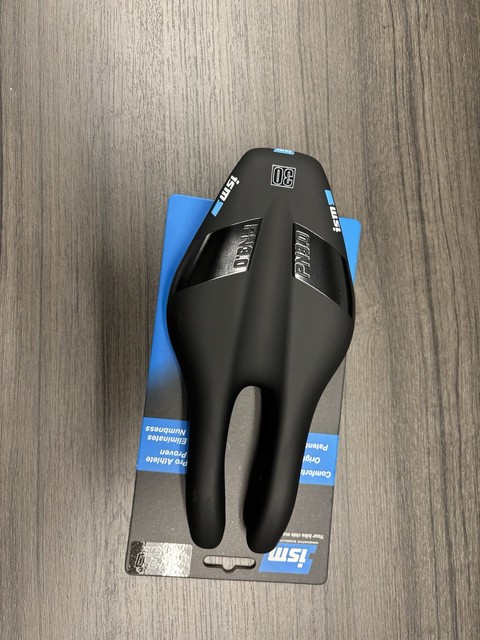
ISM PN 3.0
A fully noseless, split-nose design that eliminates perineal contact entirely — the most aggressive prostate-focused geometry on this list, popular with triathletes.
- Fully noseless, split design
- No nose to press upward in aggressive positions
- Designed to maintain blood flow in aero positions
- Eliminates perineal pressure most completely of any design here
- Needs a 2-3 week adaptation period and a different riding position

ISM PR 3.0
ISM’s recreation-oriented noseless model — wider and more padded than the PN 3.0, built for upright road and hybrid riding rather than an aggressive tri position.
- Noseless split design
- Wider, more padded than the PN 3.0
- Recreation/upright geometry
- More approachable than the racing-focused PN 3.0 for casual riders
- Still requires an adjustment period like other noseless designs

ISM Adamo Time Trial
ISM’s original triathlon/TT-focused noseless model — narrower and more aerodynamically shaped than the PN or PR lines, built for aggressive aero positions.
- Fully noseless design
- Narrow, aero-shaped profile
- Designed for triathlon/time-trial position
- Purpose-built for the most aggressive aero riding positions
- Narrower shape than the PN/PR lines takes more adjustment

Selle SMP Dynamic
A distinctive drooping “eagle beak” nose with a full-length center channel, widely credited by riders who couldn’t get comfortable on shallower cutout designs.
- Full-length center cutout channel
- Drooping “eagle beak” nose shape
- Retains a conventional saddle profile
- Effective for riders who found shallow cutouts insufficient
- Distinctive shape takes some getting used to visually and functionally

Specialized Power with Mirror
A short-nose design with a wide central cutout and 3D-printed lattice padding — a road-race-oriented pick that keeps a conventional saddle shape.
- Short-nose design
- Wide central cutout
- 3D-printed Mirror lattice padding
- Stays close to a familiar road saddle shape and stiffness
- Mirror lattice versions are significantly pricier than the standard foam version
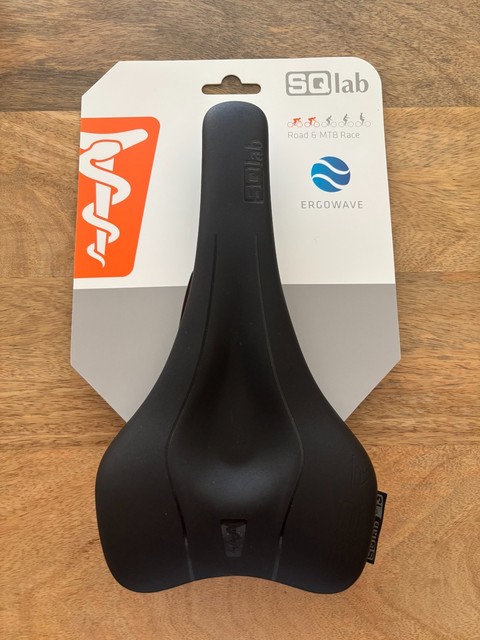
SQlab 612 Ergowave
A stepped saddle with a dropped nose and raised rear section that shifts weight onto the sit bones instead of the perineum, sold in multiple widths matched to sit-bone measurement.
- Stepped Ergowave profile
- Dropped nose, raised rear
- Sold in multiple width options
- Width options let you match the saddle to your actual sit-bone measurement
- Less dramatic pressure relief than a fully noseless design

Cobb V-Flow Max
A road/triathlon saddle with a lowered nose section and a deep-cut pressure trough designed specifically to relieve prostate pressure.
- Deep-cut pressure trough
- Lowered nose section
- Road/triathlon geometry
- Purpose-designed by a saddle specialist specifically around this pressure point
- Less widely stocked than ISM or Specialized
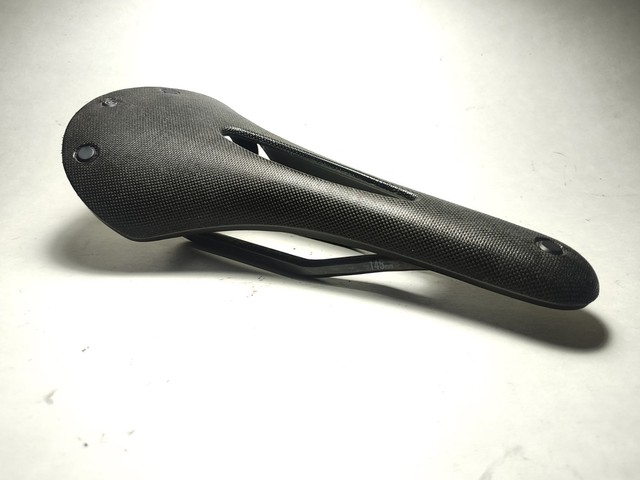
Brooks Cambium C13 Carved
A vulcanized-rubber-top saddle with an anatomical cut-out for perineal relief, in the lightest version of Brooks’s Cambium line.
- Vulcanized rubber top
- Anatomical cut-out hole
- Carbon-railed, lightweight build
- Available in two widths
- Distinctive flexible rubber top rides differently from foam-and-leather saddles
- Premium pricing for the carbon-rail version

Bontrager Verse Elite
A full-length cutout saddle from a mainstream bike-shop brand (Trek’s house component line), sold across three price tiers so you can trade up for lighter rail materials without changing the shape.
- Full-length center cutout
- Wider mid-section
- Sold in Comp, Elite, and Pro tiers
- Available at any Trek dealer, easier to try in person than niche saddle brands
- Cutout is less dramatic than the ISM or Cobb designs

Selle Royal Respiro
A budget-friendly cutout saddle with a ventilation channel running the full length of the seat, aimed at recreational and commuter riders rather than racers.
- Full-length ventilation/cutout channel
- Relaxed, Moderate, and Athletic profile options
- Steel or alloy rail options
- Most affordable cutout saddle on this list
- Comfort-oriented profile for upright commuting
- Less aggressive pressure relief than the racing-focused options here
Spiderflex Recreational Bike Seat
A distinct “hornless” design using two separate trapezoidal pads instead of a single saddle shape, spreading sit-bone pressure over a wider area than either a cutout or a split-nose saddle.
- Two separate trapezoidal pads
- No horn/nose at all
- Chamfered pad edges to spread pressure
- Fundamentally different mechanism from both cutout and split-nose designs, worth trying if neither has worked
- Unconventional look and feel takes real adjustment time
Buying tips
- This is anatomy, not medicine — a saddle changes pressure distribution, it doesn’t treat or prevent any prostate condition. See a doctor about persistent numbness, pain, or urological symptoms.
- Measure your sit-bone width (many bike shops offer a foam-pad measurement) before buying — a cutout saddle in the wrong width still lets your perineum bear weight around the edges of the cutout.
- Fully noseless designs (ISM PN 3.0, ISM PR 3.0, ISM Adamo) need a 2-3 week adaptation period and a genuinely different riding position; cutout designs with a shortened nose (Specialized Power, SQlab, Brooks C13 Carved, Bontrager Verse, Selle Royal Respiro) are a smaller adjustment if you’re not ready to go noseless.
- Spiderflex’s dual-pad “hornless” design is a third mechanism worth trying if neither a cutout nor a split-nose saddle has solved the problem.
- Saddle angle matters as much as the cutout itself — a nose-up tilt increases perineal pressure regardless of which saddle you choose; aim for level or very slightly nose-down.
As an Amazon Associate and eBay Partner, toptenpick.com earns from qualifying purchases. Prices and availability are subject to change.