

As an Amazon Associate and eBay Partner, toptenpick.com earns from qualifying purchases. Prices and availability are subject to change.
Battery pumps are sold on one number — airflow, quoted in litres per minute — and it describes only half of what a pump does. Flow fills volume. Pressure finishes the job. They are separate specifications and they trade against each other, which is why a pump that inflates a pool float in fifteen seconds can leave a queen air bed soft and sagging no matter how long you run it.
The reason is straightforward. As a mattress fills, the air inside pushes back. A pump can only keep moving air while its static pressure exceeds that back-pressure, and small high-flow fan pumps run out of pressure well before a mattress reaches the firmness you want to sleep on. A 200 L/min ultralight inflator is superb at the first 90 per cent and often incapable of the last 10 — and the last 10 per cent is the difference between a bed and a hammock. A corded pump like the Intex QuickFill moves 650 L/min and has the pressure behind it to finish; that is why RV owners keep one despite the cable.
The second thing that catches buyers is far more mundane and causes more returned pumps than anything else: the nozzle. Air mattresses use several incompatible valve types — the wide flat valve on most cheap beds, the Boston valve on better ones, proprietary recessed valves on many branded mattresses, and the tiny nozzles for pool toys. A pump with the wrong adapter is not a slow pump, it is a useless one. Check the valve on your mattress before you check anything else about the pump.
There is also a third capability worth paying for and easy to miss: deflation. A pump that only blows leaves you kneeling on a mattress for ten minutes squeezing air out through a valve. A pump that reverses does it in under a minute, and it is the difference between a mattress that packs down small and one that goes back in the car as a bundle.
The ten picks below cover the pump types that actually work, the adapters that make them fit, and the power options that keep them running away from a socket.
| # | Product | Price | Where to buy |
|---|---|---|---|
| 1 | Rechargeable Quick-Fill Pump with Multiple Nozzles | $25-$50 | Amazon · eBay |
| 2 | Ultralight Mini Inflator (Flextail Tiny Pump Class) | $30-$60 | Amazon · eBay |
| 3 | D-Cell Battery Pump | $15-$30 | Amazon · eBay |
| 4 | Corded High-Volume Pump (Intex QuickFill Class) | $20-$40 | Amazon · eBay |
| 5 | 12V Car Socket Pump | $25-$55 | Amazon · eBay |
| 6 | Valve Adapter and Nozzle Set | $8-$20 | Amazon · eBay |
| 7 | Portable Power Station or Large Power Bank with AC Output | $150-$400 | Amazon · eBay |
| 8 | Foot or Hand Bellows Pump | $12-$30 | Amazon · eBay |
| 9 | Air Mattress Repair Kit | $8-$18 | Amazon · eBay |
| 10 | Rechargeable Pump with a Pressure Gauge or Auto Shut-Off | $60-$150 | Amazon · eBay |
The picks, in detail

Rechargeable Quick-Fill Pump with Multiple Nozzles
The mainstream battery pump and the right default for most people. Expect an internal lithium cell, three interchangeable nozzles covering the common valve sizes, and both inflate and deflate ports. The Etekcity is the best-known example and is notably quieter than most at around 68 dB, with a lock design that stops the nozzle popping off mid-inflation — a small detail that turns out to matter a lot when you are holding a pump against a mattress with one hand. Good for an air bed, a pool float and a paddling pool alike.
- Rechargeable lithium battery, USB or mains charging
- Three nozzle sizes for common valves
- Separate inflate and deflate ports
- Locking nozzle fitting
- Covers most household inflatables with one tool
- Deflation as well as inflation
- Quieter than most competitors
- Battery life limited to a few mattresses per charge
- Not enough pressure for very firm inflation

Ultralight Mini Inflator (Flextail Tiny Pump Class)
A remarkable piece of engineering and easy to buy for the wrong job. The Flextail Tiny Pump X weighs about 3 oz, holds a 1,300 mAh cell, recharges over USB-C, moves around 200 L/min through four nozzles and has a lamp built in. For a backpacking sleeping pad — low volume, moderate pressure — it is close to perfect and it replaces a lot of lung work. For a full-size queen air bed it is the wrong tool: not enough capacity, not enough pressure, and a very long wait.
- Around 3 oz weight, pocket sized
- Roughly 200 L/min airflow
- USB-C recharging, 1,300 mAh cell
- Four nozzles plus an integrated LED lamp
- Genuinely backpack-weight
- Ideal for sleeping pads and small inflatables
- The built-in lamp is more useful than it sounds
- Underpowered for a full-size air bed
- Small battery limits how much you can inflate per charge

D-Cell Battery Pump
The old-fashioned option and still the right answer for one specific case: infrequent use where a rechargeable cell will have gone flat by the time you need it. A pump running on four D cells sits in a cupboard for two years and works when you take it out, which no lithium pump reliably does. Output is modest and the batteries are a recurring cost, but for a guest air bed used three times a year it beats a rechargeable pump that needs an overnight charge before your visitors arrive.
- Runs on four D-cell batteries
- Inflate and deflate functions
- Two or three nozzle adapters
- No charging required
- Works after long storage with no preparation
- No cable and no charger to lose
- Very cheap to buy
- Batteries are an ongoing cost and run down quickly
- Slower than a comparable rechargeable pump
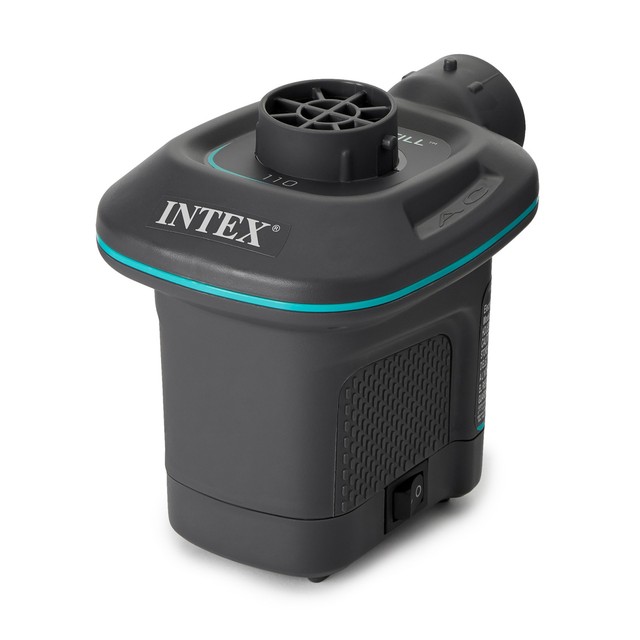
Corded High-Volume Pump (Intex QuickFill Class)
Included because it is the honest answer whenever a socket is within reach. Mains pumps like the Intex QuickFill move around 650 L/min and, more importantly, have the pressure to actually finish a large mattress firm. No battery to charge, no charge to run out, and inflation times measured in a couple of minutes rather than ten. If your air bed lives in a spare room or a caravan, buy this and keep a battery pump for the times you are genuinely off-grid.
- Around 650 L/min airflow
- Mains powered, typically 120 V
- Multiple valve adapters supplied
- Inflate and deflate
- Fastest inflation of anything on this list
- Enough pressure to finish a mattress properly firm
- Never needs charging
- Useless without a socket
- Noisy in operation

12V Car Socket Pump
The car-camping answer, and a sensible one: a pump that runs from the vehicle’s 12V socket has effectively unlimited runtime as long as you can park nearby. Output is usually comparable to a mains pump and considerably better than a battery unit. Two things to check — cable length, because five metres is often not enough to reach a tent pitch, and whether it is rated for continuous duty, since some cheap units overheat after a few minutes. Best bought as a dual-mode pump that also has an internal battery.
- 12 V cigarette-socket lead
- Output comparable to a mains pump
- Multiple nozzle adapters
- Dual-mode models add an internal battery
- Effectively unlimited runtime at a campsite
- Much more capable than a small battery pump
- Dual-mode versions cover both situations
- Cable often too short to reach the tent
- Some units are not rated for continuous running

Valve Adapter and Nozzle Set
The cheapest fix for the problem that ruins most pump purchases. Air mattresses use several incompatible valve standards — Boston valves, wide flat valves, recessed proprietary ones, small pool-toy nozzles — and a pump that does not have your adapter is simply a paperweight. A universal adapter set with a range of cones, Boston fittings and reducers costs a few dollars and turns any pump into one that fits your mattress. Buy one with the pump rather than after discovering the mismatch.
- Cones, Boston valve fittings and reducers
- Fits standard pump outlet diameters
- Silicone or ABS construction
- Storage pouch on better sets
- Solves the single most common pump problem
- Costs very little
- Makes one pump work with everything you own
- Cheap plastic adapters split with repeated use
- Some proprietary valves have no third-party adapter at all

Portable Power Station or Large Power Bank with AC Output
A different way to solve the runtime problem: instead of buying a battery pump, bring a battery and use a proper mains pump. A small power station with an AC outlet runs a 650 L/min mains pump for far longer than any integrated cell, and it powers phones, lights and a fan for the rest of the trip. Check the continuous output rating covers the pump’s draw — most air pumps are modest, well under 150 W, so even a small unit will do it. This is the setup most regular campers end up with.
- AC outlet with a continuous rating over the pump’s draw
- USB and 12 V outputs alongside
- Recharges from mains, car or solar
- 200 Wh and up
- Runs a full-power mains pump away from the grid
- Powers everything else on the trip
- Far more capacity than any pump’s internal cell
- Expensive relative to a simple battery pump
- Bulky and heavy to carry
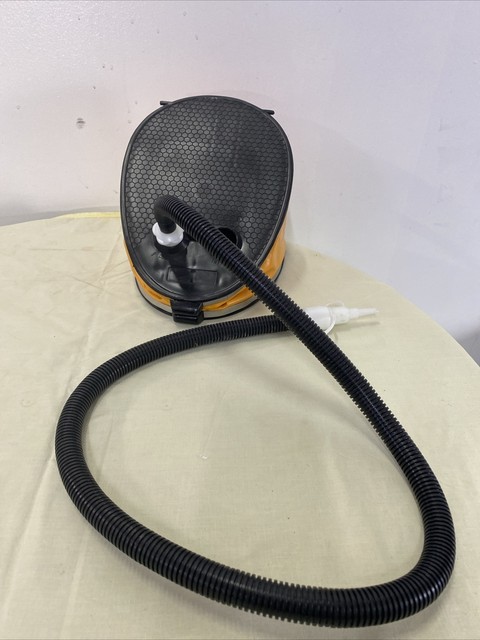
Foot or Hand Bellows Pump
No battery, no noise, no failure mode more complicated than a split hose — and it produces real pressure, which is the thing small electric pumps lack. A bellows foot pump will not fill a queen mattress quickly, but it will top one off to genuinely firm after an electric pump has run out of puff, which is a good division of labour. As a backup it weighs little and costs almost nothing, and when a pump battery dies at 11 pm on a campsite it is the difference between a bed and the floor.
- Foot-operated bellows or hand pump
- Standard nozzle adapters
- No power required
- Folds flat for storage
- Produces higher pressure than small electric pumps
- Cannot run out of charge
- Excellent as a top-off and a backup
- Slow and tiring for a full inflation
- Cheap bellows split at the seams
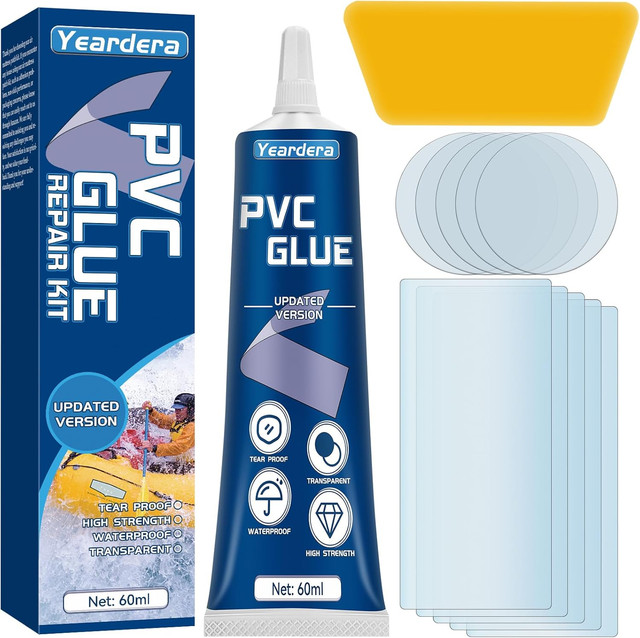
Air Mattress Repair Kit
Directly relevant to pumps, because a mattress that will not hold air is frequently blamed on a weak pump. A slow leak looks exactly like insufficient pressure: firm at bedtime, soft by 2 am. A repair kit with vinyl patches and adhesive costs very little and, together with a spray bottle of soapy water to find the hole, distinguishes a leaking mattress from an inadequate pump. Check the seams and the valve surround first — those are where the great majority of air beds actually fail.
- Self-adhesive and glue-on vinyl patches
- Adhesive suited to PVC air beds
- Valve repair pieces in better kits
- Compact enough to pack
- Distinguishes a leak from a weak pump
- Extends the life of a mattress for a couple of dollars
- Small enough to carry everywhere
- Seam leaks are much harder to fix than pinholes
- Adhesive has a shelf life once opened

Rechargeable Pump with a Pressure Gauge or Auto Shut-Off
The upgrade that addresses the actual physics rather than working around it. A pump that measures pressure and stops at a set point solves two problems at once: it stops you over-inflating and stressing the seams, which is the leading cause of a burst air bed, and it gives you a repeatable firmness instead of a guess. These are more common in the outdoor and paddleboard market than the household one, so search there — the same pump handles an air bed perfectly well.
- Digital pressure readout in PSI or kPa
- Programmable auto shut-off
- Rechargeable with 12 V input as well
- Inflate and deflate modes
- Repeatable firmness instead of guesswork
- Prevents the over-inflation that splits seams
- Higher pressure capability than simple fan pumps
- Noticeably more expensive
- Heavier and bulkier than a basic pump
Buying tips
- Check your mattress valve before you look at any pump. Air beds use several incompatible valve types and the mismatch is the single most common reason a pump gets returned. A pump without your adapter is not slow, it is useless. A universal nozzle set costs a few dollars and removes the risk entirely — buy one alongside the pump rather than after the disappointment.
- Flow and pressure are different specifications. Litres per minute tells you how fast the first 90 per cent goes; static pressure decides whether it ever gets genuinely firm. Small high-flow inflators run out of pressure before an air bed is ready to sleep on. If your pump seems to stall at almost-firm, the problem is pressure and no amount of extra running time will fix it.
- Buy a pump that deflates as well as inflates. Squeezing the air out of a queen mattress by hand takes ten unpleasant minutes and never gets it fully flat, which means it does not fit back in its bag. A reverse function does it in under a minute. It is usually the same motor and the same price, so there is no reason to buy a pump without it.
- A mattress that is soft by morning is usually leaking, not under-pumped. The two look identical. Inflate it firm, leave it an hour and feel the difference, then check with soapy water — seams and the valve surround are where air beds actually fail. Diagnosing this correctly saves buying a pump you did not need.
- Do not inflate a new air bed fully on the first night. The material stretches as it settles in, and a bed pumped rock-hard from new puts the seams under their highest load at their weakest moment. Inflate to firm-but-yielding for the first couple of uses, top it up as it stretches, and it will last considerably longer.
- Match the pump to your usual situation, not the extreme one. If there is a socket in the room, a corded pump is faster, cheaper and never flat. If you car camp, a 12 V pump has effectively unlimited runtime. A battery pump is the right answer specifically when you are away from both — buying one for a spare room means charging it before every visitor.
- Charge before the trip, not on it. Lithium cells self-discharge in storage and a pump that sat in a cupboard all winter will likely be flat. Put it on charge the day before you leave. The cheap insurance is a foot bellows in the car — no battery, more pressure than the electric pump anyway, and it turns a dead pump into an inconvenience rather than a ruined night.
- Top off in the evening, not at bedtime. Air contracts as it cools, so a mattress inflated in a warm room and slept on in a cold tent will feel softer by several degrees of firmness. Inflate early, let it reach the tent’s temperature, and top it off just before you get in. It is the same volume of air behaving differently, not a leak.
As an Amazon Associate and eBay Partner, toptenpick.com earns from qualifying purchases. Prices and availability are subject to change.