

As an Amazon Associate and eBay Partner, toptenpick.com earns from qualifying purchases. Prices and availability are subject to change.
Bath visors have a reputation for being the thing that fixes hair washing, and a second reputation — among parents who have actually bought one — for being the thing the child pulls straight off. Both are earned, and the reason is worth understanding before you spend anything.
A visor works by putting a brim between the water and the eyes. For that to work it has to sit against the forehead, and that contact is what most toddlers object to, not the water. A child who is already tense about hair washing now has something gripping their head that they cannot see past and cannot easily remove. For a child who is mildly unsure, a visor is often enough. For a child who is genuinely frightened, it frequently makes things worse — because the loss of control is the actual problem, and the visor adds to it.
That suggests a different way to think about the shopping decision. Ask what your child is objecting to. If it is stinging eyes, a visor or a rinse cup solves it directly. If it is water on the face, a rinse cup with a soft sealing edge — held by the child’s own hand against their forehead — often works where a visor does not, because the child stays in control of it. And if the objection is to lying back at all, the answer may be a method change rather than a product: washing hair at a sink, or upright with a flannel, or in a shower they can stand in.
There is a safety point that applies to all of them. Nothing on a child’s head in a bath should be tight, elasticated in a way they cannot get out of, or able to slide down over the face. Look for a soft split in the crown or an adjustable strap that yields under a pull. And no product on this list replaces the only rule that matters in a bathroom: a toddler in water is never left alone, not for a moment, not for a phone call.
Below are ten things worth trying, including several that are not visors at all.
| # | Product | Price | Where to buy |
|---|---|---|---|
| 1 | Soft Silicone Bath Visor with Adjustable Strap | $8-$18 | Amazon · eBay |
| 2 | Split-Crown EVA Foam Shampoo Shield | $6-$14 | Amazon |
| 3 | Rinse Cup with a Soft Sealing Edge | $8-$16 | Amazon · eBay |
| 4 | Controlled-Flow Bath Rinser | $12-$25 | Amazon · eBay |
| 5 | Tear-Free Shampoo | $6-$15 | Amazon · eBay |
| 6 | Non-Slip Bath Mat | $12-$30 | Amazon · eBay |
| 7 | Bath Kneeler and Elbow Rest Set | $20-$40 | Amazon · eBay |
| 8 | Soft Bath Spout Cover | $8-$18 | Amazon · eBay |
| 9 | Hooded Towel with a Deep Hood | $15-$35 | Amazon · eBay |
| 10 | Bath Toys with a Rinsing or Pouring Function | $10-$25 | Amazon · eBay |
The picks, in detail

Soft Silicone Bath Visor with Adjustable Strap
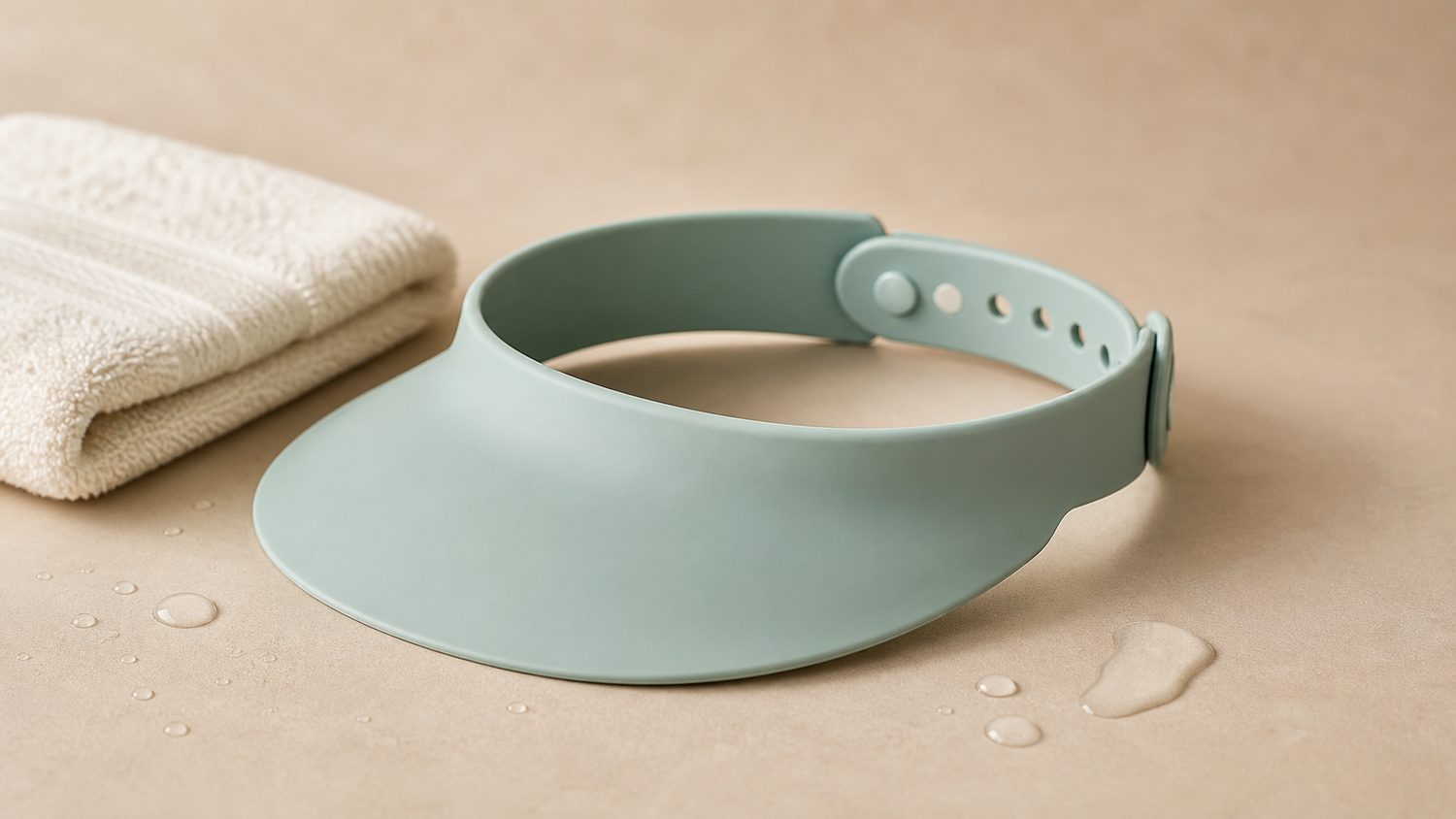
The standard product and the one to start with. A flexible silicone brim sits around the head with an adjustable strap so it fits a growing child rather than a single size. The features that matter are softness at the point of contact — a hard plastic edge on the forehead is exactly what a child rejects — and a strap that adjusts easily so it can be left comfortably loose. Silicone is also the material most likely to survive being chewed, thrown and left wet, which all three will happen.
- Flexible silicone brim and crown
- Adjustable strap for a range of head sizes
- Soft edge at the forehead contact point
- Quick-drying and mould-resistant
- Fits from toddler to early school age
- Soft contact edge is far better tolerated
- Easy to rinse and hang dry
- Still sits against the forehead, which some children refuse
- Adjustable straps can be fiddly with wet hands
Split-Crown EVA Foam Shampoo Shield
The design that solves the fit problem differently. Instead of a strap, the crown has a split that flexes apart, so the shield grips gently by its own elasticity and comes off with a light pull in any direction. That last part is the safety argument: there is nothing to unbuckle in a hurry. Foam is also very light and floats, which children often find less alarming than something that feels substantial on their head. It wears out faster than silicone and absorbs water over time.
- Split crown that flexes to fit
- Soft EVA foam construction
- Comes off with a pull in any direction
- Lightweight and buoyant
- No buckle or strap to undo in a hurry
- Very light, so it feels less imposing
- Self-sizing across a wide age range
- Foam absorbs water and degrades faster
- Loosens as the crown stretches with use

Rinse Cup with a Soft Sealing Edge
Often the better answer, and the one worth trying before a visor. A rinse cup has a flexible lip that the child holds against their own forehead while you pour, so the water is diverted away from the face — and crucially, the child is holding it. For a toddler whose real objection is loss of control, giving them the job changes the dynamic completely. It is also far less likely to be pulled off in protest, because there is nothing gripping their head.
- Soft flexible lip that seals against the forehead
- Ergonomic handle sized for small or adult hands
- Holds enough water for a full rinse
- Some models have dual pour spouts
- The child can hold it, which addresses the real objection
- Nothing gripping the head to be pulled off
- Doubles as a bath toy between uses
- Needs the child to hold reasonably still
- A rigid-lipped cup seals poorly and lets water through
Controlled-Flow Bath Rinser
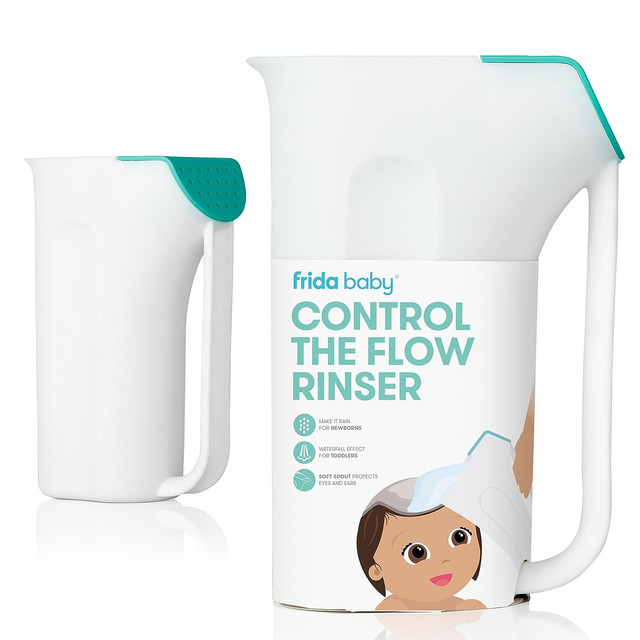
A step up from a plain cup. A controlled-flow rinser meters the water out in a gentle, even stream rather than a sudden slosh, which matters because it is the unpredictability of the pour that many children react to. Some designs let you fill from the bath and squeeze, which keeps one hand free — genuinely useful when the other hand is steadying a toddler. The flow control is the whole feature; a cup with a fancy shape and no flow control is just a cup.
- Metered or squeeze-controlled flow
- Fills directly from the bath water
- Soft edge or rim on most models
- One-handed operation
- Predictable pour is much less startling
- Leaves one hand free to steady the child
- Works at a sink as well as in the bath
- More parts to dry and keep mould-free
- Slower than simply tipping a jug
Tear-Free Shampoo
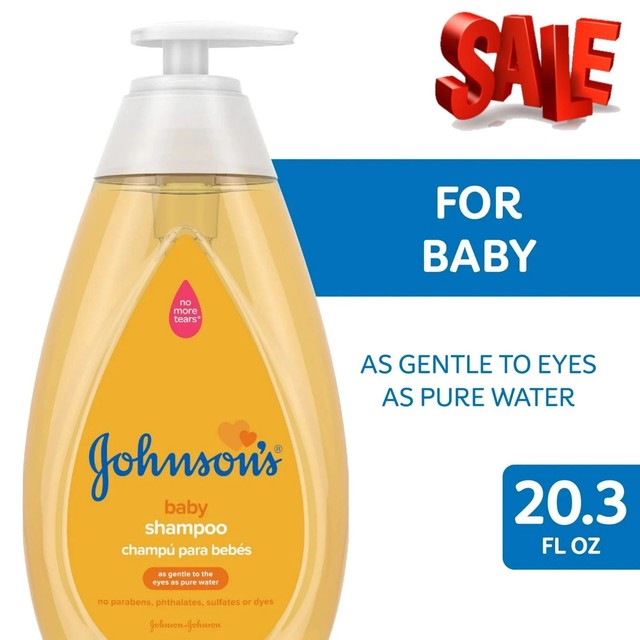
Worth putting on the list because it is the cheapest possible test of whether you have a stinging problem or a control problem. If a genuinely mild, tear-free formula removes the objection, you never needed a visor. If the child still protests exactly as much with shampoo that cannot sting, the issue is the water on the face or the lying back, and you now know which product to buy. Look for a short ingredient list and a pH close to the eye’s own rather than a marketing claim on the front.
- Mild surfactants formulated not to sting
- pH balanced close to tear fluid
- Fragrance-free options for sensitive skin
- Pump bottles for one-handed use
- The cheapest way to identify the real objection
- Helpful for sensitive skin regardless
- Pump bottles are far easier with wet hands
- Tear-free does not mean it cannot irritate at all
- Marketing claims outrun the formulation on many brands
Non-Slip Bath Mat
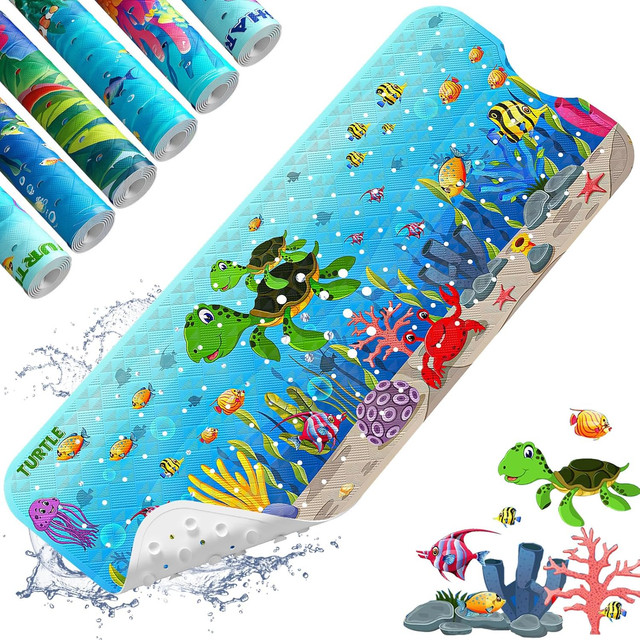
Relevant here rather than incidental. A large part of what a toddler is reacting to when they resist leaning back is the feeling of slipping, and a tub floor with a film of soap on it is genuinely slippery. A good suction mat gives them secure footing and something to sit on that does not slide, and the difference in confidence is often immediate. Choose one with many small suction cups over one with a few large ones, and lift and dry it regularly or you will grow mould underneath it.
- Dense suction cups across the whole underside
- Textured upper surface
- Mould-resistant materials on better mats
- Drainage holes to prevent water pooling
- Secure footing removes a real source of fear
- Cheap and immediately effective
- Protects against genuine slip injuries
- Grows mould underneath if not lifted and dried
- Will not stick to a textured or non-slip tub surface
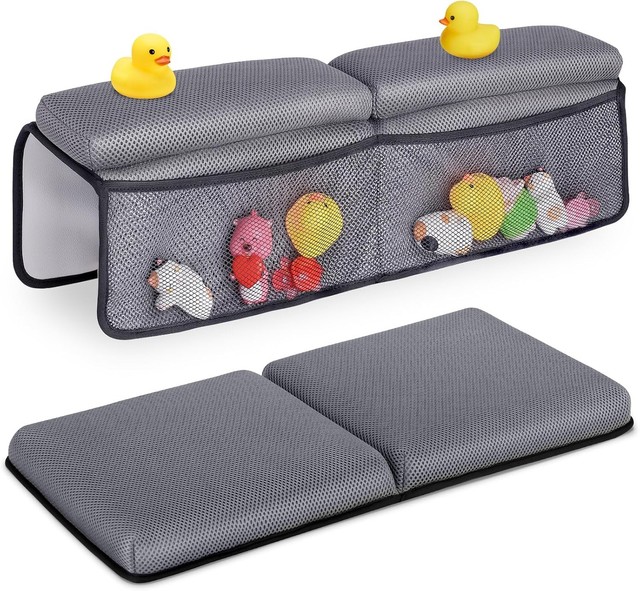
Bath Kneeler and Elbow Rest Set
For the adult, and it changes the child’s experience more than it sounds. Hair washing goes badly when it is rushed, and it gets rushed when the person doing it is kneeling on a hard floor with their elbows on a cold tub edge. A padded kneeler and elbow rest lets you take the extra thirty seconds to do it calmly, at the child’s pace. Parents consistently report this as one of the more useful bath purchases, and it is never on lists about hair washing.
- Thick foam kneeling pad
- Elbow rest that clips over the tub edge
- Storage pockets for cups and shampoo
- Quick-drying, wipe-clean covers
- Removes the physical reason bath time gets rushed
- Keeps cups and shampoo within reach
- Genuinely helps anyone with knee or back trouble
- Bulky to store in a small bathroom
- Cheap foam compresses flat within months

Soft Bath Spout Cover
A small safety item that belongs in any bathroom with a toddler in it. A metal tap at head height in a hard-surfaced room is a real injury risk, and the moments when a child jerks back — which is exactly what happens during a difficult hair wash — are when heads meet taps. A soft cover costs very little and removes the consequence. Choose one that fits your specific spout shape; universal covers fall off, which is worse than not having one because you stop noticing.
- Soft silicone or rubber cover
- Fits over the bath spout
- Character designs that double as a distraction
- Some cover the temperature control too
- Removes a real head-injury risk
- Very cheap
- Often becomes a bath toy in its own right
- Universal fits slip off some spouts
- Traps water and needs drying out
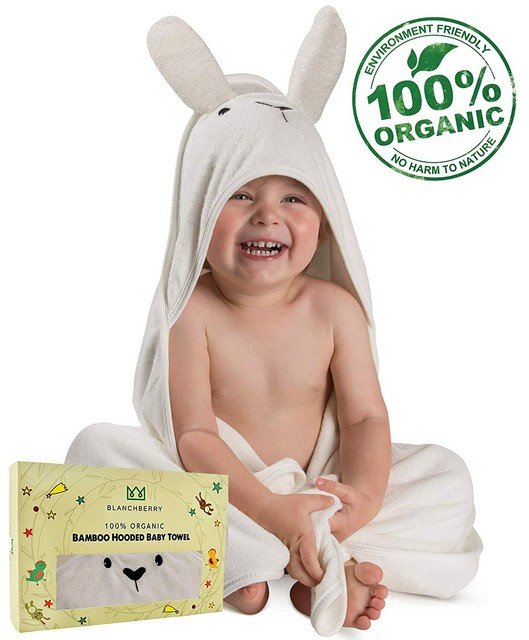
Hooded Towel with a Deep Hood
The immediate aftermath matters as much as the rinse. A child whose face ends up wet and cold at the end of the wash learns that the whole thing is unpleasant, however well the rinse went. A large hooded towel with a genuinely deep hood — deep enough to cover the forehead and dry the face straight away — closes the sequence well. Buy one sized for the age your child is now rather than one they will grow into; a towel that swamps them is harder to use quickly.
- Deep hood covering the forehead
- Cotton terry or bamboo, high absorbency
- Toddler sizes as well as infant
- Hanging loop for drying
- Dries the face immediately, ending the wash well
- Keeps a wet child warm while you get to a towel
- Bamboo versions are notably more absorbent
- Infant sizes are outgrown very quickly
- Thick towels take a long time to dry themselves

Bath Toys with a Rinsing or Pouring Function
The indirect approach, and often the one that actually works. Cups, watering cans and pouring toys let a child practise having water poured over their own hands and arms, and then their head, at their own pace and under their own control. That rehearsal is doing something a visor cannot: changing how the child feels about water on the face rather than preventing it. Choose sealed or easily drained toys — anything that takes water in and cannot dry out grows mould inside.
- Cups, jugs and watering-can shapes
- Sealed or fully drainable to prevent mould
- Sized for small hands
- Sets covering several pouring actions
- Lets the child rehearse water on the face in their own time
- Addresses the fear rather than working around it
- Cheap and entertaining regardless
- Squeeze toys with a pinhole grow mould inside
- No help at all on the day you simply need hair washed
Buying tips
- Work out what your child is actually objecting to. Stinging eyes, water on the face, and being asked to lean back are three different problems with three different answers. Tear-free shampoo tests the first for the price of a bottle. If the protest is identical with shampoo that cannot sting, a visor is probably not your answer either.
- A visor takes control away, and control is often the real issue. It sits against the forehead, blocks part of the view and cannot easily be removed by a small child — which is exactly the situation an already-nervous toddler is objecting to. A rinse cup the child holds themselves works where a visor fails, for precisely this reason. Try the cup first.
- Nothing on a child’s head in a bath should be tight. Look for a soft split crown or a strap that yields under a pull, so it comes away easily in any direction. Never improvise with elastic, a hair tie or anything that grips. And no bath product of any kind replaces the rule that a toddler in water is never left alone — not for a moment.
- Lean forward, not back. Rinsing with the head tipped forward over a cupped hand across the forehead keeps water off the face far better than tipping back, and most children find it much less alarming because they can see. It also means shampoo runs away from the eyes rather than towards them. Try the technique before buying anything.
- Let them practise pouring on themselves. A cup or watering can in a child’s own hands lets them get water on their hands, arms and then their head at whatever pace they choose. That rehearsal changes how they feel about water on the face, which is the underlying problem — a visor only prevents it, which means the fear is still there next week.
- Wash hair at the start of the bath, not the end. Doing it first means the unpleasant part is over while the child is still fresh and interested, and everything after it is play. Leaving it until the end means the bath ends badly every single time, and children remember how things finish. It costs nothing and it is the most useful change most parents make.
- Check the water temperature with a thermometer, not your wrist. An adult wrist is a poor judge and children’s skin is more sensitive than ours. Around 37 °C is the usual guidance. Water that feels fine to you can feel too hot to them, and a child who finds the water uncomfortable will resist everything that follows — which then gets blamed on the hair washing.
- Hang everything up to dry after every bath. Visors, cups, mats and toys all sit wet in a warm room, and that grows mould — inside squeeze toys and under suction mats especially. Lift the mat, drain the toys, hang the visor. Anything that takes on water and cannot be dried out is better thrown away than scrubbed.
As an Amazon Associate and eBay Partner, toptenpick.com earns from qualifying purchases. Prices and availability are subject to change.