

As an Amazon Associate and eBay Partner, toptenpick.com earns from qualifying purchases. Prices and availability are subject to change.
Type “arrows for a Samick Sage” into a search bar and you’ll get a single confident answer, usually one spine number. That answer is wrong for most owners, and not because the source did anything sloppy. The Sage is sold as a takedown, and its limbs are swapped out and sold separately in a dozen-plus draw weights, from 25 up to 60 pounds. The riser never changes; the bow’s actual draw weight does, every time an owner switches limbs. Arrow spine is chosen to fit the limb, not the bow model, so there is no single right arrow for a Sage, only a right arrow for a Sage set up at your specific weight and draw length.
Spine is how stiff the shaft is. Too weak for your setup and the arrow flexes wildly off the string, missing left or right of where you aimed; too stiff and it does the opposite. Two numbers decide it: your draw weight, which is not necessarily the number stamped on the limb, since makers mark to the nearest 5 pounds and can run a few pounds over, and your draw length, since a longer draw stores and releases more energy through the same shaft. Every arrow maker publishes a spine chart cross-referencing both. Skipping it and buying by “what other Sage owners use” is how mismatched arrows end up in the quiver.
One spec isn’t about grouping at all: length. An arrow has to be longer than your draw length, full stop. Trad archers routinely add an extra inch and a half to two inches of margin over their measured draw for exactly this reason, an arrow that’s too short can be drawn back past the rest or the shelf and come off the bow at your hand. That’s not a tuning problem, it’s an injury risk, and it’s the one spec worth over-building rather than optimizing.
The Sage’s riser is cut close to center, which is a genuine advantage: less of the arrow has to flex sideways around the shelf on release than on an off-center traditional bow, so factory spine charts tend to run a little truer than they would on a full-shelf longbow. It doesn’t exempt you from checking a chart, and swapping from feathers to vanes, or stepping up to a heavier hunting point, both stiffen the effective spine you need.
Everything below is grouped by what it’s actually suited for: light aluminum and cedar for a stock 25-to-35-pound Sage, carbon in the middle weights most owners land on, and heavier options for the 45-to-60-pound limbs some shooters swap in later. Check your limb weight and draw length against the maker’s chart before buying any of them.
| # | Product | Price | Where to buy |
|---|---|---|---|
| 1 | Easton XX75 Jazz Aluminum Arrows | $65–$75 | Amazon · eBay |
| 2 | Easton XX75 Gamegetter Aluminum Arrows | $70–$90 | Amazon · eBay |
| 3 | Gold Tip Traditional Classic XT | $70–$100 | Amazon · eBay |
| 4 | Carbon Express Heritage BuffTuff | $75–$110 | Amazon |
| 5 | Easton Carbon Legacy (Traditional Only) | $60–$90 | Amazon · eBay |
| 6 | Black Eagle Zombie Slayer | $75–$100 | Amazon · eBay |
| 7 | Victory VAP TKO | $100–$140 | Amazon · eBay |
| 8 | Easton Avance / Avance Sport 4mm Carbon Target Shafts | $100–$190 | Amazon · eBay |
| 9 | Rose City Archery Port Orford Cedar Shafts | $25–$45 | Amazon · eBay |
| 10 | Easton FMJ 5mm (Full Metal Jacket) | $160–$190 | Amazon · eBay |
The picks, in detail
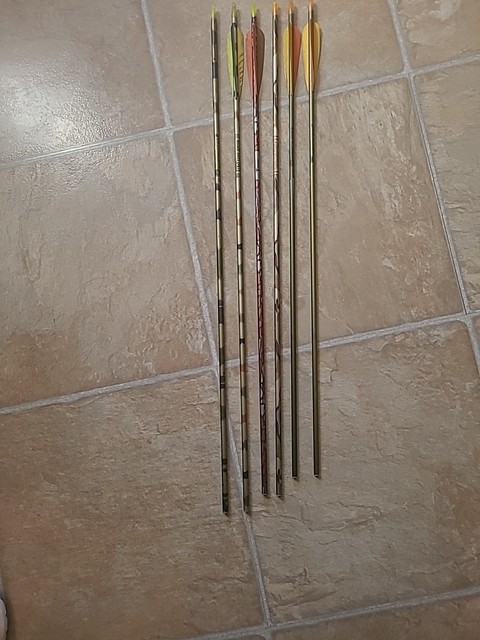
Easton XX75 Jazz Aluminum Arrows
The aluminum arrow most beginner takedown recurves, Sage included, actually get recommended alongside, because it’s made in enough shaft sizes to cover a wide span of draw weights and comes factory fletched and ready to shoot. It’s not the lightest or fastest option here, but aluminum flexes predictably and is forgiving of a beginner’s inconsistent release, which matters more than raw speed while you’re still learning to shoot the same shot twice.
- 7075 aerospace aluminum, hard-anodized finish
- Factory fletched with 4-inch parabolic feathers
- Multiple shaft sizes for different draw weights
- Sold in 6-packs
- Forgiving flex behavior for a developing release
- Wide size range makes correct-spine matching easier
- Long-running, well-documented Easton line with easy-to-find charts
- Heavier and slower than a comparable carbon arrow
- Aluminum shafts bend rather than shatter, so check straightness after hard hits
- Not the arrow to grow into once you’re shooting seriously

Easton XX75 Gamegetter Aluminum Arrows
A heavier-walled sibling to the Jazz, built on the same XX75 aluminum alloy but sized for higher draw weights and hunting-style use rather than a beginner’s lightest limbs. It’s the more sensible aluminum pick once you’ve swapped in 40-pound-plus limbs on a Sage, where a Jazz-weight shaft would be under-spined. Like the Jazz, it’s predictable and inexpensive to replace, which matters while you’re still occasionally hitting the ground instead of the target.
- XX75 aluminum alloy, heavier wall than the Jazz
- Sized for higher draw weights
- Sold in 12-packs
- Hunting-oriented shaft weight and durability
- Suits heavier swapped-in Sage limbs better than lighter aluminum
- Inexpensive to replace while learning
- Same predictable aluminum flex behavior as the Jazz
- Too stiff and heavy for the lighter end of the Sage’s weight range
- Slower than carbon at the same spine
- Less common in stores than the Jazz, so shop online
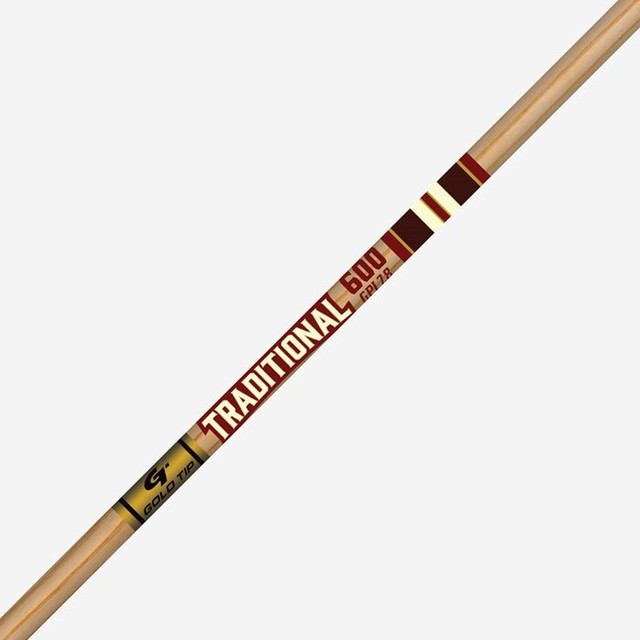
Gold Tip Traditional Classic XT
A carbon shaft built specifically for traditional and takedown recurve shooters, factory fletched with feathers and finished with brass inserts, which is the setup most Sage owners moving off aluminum land on. It threads the needle between an aluminum shaft’s forgiving flex and a full target-carbon shaft’s stiffness and light weight, and it’s sold in spine options that map directly onto the Sage’s common draw-weight range.
- Carbon construction with brass inserts
- Factory fletched with 4-inch feathers
- Built specifically for traditional and recurve shooters
- Sold in 6-packs, multiple spines
- Purpose-built for exactly this kind of takedown recurve
- Feather fletching suits a shelf-rest setup like the Sage’s stock rest
- Good middle ground between aluminum’s forgiveness and carbon’s performance
- Costs more than an equivalent aluminum arrow
- Feathers wear faster than vanes and need occasional replacement
- Still requires checking spine against your actual limb weight
Carbon Express Heritage BuffTuff
Carbon Express aims this shaft at shooters who want a wood arrow’s look without a wood arrow’s inconsistency: a wood-grain finish over a genuine carbon core, with a tough BuffTuff coating meant to survive the ground and rocks better than paint on real cedar. It comes in three spine groupings built around different draw-weight bands, so matching it to a specific limb set on a Sage is a matter of picking the right one, not guessing.
- Carbon shaft with wood-grain BuffTuff finish
- Sold in three spine groupings for different draw weights
- Factory fletched with shield-cut feathers
- Straightness tolerance of ±.005 inch
- Wood-arrow look without wood’s warping and inconsistency
- Clear spine groupings simplify matching to a Sage’s limb weight
- Durable finish for stump shooting and rough handling
- Costs more than a plain black carbon shaft with no performance upside
- Spine groupings are broader than a full numeric spine chart
- Finish is cosmetic, it doesn’t out-shoot a plain carbon arrow at the same spine

Easton Carbon Legacy (Traditional Only)
Easton’s dedicated traditional-carbon line, wood-grain finished and fletched with a mix of barred and solid-color feathers in the old-fashioned style, sold in spines from 340 up to 700 so it covers everything from a stiff hunting-weight Sage down to a light 25-pound starter setup. It’s a step up in fletching and finish quality from a basic carbon shaft, aimed at shooters who care how their traditional setup looks as well as shoots.
- Wood-grain carbon shaft
- Spine range 340 to 700, covers light to heavy limbs
- Factory helical feather fletching
- Traditional barred-feather color scheme
- Wide spine range covers nearly the whole Sage limb lineup
- Traditional styling matches a wood-riser takedown bow
- Reputable Easton manufacturing and consistent spine labeling
- Pricier than a plain carbon shaft with the same performance
- Feather fletching needs more care than vanes in wet weather
- Sold in 6-packs, so building a full dozen means buying twice
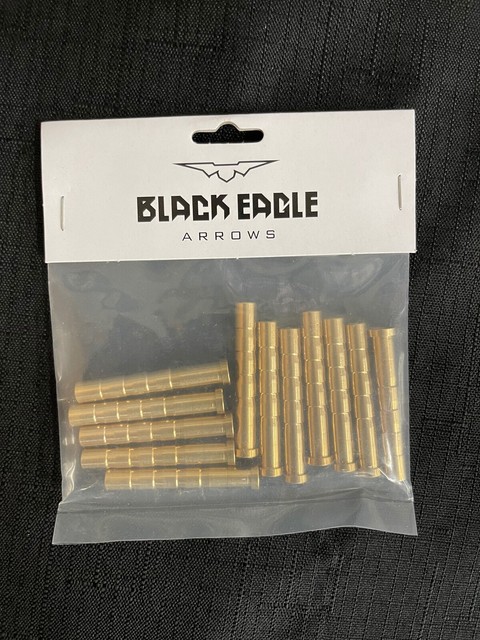
Black Eagle Zombie Slayer
A small-diameter carbon shaft built for hunting accuracy that also works well on a traditional recurve setup like the Sage, especially once you’ve moved past a beginner’s lightest limbs. The thinner diameter reduces wind drift and cuts through brush more cleanly than a fatter target shaft, which matters if the Sage is being used for stump shooting or small-game hunting rather than paper targets on a range.
- Small-diameter carbon construction
- Factory fletched, multiple spine options
- Designed for hunting accuracy and durability
- Sold in 6-packs
- Thinner diameter cuts wind drift and brush resistance
- Durable enough for stump shooting and rough use
- Popular, well-reviewed shaft in the hunting-recurve community
- Not marketed or optimized for pure target shooting
- Small diameter needs matching nocks and points, not universal fit
- Costs more than a basic beginner carbon arrow

Victory VAP TKO
A micro-diameter hunting arrow built for kinetic energy and penetration rather than target scores, worth considering only once a Sage is set up with heavier 45-to-60-pound limbs; at 25 to 35 pounds it will typically be under-spined. It’s a specialist choice on this list, not the arrow for a first-time buyer, but a real option for someone using an upgraded Sage for small-game or stump-shooting who wants a harder-hitting shaft.
- Micro-diameter carbon construction
- Built for kinetic energy and penetration
- Suited to heavier draw weights
- Multiple spine options for hunting setups
- High kinetic energy for hunting-weight setups
- Micro diameter reduces wind drift
- Well-regarded in the hunting-arrow segment
- Needs a heavier Sage limb set to be correctly spined
- Overkill and likely mis-spined on stock light limbs
- Priced above the general-purpose shafts on this list

Easton Avance / Avance Sport 4mm Carbon Target Shafts
A genuine target-grade carbon shaft, a step above the traditional-styled arrows elsewhere on this list, aimed at a Sage owner who has started shooting targets seriously and wants tighter straightness tolerances and a wider spine selection than a beginner shaft offers. It’s sold as bare shafts, so budget for points, nocks and fletching, or a build service, on top of the shaft price.
- 4mm all-carbon target shaft
- Wide spine selection for fine-tuning
- Two straightness grades (Avance and Avance Sport)
- Sold as bare shafts, 12-count
- Target-grade straightness tolerance for better consistency
- Wide spine range simplifies matching to an exact draw weight
- Reputable Easton target-arrow line
- Sold bare, so nocks, points and fletching are extra cost and assembly
- More arrow than most casual Sage owners need
- Pricier per shaft than the traditional-styled options here

Rose City Archery Port Orford Cedar Shafts
The classic pairing for a wood-riser bow like the Sage: real cedar shafts sold bare, in spine bands tied directly to draw weight, for example 30-to-35 pounds or 35-to-40, so choosing the right dozen is as simple as matching the band to your limb set. They need cutting to length, a point and fletching before they’re shootable, which is more work than a factory-fletched carbon arrow, but it’s the traditional-archery route many Sage owners specifically want.
- Real Port Orford cedar, sold bare
- Spine bands matched directly to draw-weight ranges
- 12-pack, multiple diameters and finishes available
- Traditional wood-arrow construction
- Authentic traditional-archery option for a wood-riser bow
- Spine bands map straightforwardly onto Sage limb weights
- Inexpensive way to build a full traditional-style set
- Bare shafts need cutting, pointing and fletching before use
- Wood is less consistent shaft-to-shaft than carbon or aluminum
- More prep work than any factory-fletched option on this list
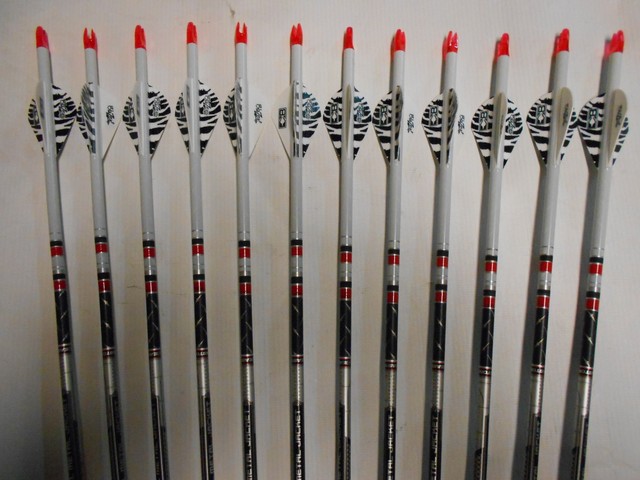
Easton FMJ 5mm (Full Metal Jacket)
A hybrid shaft with a carbon core wrapped in an aluminum jacket, built for higher-poundage hunting setups rather than a stock Sage. It makes the most sense if you’ve swapped in 45-to-60-pound limbs and want a heavier, tougher arrow to match. It’s the most expensive shaft on this list by a wide margin, and it’s genuinely more arrow than a light or beginner Sage build calls for.
- Carbon core with aluminum outer jacket
- Built for higher draw weights and hunting use
- Sold as bare shafts, dozen count
- Durable construction resistant to bending
- Matches a heavy swapped-in Sage limb set well
- Tougher against bent or damaged shafts than pure carbon
- Consistent, well-documented Easton spine charts
- By far the most expensive option on this list
- Mis-spined and unnecessary on light stock Sage limbs
- Sold bare, adding assembly cost and effort
Buying tips
- Arrow spine must match your actual draw weight and draw length together, not the bow model, so always check a manufacturer spine chart before buying.
- Limb-marked poundage is approximate: makers mark to the nearest 5 pounds and can run a few pounds over, so a “40-pound” limb might really pull closer to 43.
- Never shoot an arrow shorter than your draw length; trad archers add an extra inch and a half to two inches of margin because a too-short arrow can be drawn off the rest and strike your hand.
- The Samick Sage’s riser is cut close to center, which makes factory spine charts run truer than on a full-shelf longbow, but it does not replace checking the chart.
- Switching from feathers to vanes, or stepping up to a heavier point weight, both stiffen the effective spine you need, so re-check the chart after either change.
- Because Sage limbs are sold separately and commonly swapped, re-check arrow spine every time you change limb weight, not just once when you buy the bow.
- Aluminum and wood shafts are the traditional, budget-friendly choice for stock 25-to-35-pound Sage limbs; carbon suits the middle weights most owners settle on.
- If you later swap in heavier 45-to-60-pound limbs, plan on a stiffer, often heavier arrow; the shafts that worked at 30 pounds will likely be too weak.
As an Amazon Associate and eBay Partner, toptenpick.com earns from qualifying purchases. Prices and availability are subject to change.