

As an Amazon Associate and eBay Partner, toptenpick.com earns from qualifying purchases. Prices and availability are subject to change.
The LRS is quoted at 86 dB sensitivity, and that number is measured in a way that hides how hungry it really is. Magnepan specifies it as 86 dB at 500 Hz, one metre, with 2.83 volts applied. On an 8-ohm speaker 2.83 volts is exactly one watt, which is why that is the industry’s reference voltage. But the LRS is a 4-ohm load, and 2.83 volts into 4 ohms is two watts. So the honest one-watt sensitivity is about 83 dB, not 86. Against a typical 88 dB bookshelf speaker the LRS looks 2 dB down on the spec sheet and is actually around 5 dB down in watts — a factor of three in the power you need for the same level. That gap is the entire reason people buy an amplifier for these and are still disappointed.
The good news is that the load is otherwise one of the easiest an amplifier will ever see. A planar magnetic panel is essentially a long strip of conductor on a film: it behaves close to a pure resistance, with very little of the reactive phase angle that makes a ported box speaker dangerous to drive. The LRS sits near 4 ohms across the band and dips to about 3. There are no impedance peaks to fight and no phase swings to trip protection circuits. It is simply a low, flat, resistive load that never lets the amplifier rest.
That combination produces one simple buying test. Look at the amplifier’s rated power into 8 ohms and into 4 ohms. If the 4-ohm figure is roughly double the 8-ohm figure, the power supply can deliver current and the amplifier will drive these speakers. If a receiver claims 100 watts into 8 ohms and 110 into 4 — or, more often, does not publish a 4-ohm figure at all — it is voltage-limited and will run out well before you expect. The doubling rule is not audiophile folklore here; it is the specification that the LRS actually tests.
Two consequences worth stating plainly. Because the load is benign in phase, amplifiers that would misbehave on a difficult box speaker — modest Class D, and tube amplifiers used on the 4-ohm tap — generally work fine on an LRS. They do not sound broken. They simply run out of headroom, and on a dipole panel that runs out as compression and a collapsing soundstage rather than obvious distortion, which is why people often do not realise it is happening.
And the LRS is a dipole: it radiates equally forward and backward, cancelling at the sides, which costs efficiency in exchange for the openness people buy these for. Placement matters as much as amplification. Get them at least two to three feet off the front wall before concluding the amplifier is the problem.
| # | Product | Price | Where to buy |
|---|---|---|---|
| 1 | Schiit Vidar 2 | $700–$900 | Amazon · eBay |
| 2 | Parasound Halo A 21+ | $2,800–$3,600 | Amazon · eBay |
| 3 | NAD C 298 | $1,800–$2,500 | Amazon · eBay |
| 4 | Emotiva BasX A2 | $500–$800 | Amazon · eBay |
| 5 | Monolith by Monoprice 2-Channel THX Power Amplifier | $700–$1,200 | Amazon · eBay |
| 6 | Anthem MCA 225 Gen 2 | $2,000–$2,800 | Amazon |
| 7 | Crown XLS 1502 DriveCore 2 | $400–$600 | Amazon · eBay |
| 8 | Rogue Audio Sphinx V3 | $1,600–$2,200 | Amazon · eBay |
| 9 | Fosi Audio V3 Mono Power Amplifiers | $130–$260 | Amazon · eBay |
| 10 | Rotel RB-1582 MkII | $1,300–$2,000 | Amazon · eBay |
The picks, in detail

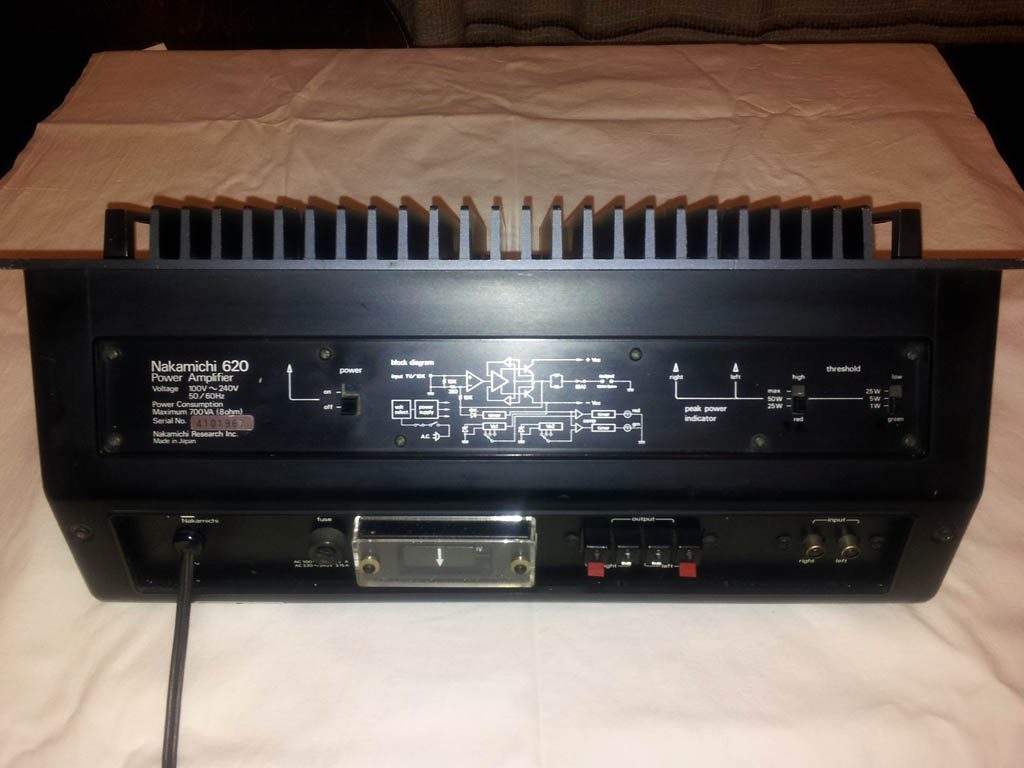
Schiit Vidar 2
The default recommendation in Magnepan circles for good reason: it is rated 100 watts into 8 ohms and doubles cleanly to 200 into 4, which is exactly the behaviour the LRS asks for, at a price that does not exceed the speakers. It also runs as a mono block, so a pair is the obvious upgrade path when you decide the LRS deserves more. American-built with a straightforward return policy.
- 100 W per channel into 8 ohms, 200 W into 4
- Switchable to mono block operation
- Balanced and single-ended inputs
- Designed and built in the United States
- Doubles into 4 ohms, which is the whole test
- Priced sensibly against the speakers themselves
- Clear upgrade path by adding a second unit
- Runs hot and needs ventilation above it
- No volume control, so a preamp is required
- Sold direct, so no dealer audition
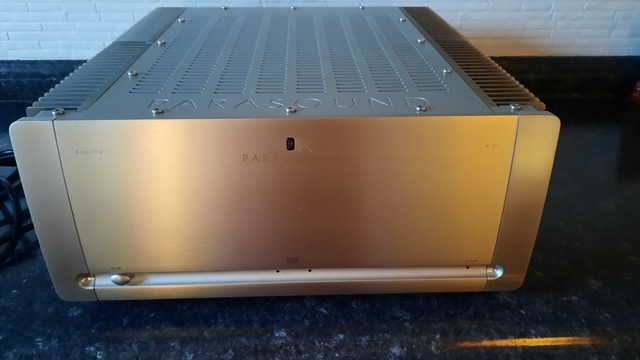
Parasound Halo A 21+
The amplifier people move to when the LRS has convinced them. It is rated 300 watts per channel into 8 ohms and 500 into 4, which is far more current than the panels can absorb at any sane volume, and that surplus is the point: the LRS stops compressing on dynamic peaks and the soundstage stays put. John Curl’s design, high bias Class A for the first watts, and built to a standard that outlasts several speaker changes.
- 300 W per channel into 8 ohms, 500 W into 4
- Class A for the first several watts
- Balanced XLR and unbalanced inputs
- Bridgeable to mono
- Vastly more current headroom than the LRS can use
- Superb build and long service reputation
- The peaks stay effortless at any realistic level
- Several times the price of the speakers
- Heavy — around 60 pounds — and needs real shelf space
- Substantial idle heat output

NAD C 298
The modern-measurement answer: Purifi Eigentakt Class D modules in an NAD chassis, delivering high power into 4 ohms with distortion figures far below anything audible and almost no idle heat. Where a big Class AB amplifier gives you current through sheer power supply mass, this gives it through a switching design that holds its output almost independent of load. Bridgeable to mono if you want more.
- 185 W per channel, both channels driven
- Purifi Eigentakt Class D output modules
- Bridgeable to mono operation
- Balanced and single-ended inputs
- Very low distortion and noise, measured not claimed
- Runs cool and draws little idle power
- Compact and light for the output
- Expensive for the power rating
- Class D voicing divides opinion in Magnepan circles
- Needs a preamp with decent output to drive it fully

Emotiva BasX A2
The sensible mid-budget Class AB choice. Emotiva’s whole pitch is generous power supplies at modest prices, and the BasX line delivers real, measurable current into 4 ohms rather than the optimistic ratings of a mass-market receiver. It is the right amplifier for someone who wants to hear what the LRS does before deciding how much further to take the system.
- Stereo Class AB design
- Rated into both 8 and 4 ohms
- Balanced and RCA inputs
- Twelve-volt trigger and auto-on
- Real 4-ohm capability at a modest price
- Straightforward, well-built and reliable
- Published specifications rather than marketing numbers
- Not as refined at low level as the pricier options
- Fan or vent noise reported on some units in quiet rooms
- Direct sales only in most markets

Monolith by Monoprice 2-Channel THX Power Amplifier
The value-per-watt outlier. Monoprice’s Monolith amplifiers are THX-certified, conservatively rated, and priced well below what the output would normally cost, which makes them a common choice for driving inefficient speakers on a budget. Rated into 4 ohms with a genuine increase over the 8-ohm figure, and built around a large toroidal supply rather than a marketing claim.
- THX certified stereo power amplifier
- Rated into both 8 and 4 ohms
- Toroidal transformer, Class AB output
- Balanced XLR and RCA inputs
- Exceptional power for the money
- Independently certified rather than self-rated
- Solid build with good heatsinking
- Very heavy and physically large
- Cosmetics are plain and shipping damage is a known risk
- Stock varies and models are revised without notice
Anthem MCA 225 Gen 2
A quietly excellent stereo amplifier that is built for exactly the load the LRS presents: high current capability into low impedance, with the 4-ohm rating approaching double the 8-ohm figure. Anthem’s engineering comes from the home-theatre side, which means the protection circuitry and thermal design are serious, and it is happy driving a difficult load for hours without complaint.
- 225 W per channel into 8 ohms
- Substantially higher rating into 4 ohms
- Advanced Load Monitoring protection
- Balanced and unbalanced inputs
- Designed specifically for low-impedance loads
- Robust protection without nuisance shutdowns
- Excellent dealer support network
- Expensive relative to the speakers
- Large chassis with significant weight
- Plain industrial appearance

Crown XLS 1502 DriveCore 2
The professional-audio shortcut, and a genuinely rational one: rated 525 watts per channel into 4 ohms for a fraction of what a domestic amplifier of that output costs. Magnepan owners have used Crown amplifiers for decades because a pro amp is designed around driving low impedances all evening. The compromise is that it is a pro tool, with a fan, XLR and TRS inputs and no pretence of living-room styling.
- 525 W per channel into 4 ohms
- DriveCore Class D design
- XLR and 1/4 inch TRS inputs
- Built-in crossover and limiter functions
- Enormous power into 4 ohms for the money
- Designed for continuous low-impedance duty
- Light and rack-mountable
- Fan noise is audible in a quiet listening room
- Requires adapters or a balanced preamp for domestic sources
- Utilitarian looks and a 2U rack chassis
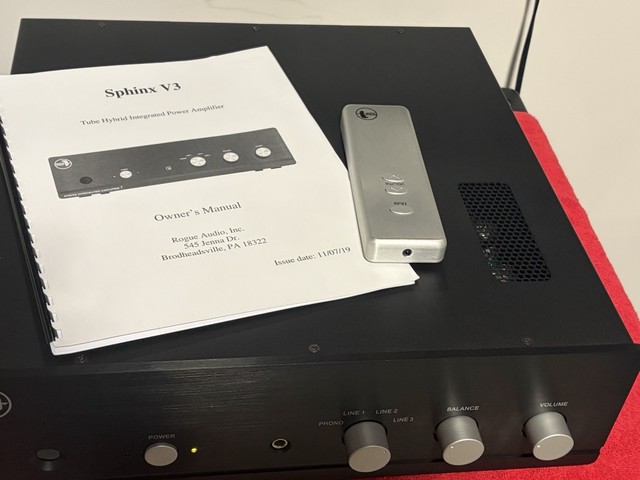
Rogue Audio Sphinx V3
The hybrid option for people who want some valve character with the LRS without giving up current. A tube input stage feeds a Class D output section, so you get the tonal signature people chase from tubes with a power section that can actually hold a 4-ohm load. It is also an integrated amplifier with a phono stage, which removes a box from the system.
- Tube input stage with Class D output
- Integrated amplifier with volume control
- Built-in moving magnet phono stage
- Headphone output
- Tube flavour without the tube headroom problem
- Integrated, so no separate preamp needed
- Phono stage included and genuinely usable
- Less outright power than the separates here
- Input tubes need occasional replacement
- Class D output section divides opinion among tube buyers

Fosi Audio V3 Mono Power Amplifiers
The honest budget entry. A pair of these compact TPA3255-based mono blocks, run from the higher-voltage supply, produces real power into 4 ohms for around a tenth of what the amplifiers above cost, and a lot of people have used them to find out whether they like planar speakers before committing. They will not give the LRS dynamic headroom, and that is the trade you are making knowingly.
- TPA3255 Class D mono block design
- Rated output depends on the power supply voltage supplied
- Very compact desktop-sized chassis
- Sold individually or as a pair
- Extraordinarily cheap way to get real 4-ohm power
- Tiny and cool running
- A genuine step up from a mass-market receiver
- Runs out of headroom on dynamic peaks
- Rated power depends entirely on which supply you buy
- Build and support are budget-grade
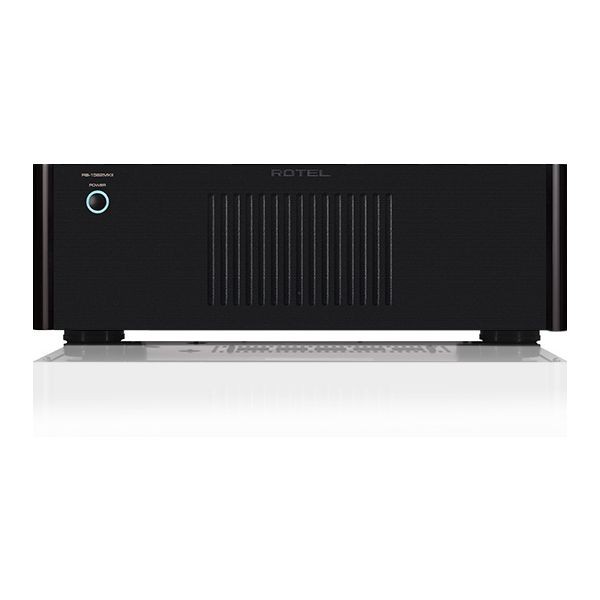
Rotel RB-1582 MkII
A traditional, heavily built Class AB stereo amplifier from a manufacturer with its own transformer winding operation, and one that behaves properly into low impedance. It is the choice for someone who wants a conventional, warm-sounding domestic amplifier with real power supply mass rather than a switching design or a pro-audio box, and it will drive the LRS to genuinely loud levels without strain.
- 200 W per channel into 8 ohms
- Oversized toroidal transformer, Class AB
- Balanced XLR and RCA inputs
- Twelve-volt trigger
- Substantial power supply for the price bracket
- Conventional, forgiving tonal balance
- Long-standing dealer network and service
- Heavy and deep — check your rack before buying
- Runs warm at idle
- Older model, so stock is increasingly used or clearance
Buying tips
- Compare the 8-ohm and 4-ohm power ratings and ignore everything else. If the 4-ohm figure is not close to double, the amplifier is voltage-limited and will compress on these speakers.
- Be suspicious of any amplifier that does not publish a 4-ohm rating at all. On a mass-market receiver that omission is the specification.
- Do the sensitivity arithmetic before blaming the amplifier. 86 dB at 2.83 volts into 4 ohms is really about 83 dB per watt, so the LRS needs roughly three times the power of an average 88 dB bookshelf for the same level.
- Move the speakers before you buy anything. The LRS is a dipole and needs two to three feet of clearance from the front wall; a panel jammed against a wall sounds thin in a way no amplifier fixes.
- If you use tubes, use the 4-ohm tap and accept the headroom limit. The load is resistive, so valves work here — they simply run out sooner, and on a panel that sounds like compression rather than distortion.
- Watch for a preamp that cannot swing enough voltage. Several of these power amplifiers need a healthy input level to reach full output, and a weak source can look like an underpowered amplifier.
- Consider a pro amplifier if the budget is tight and the room is not silent. A Crown or similar gives you more current per pound than anything domestic, and the fan only matters in a genuinely quiet room.
- Add a subwoofer before adding more watts if the complaint is bass. The LRS rolls off low down by design, and no amplifier changes what the panel cannot move.
As an Amazon Associate and eBay Partner, toptenpick.com earns from qualifying purchases. Prices and availability are subject to change.