

As an Amazon Associate and eBay Partner, toptenpick.com earns from qualifying purchases. Prices and availability are subject to change.
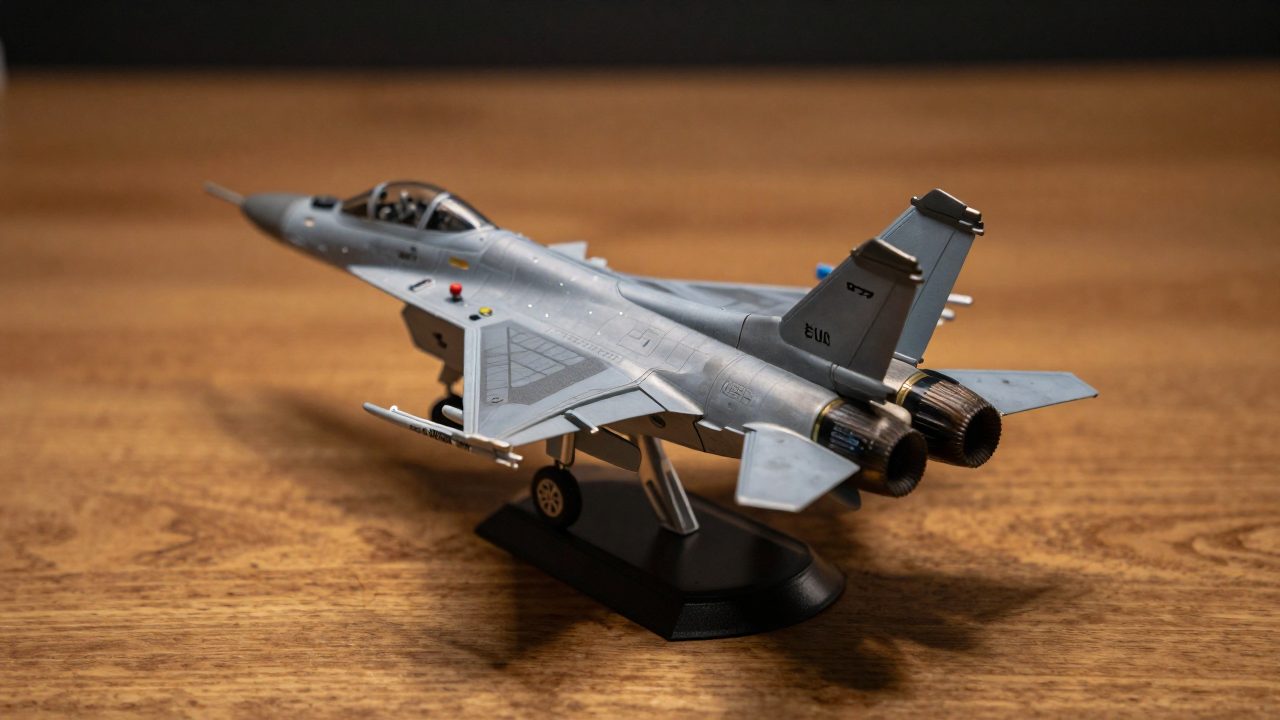
The most common mistake in buying a 1/72 F-15 kit isn’t picking a bad manufacturer — it’s picking the wrong airplane. ‘F-15’ covers several visibly different jets: the single-seat F-15C/J air-superiority Eagle, the two-seat F-15D/DJ trainer, and the F-15E Strike Eagle (and export cousins like Korea’s F-15K), which has a different rear cockpit, conformal fuel tanks, and a reinforced airframe built for mud-moving rather than dogfighting. An F-15C and an F-15E look similar in a thumbnail and are not the same aircraft — order off a small photo and you can end up with a beautifully built model of the wrong jet.
The scale itself is well served — Academy, Hasegawa, Fine Molds, Platz and Revell all currently sell 1/72 F-15 kits — but tooling age varies more than the box art suggests. Hasegawa’s F-15C tooling dates to a 1988 rework of an even older 1970s kit and has been reboxed with new decals well over a dozen times since; it still builds into a decent model, but it isn’t current-generation engineering. Academy’s F-15C (kit 12582), Hasegawa’s F-15EX Eagle II (02408), and Revell’s F-15E (03841), by contrast, are genuinely new 2020s tooling with finer panel-line detail and different, more modern parts breakdowns.
Watch for reboxes marketed as if they were new subjects. Academy’s F-15K ‘Slam Eagle’ (Republic of Korea Air Force) is the same core F-15E Strike Eagle tooling with new decals and different-colored sprues — a good kit, but not new engineering, so don’t pay a premium expecting new parts underneath. The JASDF’s F-15J and F-15DJ, the aircraft actually flown by Japan rather than the US, are a distinct airframe standard again; Fine Molds’ and Platz’s kits of them are tooled specifically for that market and those markings, not adapted from a US-variant kit with swapped decals.
None of these kits have been built or reviewed in-house here — the notes below draw on manufacturer specifications and established scale-modeling sources (Scalemates, kit-review sites, enthusiast forums), so treat fit-and-finish comments as a starting point for your own research before you commit to a variant and a manufacturer.
| # | Product | Price | Where to buy |
|---|---|---|---|
| 1 | Academy F-15E Strike Eagle (12478) | $30–$40 | Amazon · eBay |
| 2 | Academy F-15C Eagle (12582) | $26–$35 | Amazon · eBay |
| 3 | Academy F-15K Slam Eagle (12554) | $30–$40 | Amazon · eBay |
| 4 | Hasegawa F-15C Eagle (00336) | $25–$35 | Amazon · eBay |
| 5 | Hasegawa F-15EX Eagle II (02408) | $45–$60 | Amazon · eBay |
| 6 | Hasegawa F-15D/DJ Eagle | $27–$38 | Amazon · eBay |
| 7 | Fine Molds F-15J Eagle J-MSIP (FP51) | $44–$52 | Amazon · eBay |
| 8 | Fine Molds F-15DJ Eagle (FP52) | $38–$45 | Amazon · eBay |
| 9 | Platz F-15J Eagle | $45–$65 | Amazon · eBay |
| 10 | Revell F-15E Strike Eagle (03841) | $25–$35 | Amazon · eBay |
The picks, in detail

Academy F-15E Strike Eagle (12478)
Widely regarded among 1/72 modelers as the best F-15E Strike Eagle currently available in the scale, with recessed panel lines, a detailed cockpit with three-part ACES ejection seats, and a large weapons and ordnance set. Optional posable intakes and exhaust nozzle styles let you build it parked or in flight configuration.
- Over 150 parts in light grey and clear plastic
- Detailed cockpit with 3-part ACES ejection seats
- Posable intakes and optional exhaust nozzle styles
- Large ordnance and weapons set included
- Consistently rated the best 1/72 F-15E on the market by reviewers
- Fine, recessed panel-line detail for its price point
- Straightforward assembly with relatively few steps
- Included decals reportedly don’t adhere well — many builders use aftermarket decals
- F-15E only — doesn’t cover the air-superiority C/J variants
- Original tooling lineage lags the newest kits in some surface details

Academy F-15C Eagle (12582)
Academy’s 2023-tooled F-15C, a genuinely new-mould kit rather than a rebox, released with US Air National Guard ’75th Anniversary Medal of Honor’ markings. It represents the single-seat air-superiority Eagle — no conformal fuel tanks, no rear-seat canopy — giving modelers a current-generation alternative to Hasegawa’s much older F-15C tooling.
- New 2023 tooling, not a rebox of older parts
- Represents the single-seat F-15C air-superiority variant
- Includes US Air National Guard anniversary marking decals
- Modern recessed panel-line engraving
- Newest tooling of any F-15C in 1/72
- Clean single-seat air-superiority profile, distinct from Strike Eagle kits
- Good value at a mid-range price
- Marking options are tied to the specific anniversary boxing
- Fewer independent long-term build reviews so far given how new it is
- Single-seat only — a separate kit is needed for two-seat D-model variants

Academy F-15K Slam Eagle (12554)
The Republic of Korea Air Force’s Strike Eagle variant, built from Academy’s existing F-15E tooling with new decals and multi-colored sprues rather than newly engineered parts — an honest rebox, not a new kit. It’s still praised for crisp surface detail and an enjoyable build, so it’s worth buying for the ROKAF markings, not for different parts underneath.
- Snap-fit-assisted engineering on multi-colored sprues
- ROKAF-specific decal sheet
- Same core parts breakdown as Academy’s F-15E Strike Eagle
- Eight main parts trees plus a separate lower fuselage half
- Same well-regarded F-15E engineering underneath
- Distinctive Republic of Korea Air Force markings not covered by USAF-boxed kits
- Praised surface detail for the scale
- Not new tooling — it’s a rebox of the standard F-15E kit
- Limited to Korean marking schemes
- Harder to find in stock than the standard USAF-boxed F-15E

Hasegawa F-15C Eagle (00336)
Hasegawa’s long-running single-seat Eagle, based on a 1988 rework of tooling that traces back to the mid-1970s and has been reboxed with new decal sheets well over a dozen times since. It’s still a serviceable, widely available kit at a modest price, but buyers should know they’re building nearly 40-year-old engineering, not a modern-tooled kit.
- 1988-era tooling reworked from 1970s originals
- USAF F-15C marking options
- Injection-molded grey plastic with clear canopy parts
- Widely reboxed under multiple kit numbers and marking schemes
- Inexpensive and easy to find
- Decades of aftermarket decals and detail sets support this tooling
- Straightforward build for less experienced modelers
- Nearly 40-year-old tooling — softer detail than current-generation kits
- Some reported fit issues, such as wing pylon placement, noted by builders
- Superseded in accuracy by Academy’s newer F-15C (12582)

Hasegawa F-15EX Eagle II (02408)
The newest USAF variant available in 1/72, covering the F-15EX Eagle II — a modernized, fly-by-wire descendant of the airframe with a new electronic warfare suite. Released in 2022 with new tooling, this is the kit to buy for the current-production jet rather than a Cold War-era Eagle.
- New 2022 tooling specific to the F-15EX variant
- USAF Eagle II marking options
- Represents the newest F-15 variant in active production
- Injection-molded with recessed panel lines
- One of the only widely available 1/72 kits of the newest F-15 variant
- Modern tooling with finer surface detail than older Hasegawa F-15 kits
- Covers a jet not represented by older-tooled kits at all
- Sometimes on backorder given demand for the newest variant
- Fewer aftermarket decal and detail options than the long-established F-15C tooling
- Import pricing from Japan can push cost higher than domestic kits

Hasegawa F-15D/DJ Eagle
The two-seat trainer version of the C/J Eagle, used by both the USAF (F-15D) and JASDF (F-15DJ) for conversion training and, in some cases, front-line duty. This kit gives optional parts to build either the American or Japanese two-seater from the same box — a genuinely different airframe from the single-seat kits above, not just a different paint job.
- 57 parts across 6 sprues, molded in grey plastic
- Optional parts for F-15D (USAF) or F-15DJ (JASDF) versions
- Clear canopy with a positionable option
- One decal sheet covering both marking options
- Only kit on this list covering the genuine two-seat trainer variant
- Good value at a low price point
- Same solid Hasegawa engineering as their other 1970s/80s F-15 tooling
- Shares the same aging tooling lineage as Hasegawa’s single-seat F-15C
- Two-seat cockpit detail is basic by current standards
- Decal sheet covers only two marking schemes

Fine Molds F-15J Eagle J-MSIP (FP51)
Widely considered by reviewers to be one of the best-engineered 1/72 F-15 kits available, this represents the JASDF’s single-seat F-15J after its J-MSIP upgrade. It’s a Japan-market kit built specifically for JASDF markings rather than a US-variant kit adapted with different decals.
- 14 sprues in light grey plus one clear sprue
- Represents the JASDF F-15J after the J-MSIP upgrade
- Fine, crisp panel-line detail with minimal mold-mark cleanup needed
- Includes English-language instructions alongside Japanese
- Consistently rated among the best-detailed 1/72 F-15 kits available
- Represents a specific, accurately-researched JASDF upgrade standard
- Well-written, bilingual instructions
- JASDF-specific — no USAF marking options in this boxing
- Priced higher than the equivalent US-variant Academy or Hasegawa kits
- Imported kit, so shipping and availability vary by region

Fine Molds F-15DJ Eagle (FP52)
The two-seat JASDF trainer counterpart to Fine Molds’ single-seat F-15J, covering the same J-MSIP-era standard with the DJ’s distinct rear cockpit and canopy. Reviewers note the same crisp detail and clean molding as the single-seat kit, making it a natural companion if you’re building a JASDF pair rather than a mixed US and Japan collection.
- Two-seat F-15DJ-specific cockpit and canopy parts
- Same fine engraving standard as Fine Molds’ F-15J
- JASDF-specific marking options
- Bilingual Japanese and English instructions
- Matches the detail level of Fine Molds’ well-regarded F-15J kit
- Accurately represents the two-seat JASDF trainer, not a reused single-seat shell
- Good companion piece for a JASDF-focused collection
- JASDF-only markings, no USAF F-15D options
- Higher price than Hasegawa’s older two-seat kit
- Narrower distribution outside Japan-focused hobby retailers

Platz F-15J Eagle
Platz’s own tooling, first released in 2015 rather than a Hasegawa rebox, offering more interior intake-trunking detail than Hasegawa’s older F-15J kits, including visible engine compressor faces and afterburner flame holders. Most boxings focus on specific JASDF squadron markings and anniversary schemes, so check the decal sheet matches the unit you want before buying.
- Original Platz tooling from 2015 onward, not a rebox
- Full-length intake trunking with visible compressor fan faces
- Horizontally split fuselage with a separate nose section
- Squadron- and anniversary-specific marking options depending on boxing
- More detailed intake trunking than older Hasegawa JASDF kits
- Genuinely distinct tooling, not a repackaged older design
- Wide range of specific JASDF squadron marking boxings available
- Different boxings carry different, sometimes limited, decal options — check before buying
- JASDF-specific, no USAF variants
- Pricier import kit compared to domestic USAF-variant options

Revell F-15E Strike Eagle (03841)
A genuinely new-tool Strike Eagle kit released in 2022, with recessed panel-line and rivet detail that reviewers rate as scale-accurate, though its parts breakdown differs from every other 1/72 F-15E on the market, meaning aftermarket detail sets made for the Academy kit generally won’t fit it directly. It’s a solid alternative if you specifically want current Revell tooling.
- New tooling released in 2022
- Recessed panel-line and rivet surface detail
- Represents the F-15E Strike Eagle variant
- Unique parts breakdown distinct from Academy’s F-15E
- Modern, currently-tooled alternative to the older Academy F-15E design lineage
- Panel and rivet engraving praised as scale-accurate
- Widely available through mainstream hobby retailers
- Unique parts breakdown means Academy-specific aftermarket sets won’t fit
- Some reviewers note minor accuracy misses in specific areas
- Fewer marking-scheme reboxes so far than the long-established Academy kit
Buying tips
- Confirm the exact variant before buying — an F-15C/J air-superiority Eagle and an F-15E Strike Eagle are visibly different aircraft, not just different paint schemes, and conformal fuel tanks or a rear cockpit can’t be added after the fact.
- For current-generation tooling rather than a decades-old mould, look for kits released from the 2020s onward, such as Academy’s F-15C (12582), Hasegawa’s F-15EX (02408), or Revell’s F-15E (03841).
- A ‘new variant’ boxing isn’t always new tooling — check whether a kit is a genuine new mould or a rebox with different decals; Academy’s F-15K Slam Eagle, for example, reuses the F-15E tooling.
- JASDF (Japanese) markings need a JASDF-specific kit like Fine Molds’ or Platz’s — a USAF-variant kit’s decals won’t correctly cover Japan’s F-15J/DJ.
- Aftermarket decal sheets are a common, inexpensive fix if a kit’s included decals are reported as thin or poorly adhering, as reviewers note for the Academy F-15E.
- Check parts-breakdown compatibility before buying separate aftermarket resin or photo-etch detail sets — as with the Revell F-15E, a unique breakdown can mean sets built for a different manufacturer’s kit simply won’t fit.
- Two-seat trainer variants (F-15D/DJ) need a kit specifically tooled for the rear cockpit and canopy — you cannot convert a single-seat F-15C/J kit into one.
- Import kits from Japanese manufacturers like Hasegawa, Fine Molds and Platz often cost more and take longer to ship than domestic Academy or Revell kits, so factor that into your budget and timeline.
As an Amazon Associate and eBay Partner, toptenpick.com earns from qualifying purchases. Prices and availability are subject to change.